
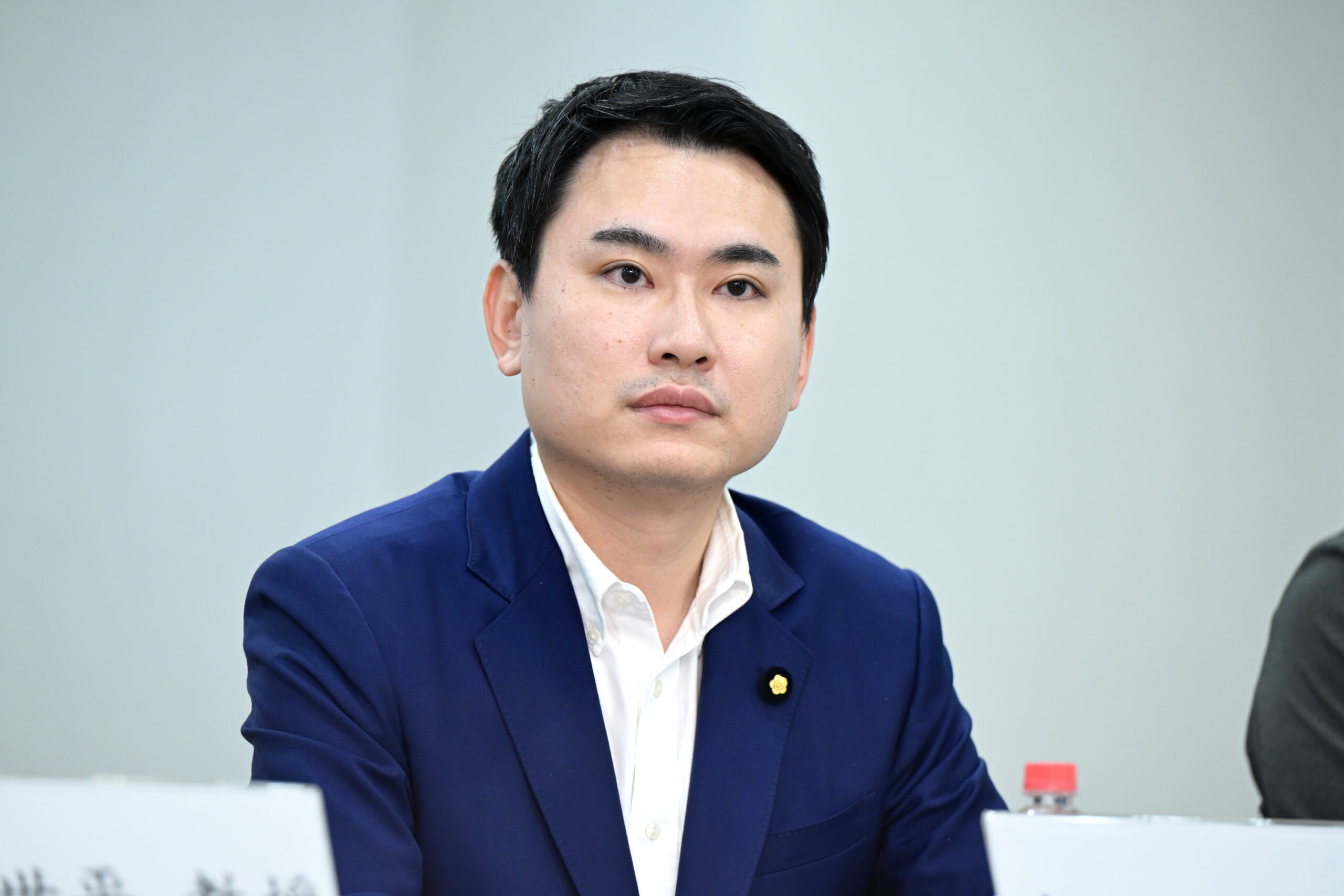
Taiwan’s legislator, Chen Guanting, recently attended a US-Taiwan defense industry conference where he emphasized the importance of Taiwan’s defense strategy going beyond just focusing on potential military conflicts in 2027. He pointed out the ongoing threat from China’s actions in the gray zone, aiming to change the status quo in the Taiwan Strait. Chen stressed the need for Taiwan to deepen defense industry cooperation with the United States to establish a long-term deterrence capability.
In his speech titled “The Day of Decision and Every Day: Beyond the 2027 Deterrent Strategy” at the conference hosted by the US-Taiwan Business Council (USTBC), Chen highlighted that Taiwan faces threats beyond traditional scenarios like full-scale invasion, including maritime blockades, attrition warfare, and persistent gray zone coercion. He mentioned China’s increasing presence through frequent military aircraft, coast guard, and government vessels activities, attempting to normalize previously unusual behaviors.
Using the example of China’s military actions following the visit of former US House Speaker Nancy Pelosi to Taiwan in 2022, Chen illustrated how China leverages various events to expand military/gray zone activities, repeating similar patterns in subsequent years. He drew parallels with China’s past strategies in transforming reefs into artificial islands in the South China Sea gradually, turning them into military outposts, aiming to change regional dynamics over the long term.
Regarding Taiwan’s response to continuous military pressure, Chen proposed adjusting defense tactics to better utilize radar, air defense systems, and surveillance capabilities to reduce unnecessary resource consumption while maintaining defense capabilities. He also emphasized the importance of effectively translating increased defense spending into actual combat power rather than solely focusing on traditional large-scale weapon acquisitions.
Chen highlighted the significance of diversifying defense investments beyond traditional acquisitions to include commercial purchases, domestic production, and international joint ventures to enable quicker responses to military needs using innovative technologies from private sectors. Emphasizing the US as a crucial defense partner, he suggested expanding opportunities for direct commercial procurement, technical collaborations, and joint production between Taiwan and the US.
He referenced the recent efforts in the Legislative Yuan to simplify defense procurement procedures, enhance information transparency, and involve more startups and small businesses in the defense industry. The establishment of a defense innovation office and a procurement information website aims to facilitate domestic and foreign companies’ understanding of defense requirements.
Chen showcased Taiwan’s unmanned aerial vehicle industry cluster in Chiayi as an example of industrial cooperation opportunities, where the Miaoli Aerospace Industrial Park is developing an ecosystem integrating research, manufacturing, and testing of drones to attract around 100 companies for joint ventures, production, and technology exchanges to deepen Taiwan-US cooperation in military and civilian unmanned systems.
During the Q&A session on balancing traditional military equipment and asymmetric warfare investments, Chen emphasized the need for the government to prioritize investment projects based on actual operational needs and effectiveness, citing Ukraine’s defense innovation platform “Brave1” as a model for evidence-based decision-making to optimize defense resource utilization through collaborations with AI and data analytics companies.
Chen stressed the importance of Taiwan’s readiness for current, 2027, and long-term security challenges, emphasizing the continuous push for institutional reforms, technological innovations, and international cooperation to ensure Taiwan’s long-term, effective, and sustainable deterrence capability amidst China’s evolving military threats. The specialized discussion was moderated by Mike Mazza, Senior Fellow at the Indo-Pacific Security Institute, with participation from Ian Easton, Associate Professor at the China Maritime Studies Institute of the US Naval War College, retired Navy Rear Admiral Mark Montgomery, and Bai Honghui, Deputy Executive Director of the Institute for National Defense and Security Studies, to explore Taiwan Strait security and future deterrence strategies.