
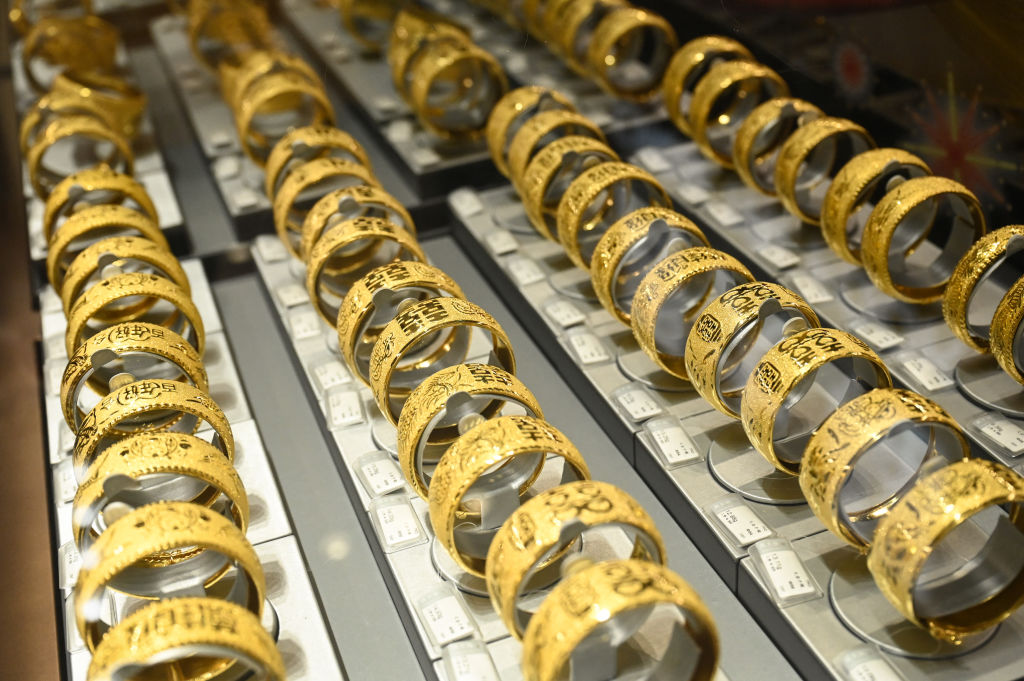
On October 16, the World Gold Council released the “2026 China Gold Jewelry Retail Trend Insight” report, indicating a divergence between quantity and price in gold jewelry sales in the first half of this year, signaling a shift in the position of gold jewelry in Chinese consumer culture.
According to a report by “Eastern Fortune” on October 16, the “2026 China Gold Jewelry Retail Trend Insight” report shows that in the first half of 2026, due to insufficient consumer confidence and high gold prices, the demand for gold jewelry in China continued to be under pressure, with demand reaching only 136 tons in the first half of the year, the lowest level in tonnage since the first half of 2006, a 30% year-on-year decline.
As reported by “The Paper” on October 16, although the tonnage of gold jewelry demand in the first half of the year saw a year-on-year decline, the consumption amount actually increased by 5%, indicating a disparity between sales volume and sales amount.
The “2026 China Gold Jewelry Retail Trend Insight” report believes that “self-wearing” consumption remains the primary driving force for gold jewelry consumption in China. The proportion of consumption in traditional scenes such as weddings and celebrations decreased from 24% in 2024 to 17% this year, showing a downward trend year by year. The proportion of consumption driven by “self-wearing” has increased from 27% in 2024 to 37% in 2025. This shift from traditional ceremonial scene-driven consumption to emotion-driven consumption has profound implications for the long-term trajectory of the industry, reshaping the underlying logic of consumer groups and buying motivations.
The Paper noted that with declining sales volume and high gold prices increasing capital costs, many retailers have closed stores, postponed expansion plans, or scaled back market sizes due to slowed inventory turnover. The soft consumer demand further amplifies industry concerns about the future. A severe downturn in the industry often begins with a sharp decline in confidence, potentially leading to panic selling and mass closures of stores.