
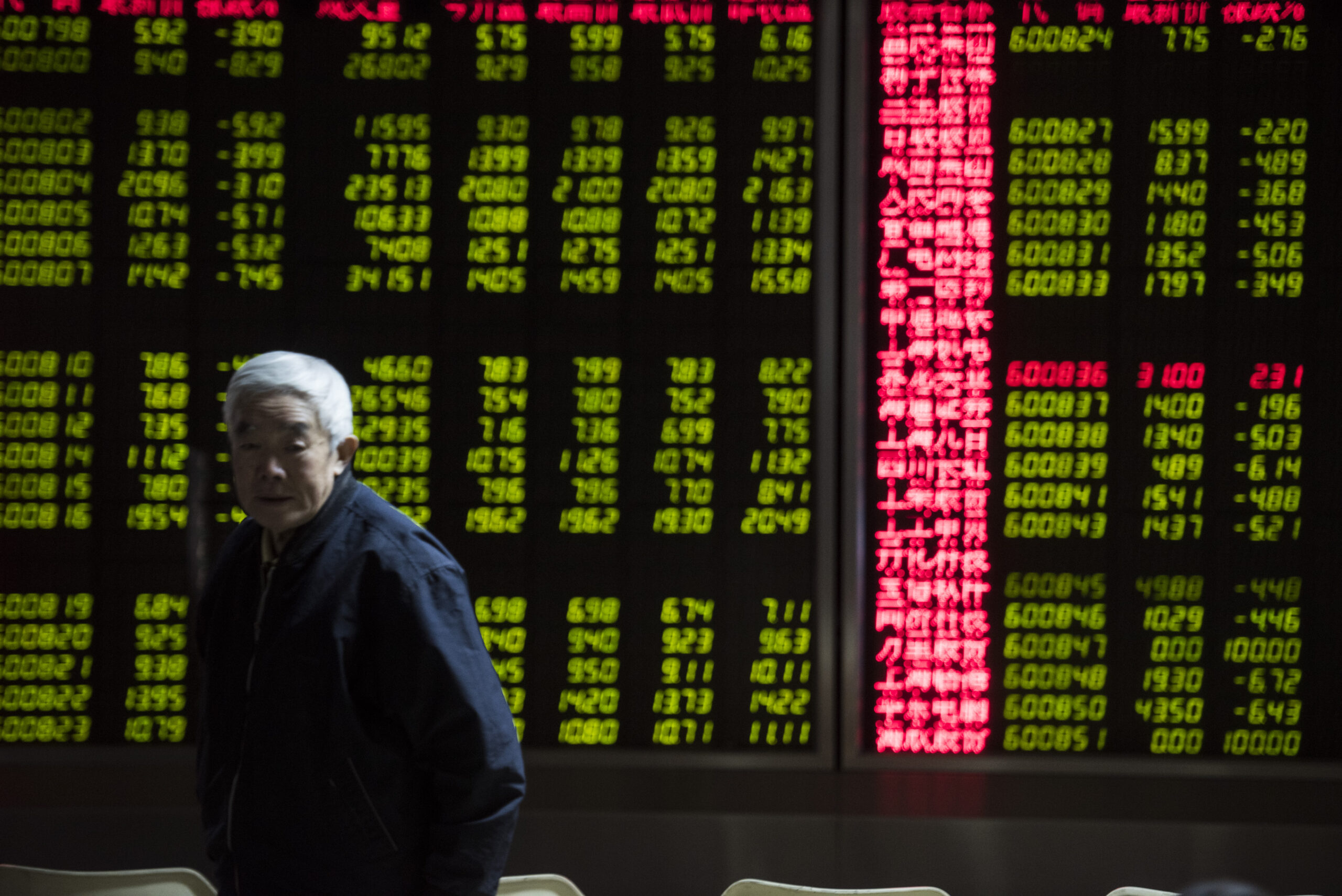
In the news on October 18, 2026, the topic of “How Chinese stock investors have been faring in recent years” has become a hot discussion on mainland Chinese internet. The saying “eight losses, one break-even, one gain” has once again sparked debates. Some people watch the market every day, hoping to see their accounts turn profitable; some are trapped in positions and reluctant to sell, always hoping to break even someday; while others have shifted from chasing highs and killing lows to less frequent trading, eventually resigned to a self-deprecating statement: “If I don’t check my account, losses don’t exist.”
According to the annual report released by the China Securities Depository and Clearing Corporation Limited in 2025, by the end of 2025, there were approximately 251 million A-share investors with around 13.87 million new investors added throughout the year. However, this statistic only accounts for investor accounts and doesn’t necessarily mean all accounts are engaged in active trading.
The growing number of new accounts being opened doesn’t equate to everyone entering the market benefiting from the stock market’s rise.
In the first half of 2026, the notion of “eight losses, one break-even, one gain” among stock investors started circulating online. Some financial self-media outlets further pointed out that nearly 80% of active retail accounts are in a loss. This set of figures has resonated with many netizens.
One of the most challenging situations for many stock investors is when the market rises, but their held stocks don’t follow suit; and when the market drops, their accounts shrink accordingly.
In 2025, major A-share indices all recorded gains with the Shanghai Composite Index rising by 18.41% and Shenzhen Component Index by 29.87% throughout the year. However, index performance reflects the overall performance of a basket of stocks and doesn’t mean every individual stock rises simultaneously. Differences in trends among different sectors, industries, and stocks can lead to significant disparities. Even when some indices perform well, investors holding other stocks may still face losses when funds are concentrated on a few popular tracks.
This reality has trapped some stock investors in a familiar cycle: seeing a particular sector continuously rising, fearing missing out and jumping in; then, when the trend reverses after their purchase, hesitating to cut losses; by the time they finally sell, the initially held stocks might bounce back while new hot stocks have already surged. After several cycles, investors realize that index gains do not always align with personal account profits.
The online spread of the concept of “three types of stock investors” categorizes different investors into long-term value seekers, short-term speculators, and passive holders, outlining corresponding profit percentages and holding periods.
– Long-term value seekers: With capital exceeding 500,000 yuan, holding period over 1 year, mainly focusing on industry prospects and company fundamentals, with a rumored profit rate of 41.2%.
– Short-term speculators: Primarily small retail investors with less than 100,000 yuan, holding stocks for less than a month, frequently chasing highs and lows, with a rumored profit rate of only 9.3%.
– Passive holders: Stocks deeply locked in losses, no longer active in trading, and accounts in a dormant state. Rumored data suggests that retail investors hold losing stocks for an average of 102 days, six times longer than profitable stocks.
This classification highlights the various situations discussed online: some seek returns through long-term holding, others engage in frequent trading and chasing short-term trends, while some choose to remain passive due to sustained losses.
Some netizens pointed out that the discussion sparked by “How Chinese stock investors have been faring in recent years” is not solely about the losses but also the indefinite waiting that follows getting trapped. Some constantly postpone the expectation of breaking even, and others ultimately opt to accept losses and exit the market.
A Weibo user, “Countryside Cabbage,” expressed that since the establishment of the Chinese stock market, investors have been continually “contributing,” from state-owned enterprise reforms to equity restructuring, and national industry support policies, yet individual stock investors seem to have never received enough attention in terms of returns.
Another prominent Weibo blogger, “Proton Research and Investment,” lamented that despite working hard for six months to earn a mere 3%, he had already outperformed 97% of the investors at his brokerage. He regretted that when the one-year deposit rate is around 1%, making money in stocks becomes challenging, while the money in hand faces constant depreciation pressure. The question arises as to how ordinary families should manage their assets. He also connected this sentiment with residents’ consumption motivation.
Some netizens joined the conversation by commenting, “The data speaks for itself, being surpassed by the Taiwan stock market? A profound sense of powerlessness.”