
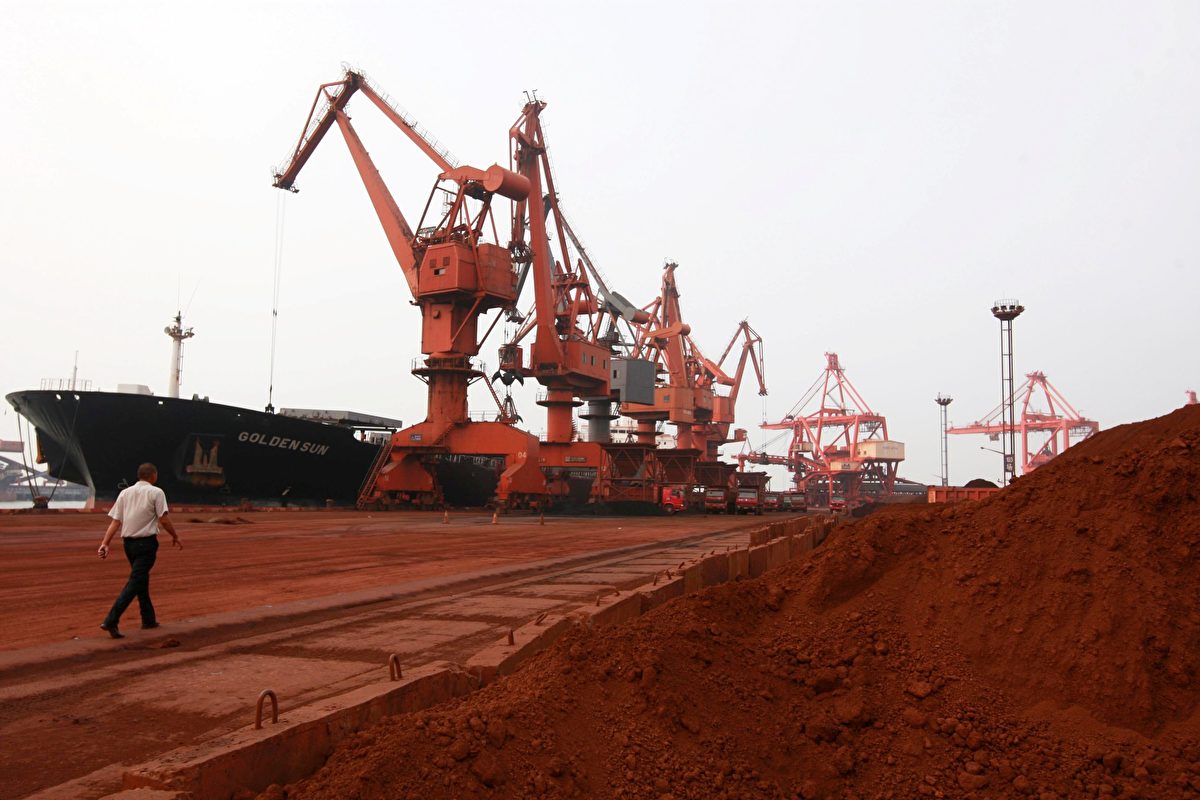
On October 17, 2026, the World Bank and five other multilateral development banks announced a key mineral cooperation framework aimed at coordinating financing, infrastructure, and policy support to help developing countries establish industry chains from mineral extraction to refining, processing, and manufacturing, thereby promoting diversification in the global supply chain.
One of the driving factors behind this cooperation is China’s significant concentration in the processing and refining of key minerals. The International Energy Agency (IEA) noted that China holds approximately 85% of global rare earth magnet separation processing, 70% of lithium refining, and over 90% of battery-grade graphite production. As the Chinese authorities expand control over mineral exports, concerns about supply chain security are on the rise worldwide.
According to Reuters, the participating institutions in this cooperation include the World Bank Group (WBG), African Development Bank Group (AfDB), Asian Development Bank (ADB), European Bank for Reconstruction and Development (EBRD), European Investment Bank (EIB), and Inter-American Development Bank (IDB).
These six banks will coordinate investments and policy support to assist resource-rich countries in building electricity, transportation, logistics, and water supply facilities and promote the establishment of “mining corridors” connecting mines with processing centers. The institutions will also attract private capital through joint financing, guarantees, and other financial tools to help develop mineral processing and manufacturing capacities.
In April of this year, the six banks issued a joint statement committing to enhancing collaboration across the value chain from mineral extraction to manufacturing. The new framework will be coordinated by a working group of multilateral development banks and progress will be reported annually.
World Bank Group President Ajay Banga stated at the IMF and World Bank Annual Meeting in Bangkok that in the field of key minerals, they plan to expand their business fivefold within five years.
The World Bank Group plans to increase support for the metal and mineral sector to $19 billion between 2026 and 2030, a significant increase from the previous five years’ $3.6 billion. This goal includes self-financing and mobilizing private capital.
Banga revealed that the World Bank has identified 20 potential partner countries and launched the first set of country-specific cooperation plans in collaboration with its multilateral development bank partners to develop local industries, creating more job opportunities and retaining economic value in the respective countries.
The World Bank also announced mineral development plans for eight countries including Argentina, Bolivia, Egypt, India, Kazakhstan, Malawi, Mauritania, and Zambia. For instance, India aims to mobilize $5 billion by 2031 to develop key mineral processing zones, rare earth corridors, and advanced manufacturing; Kazakhstan plans to mobilize up to $20 billion to support mineral processing and talent training; and Zambia hopes to increase annual copper production to 3 million metric tons by 2031.
Christian Andrés Morales Burgos, Minister of Economy and Public Finance of Bolivia, stated, “Our goal is not just to export minerals but to transform this wealth into development and prosperity for all Bolivians.”
The IEA’s “Global Strategic Mineral Outlook 2026” highlights that since China implemented export controls on seven heavy rare earths in April 2025, the related exports from China have sharply declined, leading to difficulties for some car manufacturers in the United States and Europe in obtaining permanent magnets, resulting in production cuts or temporary shutdowns.
In October of the same year, Beijing further announced an expansion of export controls, intending to include overseas products manufactured using Chinese-origin rare earths or related technologies in the restricted range. These expanded measures were subsequently suspended for a year, until November 2026.
IEA estimates that if these measures are fully implemented, the downstream production value of China’s overseas automotive, high-tech, defense, and energy industries may face risks of approximately $6.5 trillion annually.
The report points out that the number of mineral-related tariff codes involved in China’s export controls has tripled since 2023. The risks posed by the highly concentrated supply chain have shifted from theoretical vulnerability to a tangible economic security challenge.
IEA indicates that global strategic mineral investments still focus heavily on upstream extraction, with a relative lag in refining and downstream manufacturing capabilities. Even if countries increase mineral production, the highly centralized supply chain dynamics will be challenging to change without local processing capabilities.
Constructing refining projects outside major supplier countries could increase capital costs by 20% to over 150%, while average operating costs may be around 50% higher. Lack of technology, equipment, talent, and infrastructure makes it difficult for resource-rich countries to independently develop related industries.
This makes it a crucial focal point for the six multilateral development banks’ cooperation. By providing financing, loan guarantees, policy support, and infrastructure investment, they can assist resource-rich countries in establishing processing and refining capabilities, not only enhancing the local value of minerals but also promoting diversification in the global supply chain.