
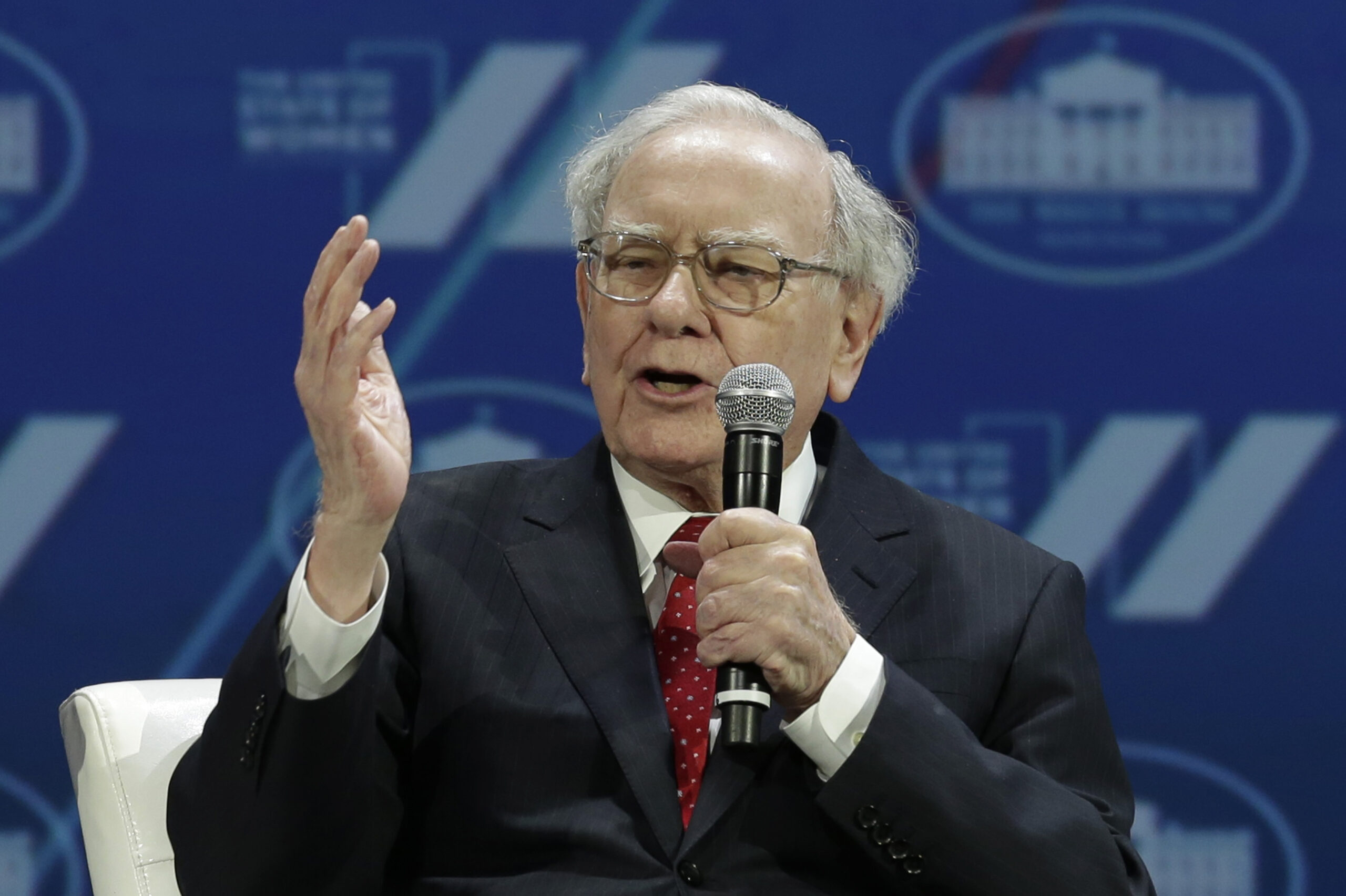
Warren Buffett, known as the “Oracle of Omaha,” stepped down as CEO of Berkshire Hathaway at the beginning of 2026, passing the baton to Greg Abel. However, Berkshire Hathaway’s heavy investment in tech giant Alphabet has recently faced a market test brought on by generative AI.
Alphabet’s stock price has fallen from its historic high in May, with its market value evaporating nearly $700 billion in just three months. As Buffett approaches his 96th birthday, this wave of stock price correction has sparked discussions in the market, particularly focusing on Berkshire’s investment performance at relatively high levels.
In the second quarter of 2026, Berkshire Hathaway significantly increased its holdings in Alphabet, with a total of approximately 106 million shares valued at around $37.8 billion, as revealed in the 13F regulatory filing submitted to the U.S. Securities and Exchange Commission (SEC). As a result, Alphabet has become Berkshire’s third largest stockholding, following only Apple and American Express.
According to Bloomberg, Alphabet’s stock price has corrected from its historic highs due to increased AI capital expenditures and market uncertainties, resulting in a cumulative shrinkage of nearly $700 billion in market value.
The trouble for Alphabet boils down to one word: AI.
With the rise of generative AI, Google’s once unassailable dominance in search has started to face new challenges. Although Alphabet has introduced the Gemini series of AI models and made substantial investments in data centers, AI chips, and computing infrastructure, competitors like OpenAI and Anthropic are rapidly catching up.
Recently, Google has experienced a loss of AI talent. Long-time core AI scientist Jeff Dean left the company to start his own venture, further undermining investor confidence upon the news.
Meanwhile, in order to maintain its AI competitiveness, Alphabet continues to make significant investments, leading to a rapid increase in capital expenditures. Janus Henderson analysts believe that Alphabet’s massive spending on the AI race, coupled with market financing, may deteriorate its free cash flow, potentially prompting some valuation-focused investors to look towards other tech giants.
Despite the recent decline, Alphabet has still seen a cumulative increase in its stock price of about 65% over the past 12 months, outperforming the broader market and many other tech stocks.
In the short term, Berkshire Hathaway’s investment in Alphabet has indeed hit headwinds. However, it is premature to conclude that Buffett has made a misjudgment. Google Search, YouTube, Google Cloud, and Gemini remain vital assets of Alphabet, and AI could bring new growth opportunities in advertising, search, and cloud businesses.
For long-term investors, the real question has never been whether a company’s stock price drops by 15% or 20%, but whether it can prove, 5 or 10 years later, that the billions of dollars invested in AI capital today will ultimately be worthwhile.
Therefore, as Buffett’s 96th birthday approaches, the question remains whether he has been “trapped” this time or once again has foresighted the future. The answer, it seems, can only be determined by time.