
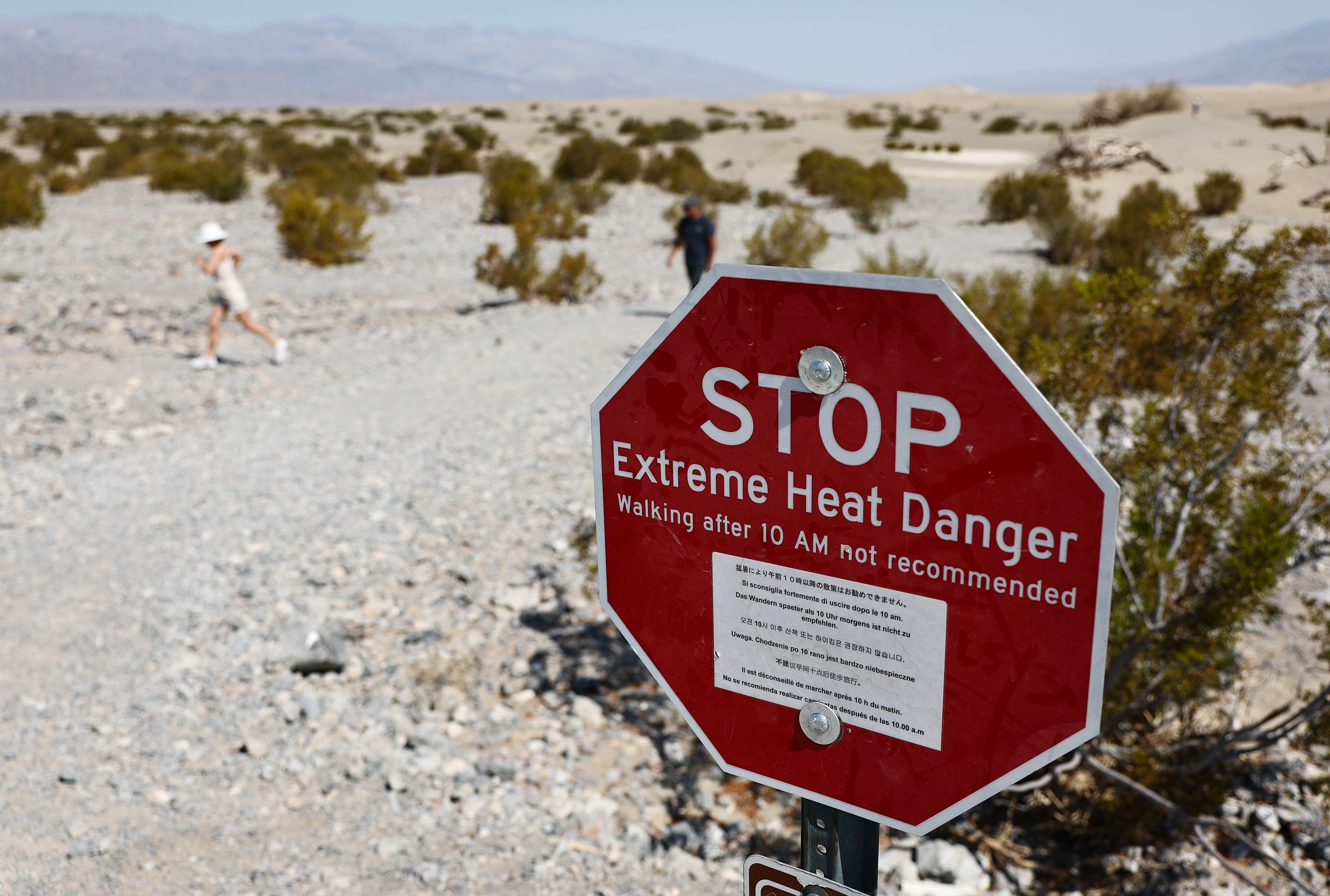
The National Park Service (NPS) announced on August 21 that a 68-year-old French tourist tragically passed away while on a self-driving tour in Death Valley National Park in California.
At the time, the temperature in Death Valley soared to 116°F (about 46.7°C).
On August 17, Pierre Michel Formosa, 68, and his companion were driving on the remote West Side Road near Queen of Sheba Mine Road when their vehicle got stuck in mud and couldn’t move.
With no other vehicles passing by on the remote stretch of road and zero cell phone signal, the two decided to abandon the vehicle and attempt to trek 2 kilometers to Badwater Road, the main road, for help. However, under the extreme heat approaching 47°C, after walking just 1.3 miles (about 2.1 kilometers), Formosa became too weak to continue. His companion had to leave him to rest in place and went on alone to reach the main road. Fortunately, they managed to flag down a passing vehicle and arrived at the visitor center to call for help at 2 p.m.
Rescue helicopters and park rangers launched a swift search and rescue operation, but by the time rescuers arrived, Formosa showed no signs of life. The Inyo County Coroner’s Office will determine the cause and manner of death of the deceased.
Mike Reynolds, the head of Death Valley National Park, expressed condolences to the family of the deceased, emphasizing the rapidly escalating dangers posed by the high temperatures, vast distances, and extremely remote environment of Death Valley.
Following this tragedy, the National Park Service issued a counterintuitive survival guideline: in desert or extreme hot and desolate areas, staying in the vehicle when stranded is often much safer than abandoning it and seeking help on foot!
1. Vehicles provide natural shelter from the sun
Even if the vehicle is turned off without air conditioning, the metal body and roof of the vehicle offer shade, significantly reducing the rate of body water evaporation and preventing heatstroke and organ failure due to overheating.
2. Easier for search helicopters to spot
In the vast deserts and salt flats, rescuers and helicopters searching from above for a metal car weighing two tons are far easier to locate than searching for a person stranded on open ground.
3. Irreversible physical exertion in high temperatures
In extreme temperatures approaching 50°C, leaving the vehicle and walking means prolonged exposure to intense sun and heat, leading to significant heat stress and water loss. For stranded visitors, even seemingly short distances may quickly become dangerous.
This self-driving breakdown tragedy in the remote Death Valley serves as a stark warning for all self-driving enthusiasts planning to visit extreme environments.
As one of the hottest and driest regions in the United States, preparation is crucial for summer self-driving trips in Death Valley National Park.
Water supply preparation: Do not rely on standard outdoor water norms!
NPS recommends carrying at least 1 gallon (about 3.8 liters) of drinking water per person per day and having additional emergency water stored in the vehicle in case of breakdowns.
Communication and itinerary reporting
In areas without cell phone signal, it’s advised to carry satellite communication devices or SOS emergency beacons (PLB). Inform family and friends of planned routes and expected return times before setting out.
Vehicle selection and route planning
Driving on unpaved and remote roads often requires high ground clearance or four-wheel-drive (4WD) vehicles. During periods of extreme summer heat, it’s strongly recommended for visitors to choose paved main roads, avoid undeveloped paths, and refrain from hiking in low-altitude areas.