
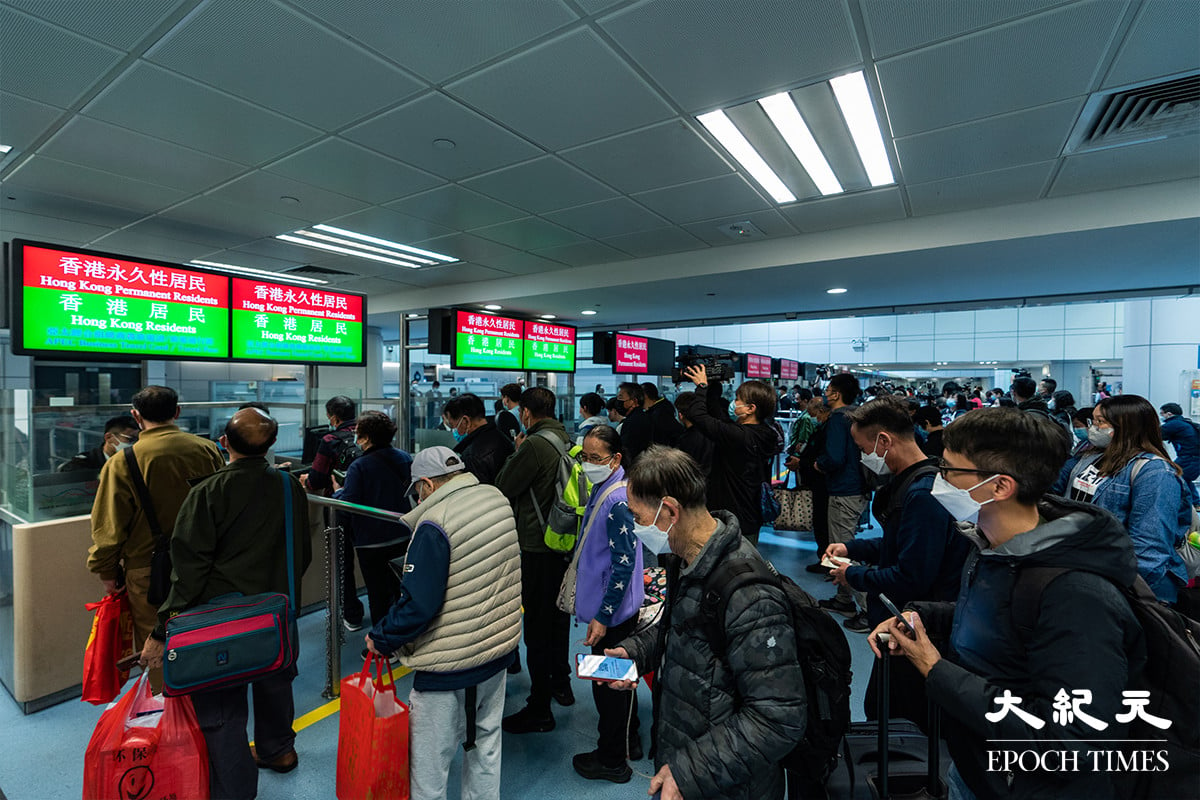
Recently, a netizen from Guangdong, China, entered mainland China through the Luohu Port in Shenzhen from Hong Kong carrying seven books, but was inspected by customs. According to the current regulations of the Chinese customs, individuals entering with single copies of books, newspapers, and periodicals for personal use can be exempt from tax inspection if they are below 10 copies per person each time. Customs officials mentioned that since the 2019 Hong Kong anti-extradition bill protests, customs in various regions have implemented extremely strict restrictions on printed materials coming from Hong Kong.
The netizen posted in a chat group in mainland China, stating that on August 15, she went to Hong Kong and brought back seven books, which were inspected by customs at the Luohu Port in Shenzhen. Previously, she had brought in six books without any inspection. The post did not disclose the titles of the seven books, nor did it mention whether all the books were ultimately allowed to enter mainland China.
Comments below the post revealed that other netizens had experiences where free newspapers and magazines from Hong Kong were inspected or even confiscated. Some mentioned that while ordinary comics could be brought within the specified quantity, those containing restricted content could still be subject to inspection.
Literature enthusiast Zhu Jian, who often buys books in Hong Kong, told reporters that most of his purchases there are non-political books. He mentioned that Shenzhen customs sometimes inspect the content of books: “All personal items go through X-ray inspection, and customs officers may ask you to open the books for them to see. The rule is to bring up to 10 soft content books at once, they just glance at the titles and let you go. Once I brought a book related to the Cultural Revolution that was confiscated and fined 500 yuan (RMB).”
The current regulations of the Chinese customs state that individuals entering with single copies of books, newspapers, and periodicals for personal use can be exempt from tax inspection if they are below 10 copies per person each time; for complete sets of publications, the limit is three sets per person each time. When asked about inbound book inquiries in February of this year, the Chinese customs reiterated these quantity standards.
However, these regulations also list prohibited and restricted content terms related to publications, including those deemed harmful to national security or detrimental to national honor and interests; those attacking the Communist Party of China or disparaging the Chinese government; disturbing social order and stability; and publications prohibited from entry as determined by relevant competent authorities or designated organizations. If customs cannot determine whether a publication falls within the prohibited range, it can be referred to the relevant competent department or designated institution for review and appraisal.
A retired customs officer from Shenzhen, Mr. Li, told reporters that since the 2019 anti-extradition bill protests in Hong Kong, customs have been particularly vigilant in inspecting travelers returning from Hong Kong to mainland China. They are concerned that mainland Chinese visitors may bring back protest print materials or images from Hong Kong. He said, “Since then, they have been strictly checking travelers carrying Hong Kong newspapers, protest photos, checking book titles, authors, publishers; magazines like ‘Asia Weekly’ are not allowed. There is a detailed form within the customs that lists publications that cannot be brought in. Tool books published abroad can be brought, but literature works cannot, as they have not been reviewed.”
In an interview with the “University Line” of the School of Journalism and Communication at the Chinese University of Hong Kong in 2024, mainland student Natalie, who was studying in Hong Kong, shared her experience. When returning to Chengdu at the end of the semester, she brought in textbooks on business and historical storybooks. Her luggage was checked by customs, and after a 20-minute inspection, she eventually relinquished two books after registering her identification and signing a form. Two other interviewees mentioned in the report had also experienced similar inspections whether they brought books personally or mailed them.
The “University Line” also mentioned a case in March 2024 where a history textbook from a Hong Kong cross-border student was inspected by Chinese customs during the crossing, and a map on one page was deemed not in line with the official standards of the Communist Party. The inspected publications are not limited to political banned books, as textbooks, historical readings, and the like could also be subject to inspection.
Beijing University scholar Wang Shuli (pseudonym) told reporters that what the Communist Party of China truly wants to control is the information within the books: “In the past, mainland Chinese people obtained information on domestic politics and economics through Hong Kong publications. In an era without the internet decades ago, Hong Kong had already become an important window for mainland Chinese to access domestic and overseas information. Customs are doing everything they can to intercept. I heard from customs friends that the Hong Kong publications they confiscated were eventually read by customs officers, then shown to the public security bureau; the most sought-after within the Communist Party are ‘Liberation,’ ‘Open,’ ‘Observer.'”
Regarding the Guangdong netizen who was inspected for bringing in seven books from Hong Kong this time, Wang Shuli reminded mainland netizens not to bring such books back to the mainland and suggested reading them in Hong Kong before returning to avoid having their names and addresses registered by customs, becoming potential targets for future investigations.