
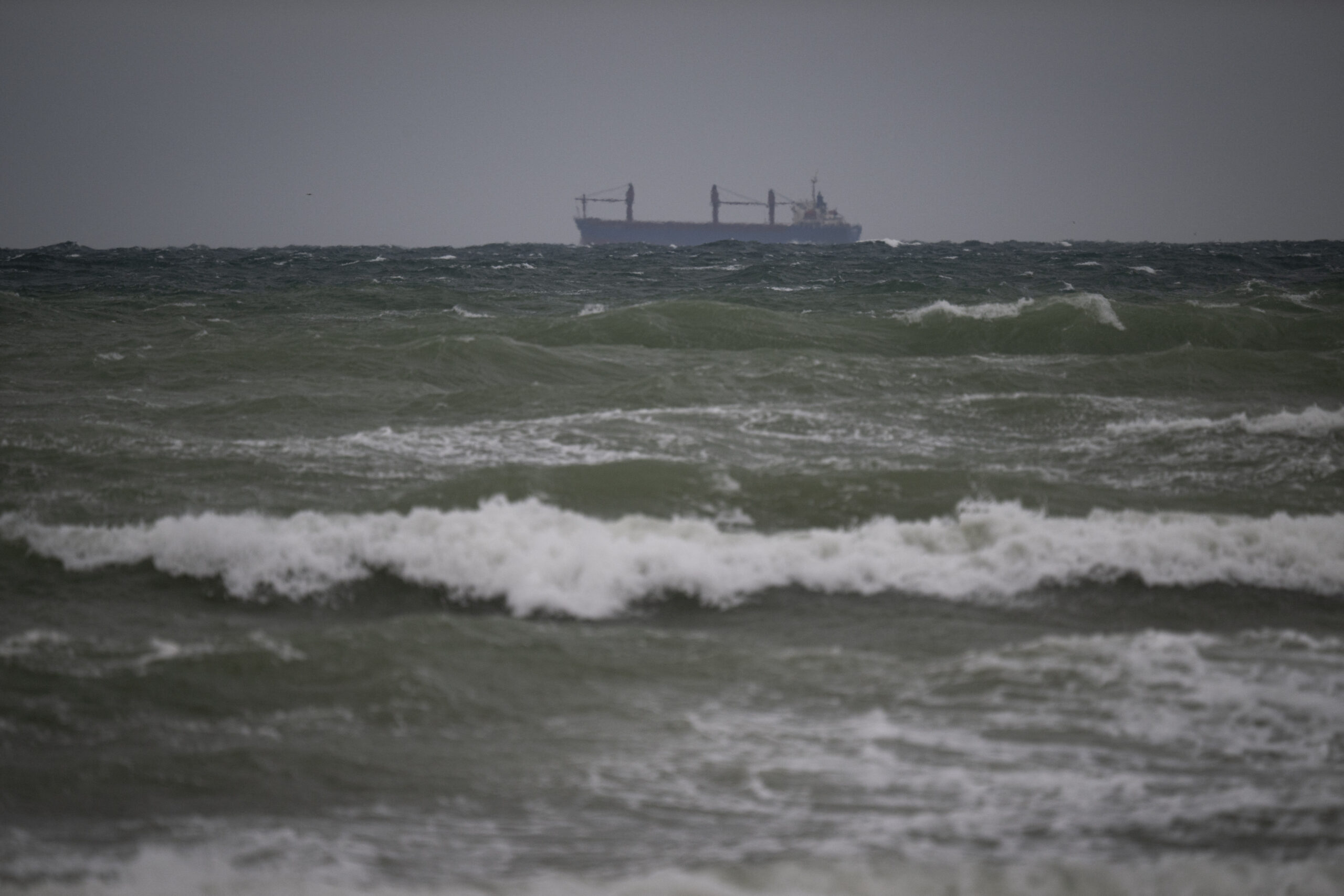
The Black Sea merchant ships have been repeatedly attacked by drones, resulting in casualties among the crew members. In response to these incidents, NATO announced on Tuesday (October 20) that they will be deploying maritime patrol aircraft, radar systems, and drones to enhance security in the Black Sea region. On the same day, the Russian military claimed to have struck five cargo ships on the route between Reni port in Ukraine and Odessa.
Recent incidents of ship attacks have occurred in the waters near Romania and Bulgaria, with Romania even deploying fighter jets to intercept unauthorized drones entering its airspace. As the conflict between Russia and Ukraine expands to the borders of NATO member states, concerns are growing about the potential for heightened tensions between Russia and NATO in the Black Sea region.
According to reports from Reuters, the main decision-making body of NATO, the North Atlantic Council, announced the reinforcement of military deployments in the Black Sea region after discussing security issues in Brussels.
In addition to maritime patrol aircraft, radar, and drones, NATO member states are planning to dispatch intelligence personnel and specialized teams to analyze the explosives used in the attacks.
NATO spokesperson Allison Hart stated: “NATO has enhanced deployments in the eastern flank, including anti-drone capabilities.” She emphasized that NATO will increase resources in the region to provide surveillance, reconnaissance, and forensic support.
Hart stressed that NATO will continue to maintain unity to ensure the capability to address various threats and safeguard the security of the one billion people in member countries.
The Russian military claimed on Tuesday to have hit three cargo ships in Reni, Ukraine, and two others heading to Odessa for military purposes. These claims have not been independently verified.
Prior to these incidents, multiple ship attacks have taken place in the Black Sea. Last week, two chemical tankers were hit by drones near the coast of Romania, causing fires.
Furthermore, at least five cargo ships near the waters of Romania and neighboring Bulgaria have been attacked, resulting in at least 23 crew members dead or missing.
NATO has not officially attributed the series of attacks to any specific country. However, military analysts believe that the attacks are almost certainly carried out by Russia, although Moscow has yet to admit responsibility for the incidents.
As the security situation in the Black Sea deteriorates, NATO member countries are stepping up defense measures.
The Romanian Ministry of Defense confirmed that on October 17, the country’s air force deployed two F-16 fighter jets to intercept two unauthorized drones that entered Romanian airspace over the Black Sea.
The Ministry of Defense stated that the downed drones were of the “Geran” series attack drones. Romanian Defense Minister Radu Miruță believes that these drones were likely manufactured by Russia, traveling at a speed of approximately 450 kilometers per hour at the time.
According to the Romanian Ministry of Defense, the country has recorded 35 unauthorized drone incidents by October 17 this year, significantly higher than the nine incidents recorded throughout all of 2025. Romania has shot down six drones this year, with no such records from the previous year.
Meanwhile, Bulgaria has requested NATO to deploy fighter jets and anti-drone systems within its borders to strengthen its defense.
On October 18, France dispatched a maritime reconnaissance aircraft to Romania to assist in addressing regional security threats.
The continuous attacks on Black Sea merchant ships have also increased the risks faced by Ukraine’s vital grain and agricultural product export routes.
The London shipping insurance market has designated most of the Black Sea area as a high-risk zone. Only the territorial waters of Romania, Bulgaria, Turkey, and Georgia are excluded from this designation. With escalating attacks, shipping insurance costs have significantly surged.
Tomas Alexa, an analyst from maritime risk analysis firm Ambrey, noted that since July this year, the frequency of attacks on Black Sea merchant ships has notably increased, with an estimated 80% of the attacks being carried out by the Russian military.
He stated, “While attacks on Black Sea merchant ships are not new, we are seeing an increase in the number of attacks and the expanding geographical scope of the incidents.”