
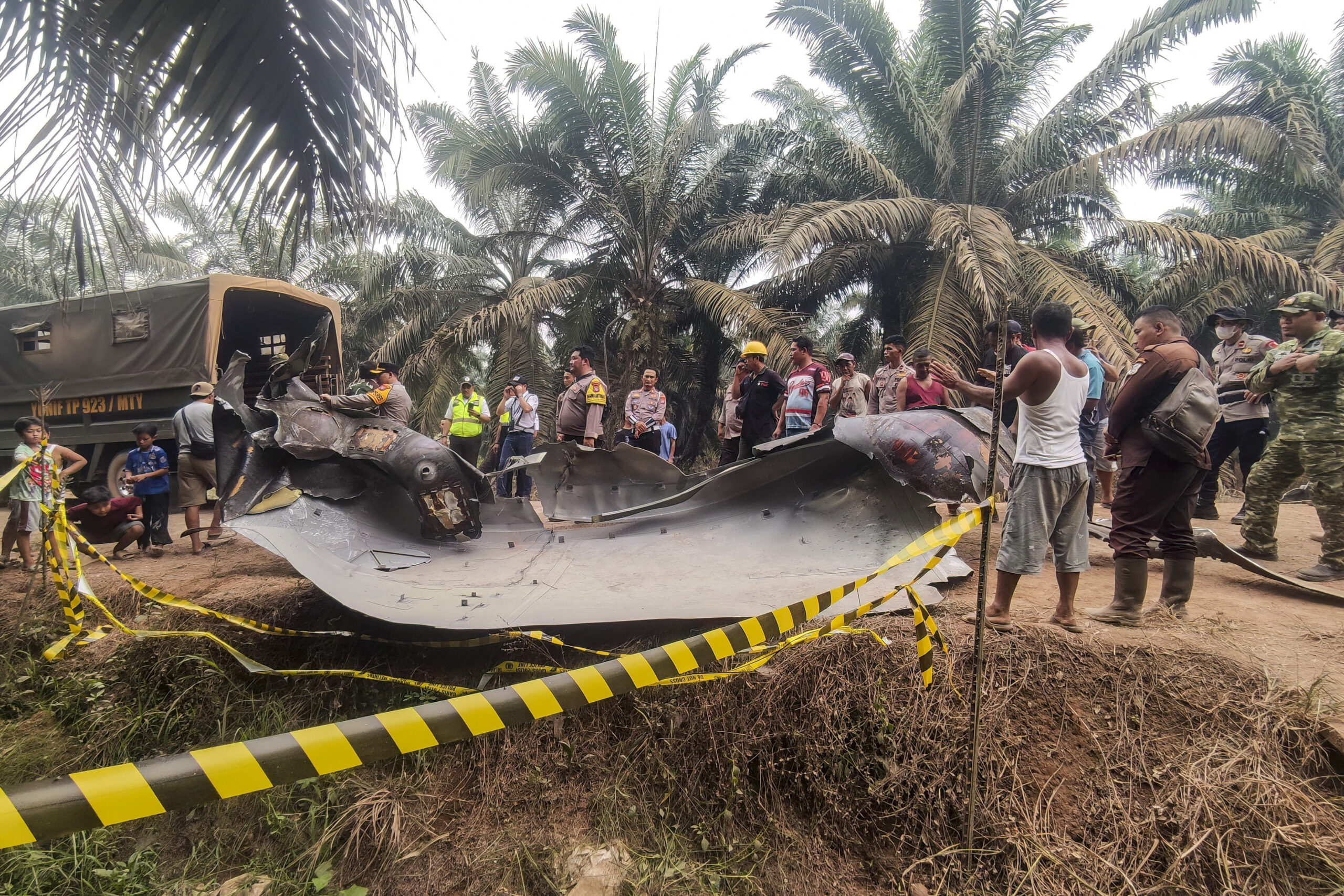
Recently in Central Kalimantan, Indonesia, a large metal debris suspected to be from China’s Zhuque-2 upgraded Long March 4 rocket was discovered in an oil palm plantation. Fortunately, the debris fell in an area where workers were not present as they had already finished their work. Authorities found a second piece of suspected debris nearby on Tuesday and are conducting further investigations.
The first debris, described by local police as a 9-meter-long aluminum plate with burn marks, was found about 3 kilometers away from the plantation workers’ residential area. The National Research and Innovation Agency of Indonesia (BRIN) believes that this metal object is likely related to the Chinese rocket launched a few days ago. The European Space Agency (ESA) warns that the risks of uncontrolled space objects reentering the atmosphere are increasing as space activities escalate.
On the evening of October 18, residents near Sampit heard a loud noise from the sky. The next morning, 51-year-old plantation worker Wardi Tamroni discovered the metal debris, initially mistaking it for airplane wreckage. The debris landed about 3 kilometers from the PT Agro Bukit palm oil company residential area where Wardi works.
“It was right there. At first, I thought it might be airplane wreckage,” Wardi told AFP. He mentioned that the debris fell in the area where they usually work but luckily all workers had already gone home, leaving no one in the plantation.
Local police chief I Kadek Dwi Yoga Sidhimantra described the fallen object as a “quite large aluminum plate, 9 meters long, irregular in shape, with clear burn marks.” Authorities confirmed that there were no casualties or property damages resulting from the incident.
Wardi commented on the accident, stating, “If we had to expect something like this to happen every day, we wouldn’t be able to work.” He added, “We can only leave it to fate. What else can we do?”
BRIN’s chief researcher in Astronomy and Astrophysics, Thomas Djamaluddin, mentioned that orbit data shows the trajectory of the Long March 4 rocket debris passing near Sampit around 5:36 pm local time on October 18, coinciding with the residents hearing a loud noise in the afternoon.
BRIN believes that the object found in the plantation is likely debris left after the rocket reentered the Earth’s atmosphere. Further confirmation on the origin will require physical examination to verify its shape, material, and markings.
According to Chinese media reports, China’s commercial aerospace company LandSpace launched the Zhuque-2 upgraded Long March 4 rocket on October 14 from the Dongfeng Commercial Aerospace Innovation Test Zone, carrying 10 satellites. China reported a successful mission delivering the satellites into their intended orbit.
Authorities discovered another object near the first debris suspected to be from the same rocket on Tuesday morning. Indonesia’s Civil Aviation Department spokesman Zachrudien stated, “We plan to inspect it. From the photos, this object appears to be circular and related to the first object.” He mentioned that the newly found object also seems to be made of aluminum alloy, but further verification is needed. The recovered debris is undergoing examination at a nearby military airfield. Zachrudien clarified that the debris poses no radiation or toxic risks.
As per the report by AFP, the ESA points out that the risk of uncontrolled space objects reentering the atmosphere and causing harm to individuals on the ground is lower compared to risks like lightning strikes or shark attacks.
“The risk of reentry into the atmosphere remains relatively small,” stated the space debris office of the ESA in a report from last year. “However, it has significantly increased from 2019 to 2024, mainly due to the rise in space activities.”
BRIN highlighted that when space objects rapidly enter the atmosphere, most materials may burn, melt, or break apart due to high temperatures. Nevertheless, some heat-resistant materials could potentially survive the entry and land on the ground.
The China National Space Administration (CNSA) has not issued a public statement regarding this incident yet.