
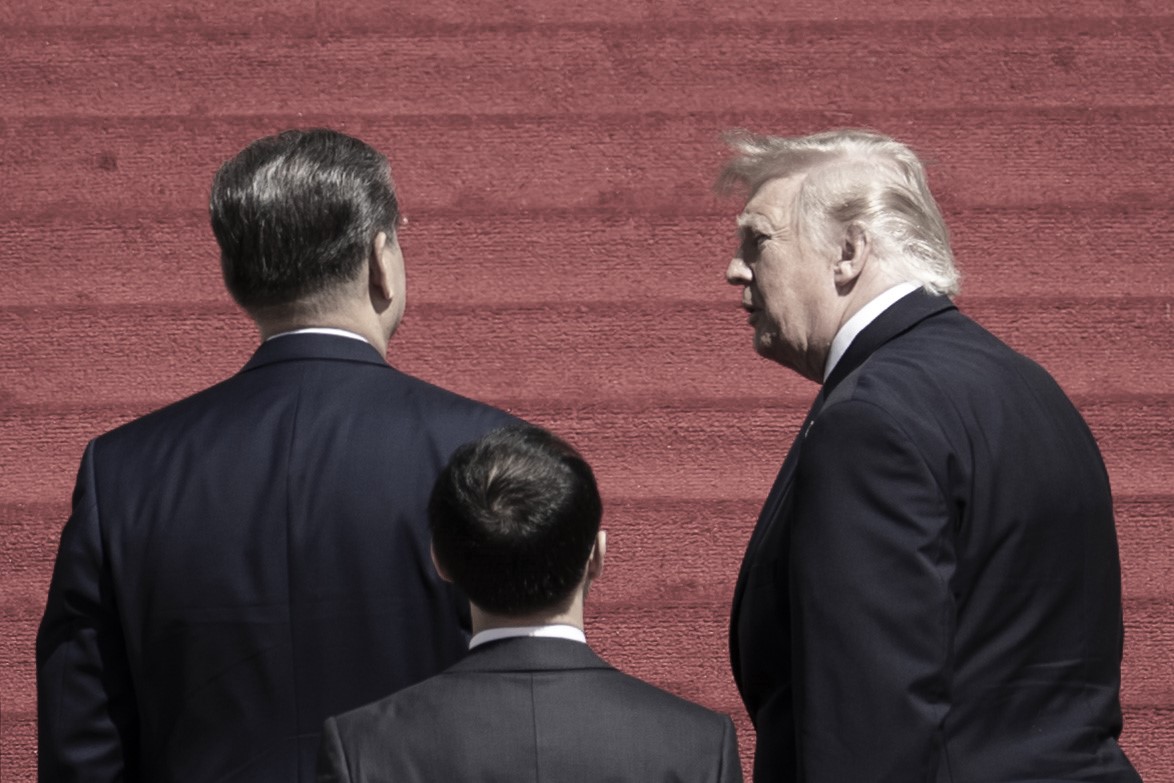
During his visit to the United States in September, Chinese Communist Party leader Xi Jinping announced a plan to invite 100,000 American youths to China for exchanges and learning over the next five years, a move that continues to draw attention. Some analysts believe that accepting this invitation could pose three major risks for the United States.
Erik Durneika, a commentary editor for “Campus Reform” under the Leadership Institute focusing on national security and foreign affairs, expressed his concerns in an article published on “The Hill” on October 12. He argued that sending 100,000 American students to China carries risks far greater than potential benefits, and Washington should reject the invitation. Durneika outlined three major risks for American youths participating in exchanges and learning in China.
Durneika mentioned the well-known fact that Chinese authorities have been increasingly restricting the movements of foreign citizens, with numerous cases of Americans being barred from leaving and over 200 being detained, making China the country with the highest number of detained American citizens. He pointed out a specific case of a Burmese political researcher who was detained by the Chinese government after accepting an invitation to attend an academic conference in China.
“Beijing invited the researcher, then arrested him,” Durneika stated. “Imagine if thousands of American students were sent to China for learning, how much leverage the Chinese government would gain for their hostage diplomacy. Beijing could use these students to pressure Washington for concessions; in a deteriorating US-China relationship, these students could even face serious harm.”
Durneika also highlighted that student exchanges with China provide Beijing with a platform to influence American youths with its ideology.
“Chinese officials will use these exchange programs to showcase a distorted image of China to American students: a technologically advanced country, environmentally conscious (despite being the world’s largest carbon emitter), respectful of all ethnic groups within its borders (despite accusations of genocide against Uyghur Muslims), and a country of peace lovers (despite military activities near Taiwan and in the South China Sea),” he explained.
Compared to older Americans, young Americans tend to be less wary of the Chinese Communist Party and more inclined to support engagement policies. Durneika pointed out that Chinese officials have recognized this generational difference and will continue to exploit it for their benefit unless the US takes effective measures to reverse the trend.
Conservative commentator Nick Sortor expressed his concern, saying, “Honestly, I don’t want to see 100,000 easily influenced American students being sent to China to participate in politically controlled propaganda tours.”
Durneika emphasized that significantly increasing the number of American students participating in programs in China poses a threat to US national security and defense industrial base. The Chinese government is rapidly expanding its military capabilities and advancing its nuclear modernization program. Through a strategy of “civil-military fusion,” China aims to build a “world-class” military by 2049, blurring the lines between academia, commerce, and defense.
It is well known that China has been exploiting the openness of US higher education and research institutions to acquire dual-use scientific research outcomes and innovative technologies to aid in its military modernization. Durneika cautioned that by sending a large number of American youths to China, the US risks unwittingly contributing to these efforts.
“DC should recall American students currently studying in China and consider raising the US State Department’s travel advisory for China to Level 3 or Level 4. We are in the midst of a cold war with Beijing and should treat and handle US-China relations accordingly,” Durneika stated.
According to Forbes, as China issues invitations for overseas studies, the number of American university students studying in China remains significantly lower than pre-pandemic levels. This raises questions about whether Beijing can reignite American students’ interest in studying in China as it becomes an increasingly complex destination.
A report by the US-China Education Trust indicated a significant decrease in the number of Americans studying in China, dropping from around 11,000 in 2019 to less than 2,000 in 2026.
For Americans considering studying in China, concerns about political tensions and overall US-China relations may influence their decisions.
Isaac Stone Fish, a visiting scholar at the Atlantic Council, who lived and studied in China for years, majoring in Chinese literature, shared on the X platform that he can no longer recommend young Americans to follow the same path he did due to the increasingly repressive environment in today’s China.
Fish explained that compared to when he studied in China, the current Communist China has become more oppressive, and its attitude towards foreigners is less friendly. The space for dissent and freedom of speech has significantly diminished.