
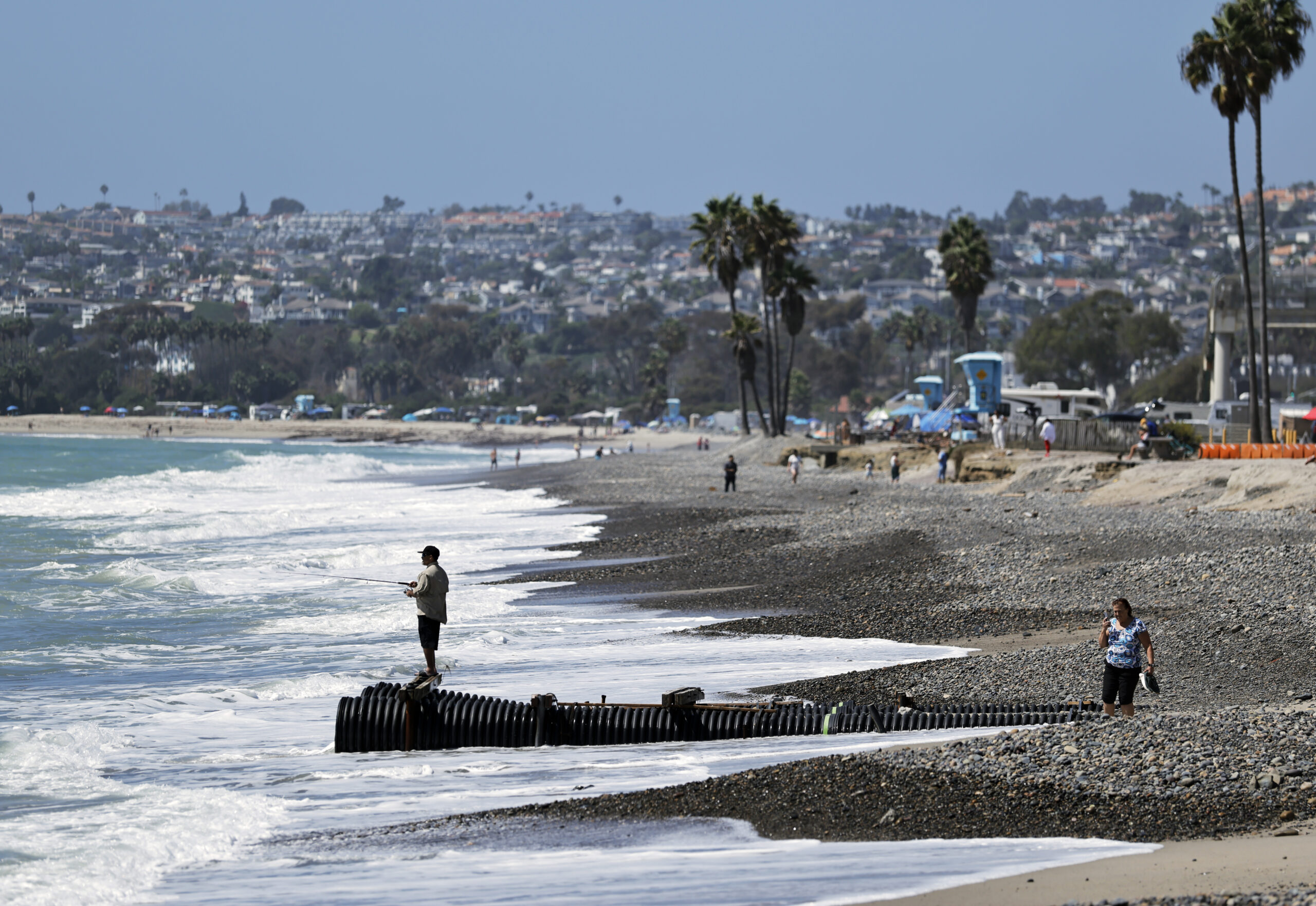
Southern California’s coastline recently welcomed a rare group of tropical “visitors” due to the abnormally strong El Niño phenomenon and the influence of warm Pacific waters. From afar, species such as yellowfin tuna, swordfish, venomous sea snakes, hammerhead sharks, and even sea turtles nesting for the first time locally have arrived, bringing an unexpected change in marine ecology. This event not only provides unprecedented viewing opportunities for Californians but also injects long-dormant business opportunities for leisure fishing and tourism industries.
According to reports from Reuters, this year’s El Niño phenomenon is particularly robust, pushing warm ocean waters further north and causing numerous tropical species to migrate to the California coast. With the prevalence of drones and advanced photography technology today, this coastal feast has become clearer and more visible than ever before.
Last month, a bigeye tuna was caught for the first time in California, while the first batch of olive ridley sea turtles nesting on Orange County beaches was also discovered, marking the first recorded sea turtle nesting on the U.S. West Coast. Furthermore, whale sharks, hammerhead sharks patrol the nearshore waters, and even a venomous yellow-bellied sea snake was spotted ashore.
Nate Jaros, the Vice President in charge of animal care at the Aquarium of the Pacific, expressed excitement to Reuters, stating, “Everyone is thrilled. The fishermen are certainly overjoyed. I am just as interested as everyone else. It is truly a magical time.”
William Ludt, the associate curator of ichthyology at the Natural History Museum of Los Angeles County, pointed out that species like the yellow-bellied sea snake, confirmed to have been sighted only 6 or 7 times, appeared last during the 2015-2016 El Niño period, and this year’s ecological upheaval is “still ongoing.”
This warm current has brought tangible benefits to the leisure fishing and sea tourism industries in Southern California. According to the Los Angeles Times, with the help of the super El Niño phenomenon, species such as bullet tuna, mahi-mahi, and wahoo typically found in the Indian Ocean, Atlantic Ocean, or around Hawaii have appeared in Southern California, attracting numerous anglers eager to experience deep-sea fishing expeditions.
The captain of the “Dana Pride” fishing boat, Brandon Erdo, took out nearly a full boat of anglers, and cheers could be heard on the deck as anglers reeled in tropical fish. Chuck Freeman, a seasoned angler with 47 years of experience in Pacific fishing, was thrilled when he reeled in a bullet tuna for the first time.
Donna Kalez, co-owner of Dana Wharf Sportfishing & Whale Watching, told the Los Angeles Times that last year their boats caught only 2 yellowfin tunas, while this year they already caught over 5800, along with more than 150 mahi-mahi.
Kalez described, “Catching mahi-mahi is very exciting because they are very visual, they jump out of the water. We caught them near kelp beds, it’s very satisfying.”
Mike Conroy, chairman of the Sportfishing Association of California, boldly stated, “This is the industry’s future ‘Golden Age,’ the days where everyone will say, ‘Remember back in the day…'”
Owyn Snodgrass, a fish biologist at the National Oceanic and Atmospheric Administration (NOAA), summed it up, “We are seeing fish that should be in Cabo San Lucas now, the entire ecosystem is shifting.”
Despite the festivity and economic opportunities brought by this marine spectacle, experts caution that the reality at sea is far more complex than the noisy social media portrayal.
The Los Angeles Times reported that while catches have significantly increased compared to the past two years, overall catch levels still fall short of those during the 2014-2015 “warm blob” and El Niño overlap period. Experts attribute this not only to a 25% reduction in deep-sea fishing trips due to economic factors this year but also to fundamental differences in the marine environment. Elizabeth Hellmers, senior environmental scientist at the California Department of Fish and Wildlife, jokingly remarked, “Exaggeration is just fishermen’s nature.”
Furthermore, Reuters noted that this warm current is not entirely harmless. Sharks have a wide range of movement and can migrate freely; however, kelp beds, which rely on cold water, are being severely damaged. This poses a threat to the resident species that depend on kelp beds for survival. As the El Niño is expected to wane next year, the ecosystem will face challenges after this brief tropical marvel.