
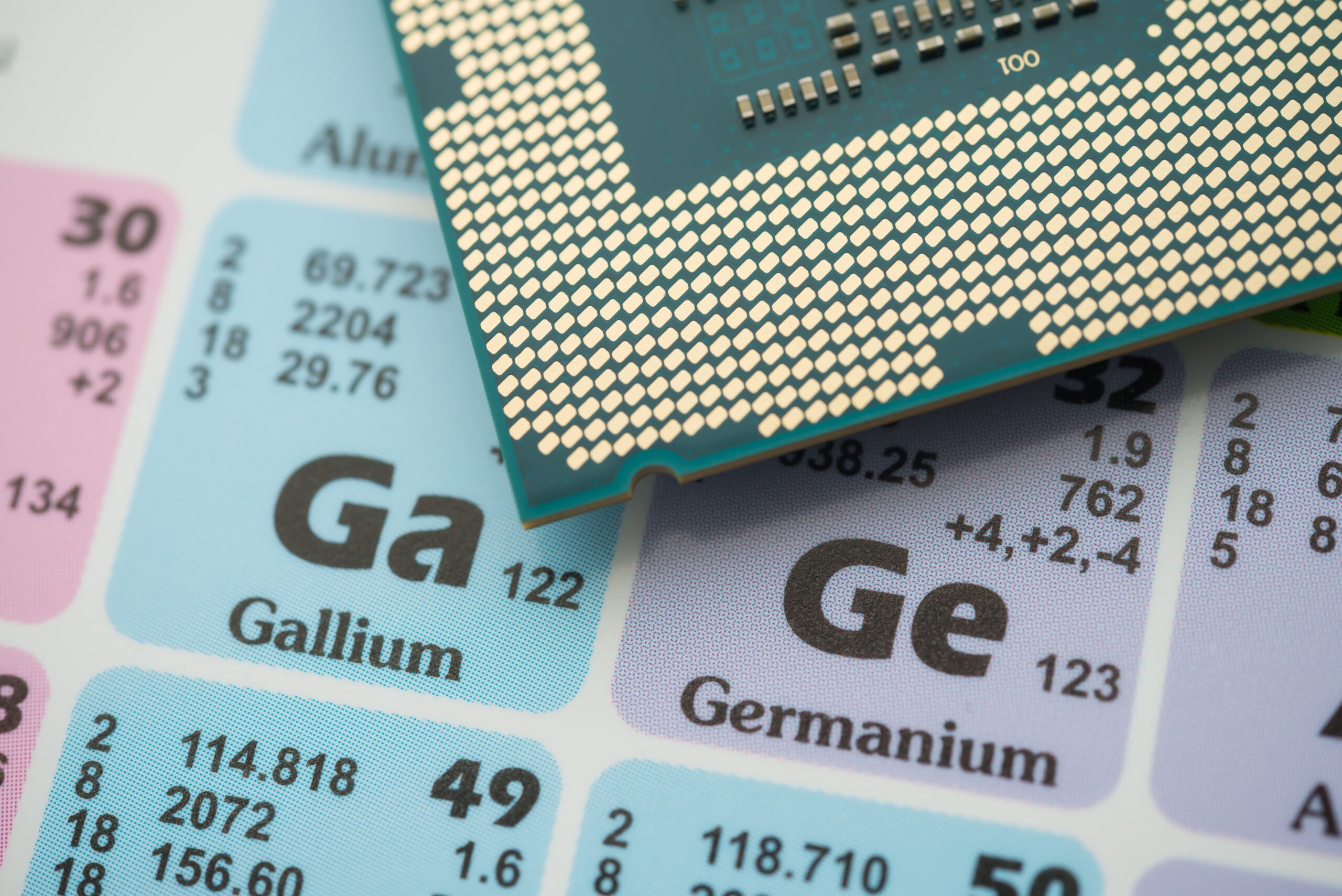
In order to reduce its reliance on China for rare earths and critical minerals, the United States has been collaborating with multiple countries globally in recent years, investing more funds to increase the self-sufficiency of critical minerals. On August 31, the Department of War (DOW) of the United States announced an equity investment of 174 million US dollars to assist Alcoa, an American aluminum company, in constructing a gallium production facility within the Wagerup alumina refinery in Australia.
This project is executed under the “Industrial Base Analysis and Sustainment” (IBAS) program through the Office of the Assistant Secretary of Defense for Industrial Policy, a multilateral cooperation program jointly promoted by the United States, Export Finance Australia (EFA), the Japanese government, and Sojitz Corporation.
The new facility, operated by Alcoa of Australia, is expected to produce approximately 100 tons of gallium metal annually.
Gallium metal is one of the key materials for modern high-performance semiconductors, and advanced semiconductors are crucial foundations for modern defense and certain advanced technology industries.
Disruption in gallium supply could affect the production and operation of key military equipment such as advanced radars, surface-to-air missile defense systems, satellites, tactical communication systems, and missile-guided thermal imaging precision optoelectronic/infrared sensors. Additionally, gallium is widely used in semiconductor devices and solar cells.
The Department of War also emphasized that gallium is a critical material for military and civilian satellite solar cells, and ensuring a stable supply of gallium is crucial to strengthening the long-term resilience of the global supply chain.
Michael Cadenazzi, Assistant Secretary of Defense for Industrial Policy, stated, “This significant agreement signed with Australia and Japan, our two major allies, will ensure a stable supply of gallium metal required for the defense industrial base and lay the foundation for strengthening collective security and economic resilience in the years to come.”
According to data from the United States Geological Survey (USGS), the Chinese Communist Party controls various critical minerals and rare earths globally, with the United States highly dependent on China for more than ten critical substances. China often uses restrictions on the export of rare earths and critical minerals as a political lever to pressure other countries.
For example, in April 2025, China imposed export permit controls on seven medium to heavy rare earth-related products and permanent magnet materials including samarium, gadolinium, terbium, dysprosium, lutetium, scandium, and yttrium in retaliation for U.S. tariff sanctions. This move impacted the automobile industries in the United States, Europe, and Japan, with some factories facing the risk of production halts.
In October 2025, China expanded the scope of export controls, then partially suspended the measures in November due to the temporary truce in U.S.-China trade, but continued restrictions on exports to Japan. Also in November of the same year, with Japanese Prime Minister Sanae Takamichi’s statement “When Taiwan is in trouble, Japan is in trouble,” tensions between China and Japan escalated, leading to continued restrictions on rare earth exports from China to Japan. Some analysts view this move by China as a method similar to the “rare earth card” used in 2010 to exert pressure.
In September 2010, a collision between fishing boats near the Senkaku Islands (known as the Diaoyu Islands in China) between China and Japan led to Japan detaining a Chinese boat captain. Without warning, China imposed restrictions on rare earth exports to Japan, severely impacting the Japanese electronics and automotive industries. This incident prompted Japan, which was heavily dependent on rare earth imports from China, to begin diversifying its supply chain.
Since its inception in 2014, the IBAS program has invested over 2.6 billion US dollars in more than 200 projects to restore and strengthen the U.S. defense industrial base. The Office of the Assistant Secretary of Defense for Industrial Policy (IBP) collaborates with domestic and international partners to build a resilient, secure, and robust industrial base to support current and future combat forces.
The “Warfighting Investment, Resource Allocation, and Execution Office” (WIRE Office) responsible for implementing the IBAS program operates under the Office of the Deputy Assistant Secretary of Defense for Industrial Base Resilience, specializing in providing key capabilities to strengthen the U.S. industrial base to meet national security requirements.