
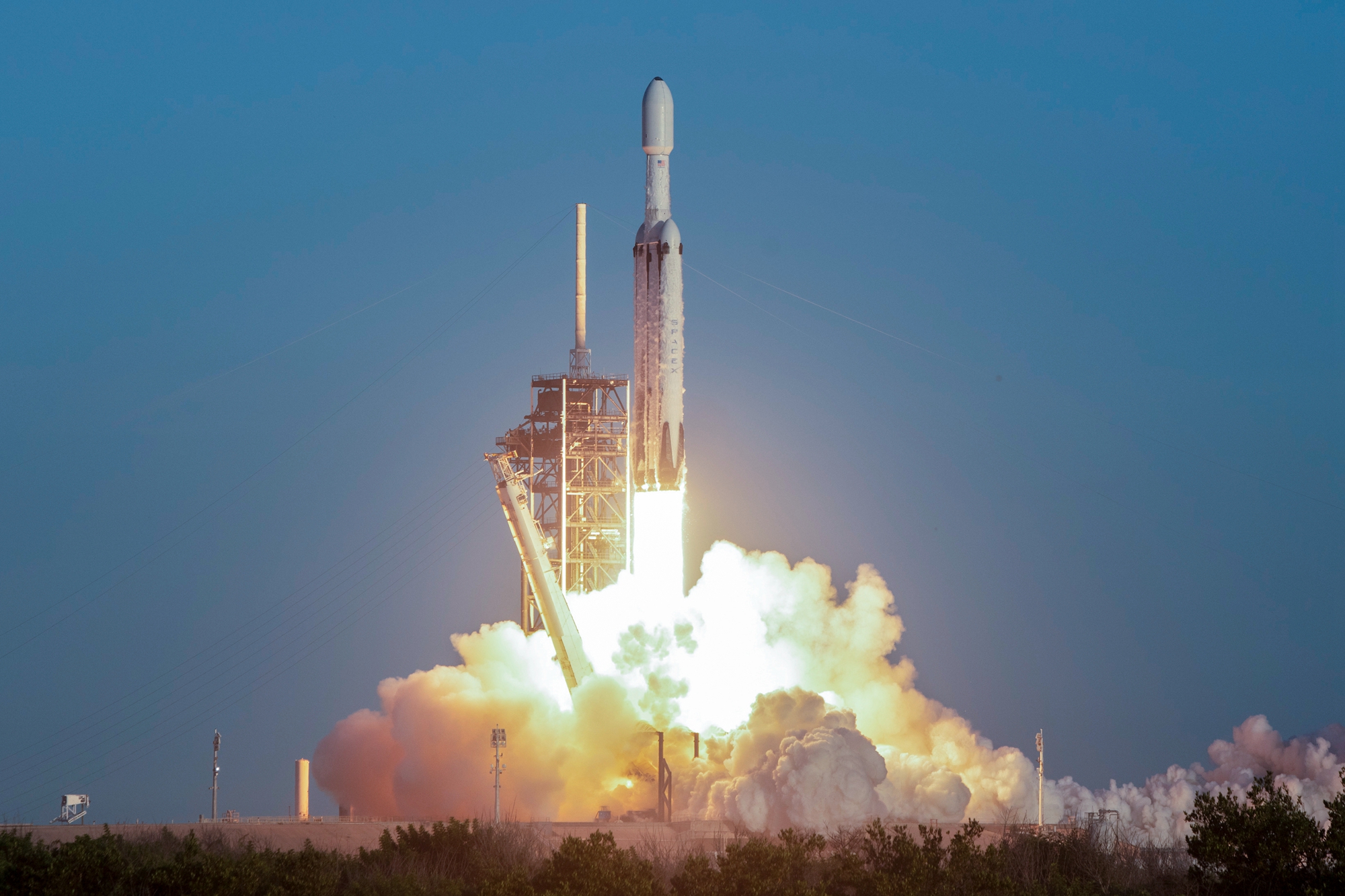
Can a rocket successfully launch into space? In addition to engine function and fuel, one key factor lies in a seemingly inconspicuous metal material: GRCop-42. It determines whether the rocket engine can withstand extreme temperatures, and this is a special copper-chromium-niobium alloy developed by NASA.
This alloy has excellent high-temperature resistance and thermal conductivity, often used in aerospace components such as liquid rocket engine combustion chambers. However, manufacturing this material with 3D printing is not easy, as the combination of parameters such as laser power, scanning speed, and material thickness exceeds 100 million, making traditional trial-and-error methods costly and time-consuming.
A research team at Washington State University (WSU) in the United States utilized artificial intelligence (AI) to select the best parameter combinations, significantly shortening the search process, and then validating the results through experiments. In just three months, the team conducted only 40 experiments and identified six feasible parameter sets, successfully printing GRCop-42 with a low-power 500-watt laser, setting a record for the first successful printing at that power level.
Jana Doppa, a distinguished professor of engineering at the WSU School of Electrical Engineering and Computer Science (EECS), stated: “Currently, 90% of commercial 3D printing equipment cannot manufacture this alloy. However, we have successfully identified feasible process parameters that allow the 3D printing technology of this alloy to no longer be limited to a few professional high-power devices, but can also be produced by general commercial equipment.”
The lead author of the paper, Azza Fadhel, mentioned that facing over 100 million possible combinations, it was impossible to test each one individually. Therefore, the research team used AI to quickly identify the most promising experimental solutions.
They first analyzed 37 failed printing parameter sets from past experiments and built a predictive model based on these results to evaluate the probability of success for untested parameter combinations. AI then recommended a small number of new parameter combinations for experimental verification.
When selecting experimental solutions, AI simultaneously considered the “most promising parameter combinations for success” and the “more uncertain areas that could provide new information,” continuously optimizing the model.
The research findings from the WSU School of Electrical Engineering and Computer Science and School of Mechanical and Materials Engineering were published in the Proceedings of the AAAI Conference on Artificial Intelligence and received the “Innovative Deployed Application Award.”
The results show that printing GRCop-42 with a lower-power laser not only saves electricity and equipment wear but also reduces manufacturing costs, potentially allowing universities, small laboratories, and companies without professional high-power 3D printing equipment to produce this aerospace-grade alloy.
The research team believes that the same AI framework can be applied to other metal alloys and even fields such as new drug development that require extensive experimental analysis, high costs, and difficulty in finding successful methods.