
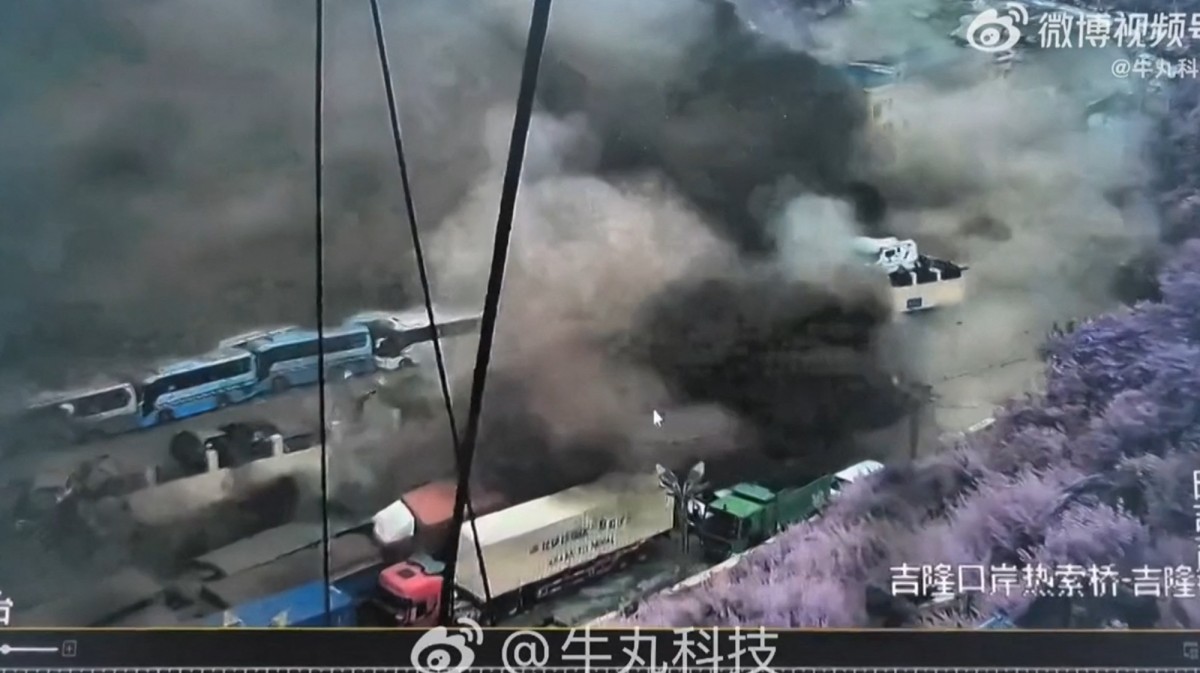
Last Wednesday, the border areas between Nepal and Tibet were hit by floods and mudslides. Data released this Monday (August 31) shows that the floods have resulted in over 900 deaths and nearly 5,000 people missing. The majority of the casualties come from Nepal, while the numbers reported by the Chinese government are scarce. The Wall Street Journal published a commentary on the same day, suggesting that the Chinese government is obscuring the truth about the floods in Nepal.
According to the editorial deputy editor-in-chief of The Wall Street Journal, Matthew Hennessey, who previously served as the managing editor of the Manhattan Policy Institute, by the end of the past weekend, the sudden floods in the border areas between Nepal and Tibet have officially caused at least 800 deaths. Of these, at least 785 deaths were reported in Nepal, while the number of deaths on the Chinese side was only 16. It is certain that the death toll will continue to rise in the coming weeks. A disaster of this magnitude naturally raises global concerns about its causes. Beijing has quickly responded by continuously issuing statements deflecting blame.
As of August 31, the latest casualties data released by the Chinese government still lingered on August 29, showing that as of Saturday night, 16 people had died in Gyirong, Tibet, with another 546 missing.
Hennessey stated that China is a country with strict censorship. Beijing controls (or attempts to control) the flow of information to the outside world. Internet restrictions and a complete lack of press freedom make it nearly impossible for the Western world to accurately understand what is happening there.
He mentioned in his article that one way to deduce the truth is to examine the propaganda crafted by newspapers aligned with the regime. The tone of these English reports can offer insights into sensitivities in Beijing. Sometimes, what they vehemently deny can actually provide clues, revealing what may be occurring.
For example, an article published on August 28 in the official Chinese organ, China Daily, by Zhao Yimeng stated, “This disaster highlights the concern that climate change is reshaping the anxieties of disasters in the high-altitude regions of the Qinghai-Tibet Plateau and its surrounding mountain areas.”
On the same day, an article in South China Morning Post titled, “How Nepal Flash Floods Sparked a Wave of Anti-China Misinformation,” claimed at the outset that “scientists” had identified the event that triggered the disaster: “A high-altitude glacier on the Nepalese side of the Himalayas collapsed, sending a large amount of water and debris downstream.” The initial cause was unclear, leading to a flood of misinformation on social media, with some attributing the events to the infrastructure projects China (China) has constructed in the region.
Hennessey questioned whether China’s massive infrastructure projects in this remote and sensitive region were related to the deadly landslide. Have these projects exacerbated the intensity of the floods? Given the casualties, these questions are reasonable.
However, the Chinese government does not see it that way. This week, they fiercely criticized those questioning them. China Daily posted on Facebook, “The Chinese Embassy in Nepal refutes rumors circulating on social media, claiming that the lethal mudslides on the Sino-Nepalese border were caused by the collapse of a Chinese hydropower dam.”
Hennessey also mentioned a post by contributor Tunku Varadarajan, an Indian-British journalist, published in South China Morning Post. The article shared his tweet as an example of the so-called “misinformation.” Varadarajan’s tweet read, “China will be the end-all and be-all of everything downriver. Literally and metaphorically.”
In his article, Hennessey wrote, “I don’t know the reason for the glacier collapse, or why the sudden floods in the border areas of Nepal caused so many deaths. This terrible disaster occurred less than a week ago, and given Beijing’s reluctance to allow real journalists to witness the situation in Tibet firsthand, the truth is hard to come by.”
“But I do know that if you don’t want someone to lie to you, it’s best to let them see it with their own eyes. However, all we receive are statements from the Chinese authorities. In this country, journalists who write reports unfavorable to the government often end up in jail or even die prematurely,” he continued.
The Chinese police announced on Monday that they had penalized 10 internet users suspected of spreading “misinformation” regarding the mudslide disaster at the Sino-Nepal border on social media. The Public Security Bureau and the Tibetan Cyber Police reported that these 10 individuals made comments on social media claiming that the numbers of missing or deceased were far higher than the official figures. Among them, a netizen named Liu posted on a platform stating, “More than 3,000 people have already died on the Chinese side.”
Shortly after the floods triggered the mudslides, local residents in Tibet captured harrowing scenes: a torrent of floodwater engulfing the Gyirong border post—an essential overland trade hub between China and Nepal. One particularly striking video showed a black “wall of water” composed of water and debris violently crashing into and destroying the border gate at the “Gate of Nations.” An article titled “An Unprecedented Mudslide Strikes the Gyirong Border” was published by the WeChat public account “Youth of the Wharf,” narrating the on-the-ground situation recorded in the video.
Within just a few hours, this article and its related original videos vanished from Chinese social media. According to the independent monitoring organization “China Digital Times,” the video of the collapsed border port was systematically blocked on WeChat, preventing even sharing in private chats.
Hennessey concluded in his article by likening the origins of the mudslide to the onset of the COVID-19 pandemic, stating that the truth will eventually come to light. He also mockingly reminded the Chinese authorities that, until then, remember: nothing bad ever happens in China, and nothing happens because of China, so any news you hear is likely to be a lie.