
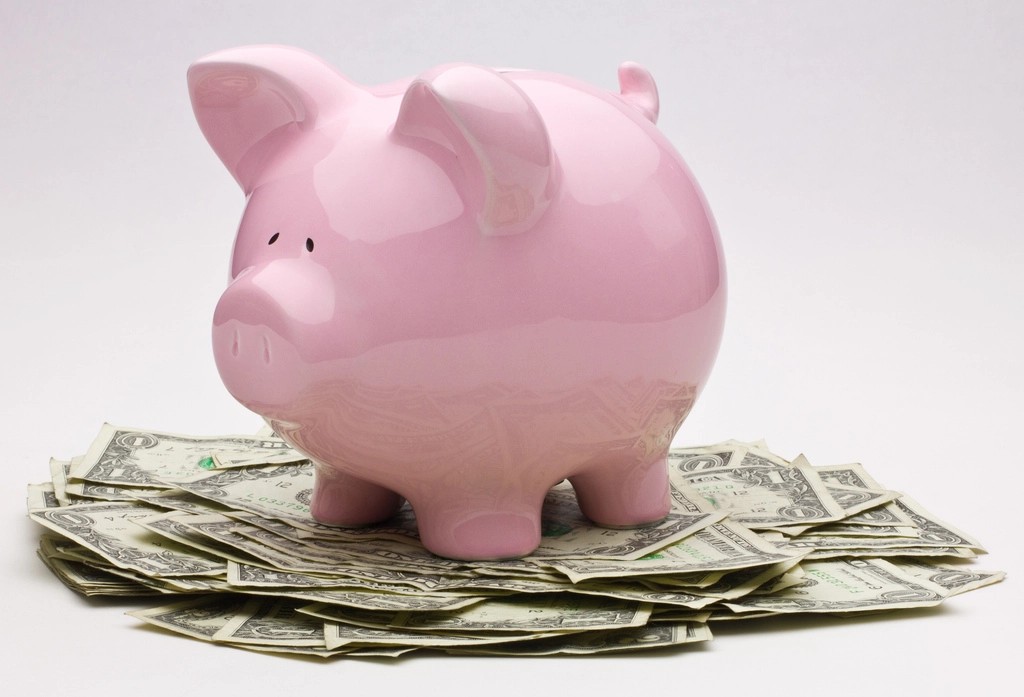
If your savings are parked in an account at a large bank, chances are you’re earning next to no interest, which means you’re losing money every month. In 2026, the disparity between the highest and lowest savings rates still remains significant. Closing this gap takes about ten minutes of your time and doesn’t involve any added risk. It’s one of the few financial moves that doesn’t require extra cost, sacrifice or locking your funds but can continue to yield returns as long as your money stays in the account.
According to data from Bankrate, the best high-yield savings account annual percentage yield (APY) currently exceeds 4%, reaching as high as 5% during promotions. In contrast, the average APY for savings accounts across the U.S. is only 0.61%. With $20,000 in your account, the yearly interest difference between the two rates is around $800 – simply by switching banks, you can earn this extra money without taking on more risk.
The higher your deposit amount, the more substantial the interest differential. If you have a $50,000 emergency fund, the interest gap between a 0.61% and 4.3% annual rate can amount to $1,850. Assuming rates remain constant, the difference could accumulate to around $10,000 over five years. Your funds remain equally secure and accessible, with the only distinction being where they are held. Therefore, it’s an easy decision to make: you don’t have to take on more risk or lock up your funds, just move your money to a place that offers you a reasonable return.
“Instead of saving leftover money, spend more of what you save.”
As mentioned by Yahoo Finance, Warren Buffett often advocates the concept of “paying yourself first,” and a high-yield savings account facilitates this practice. By setting up automatic transfers, your money starts earning competitive interest before you have a chance to spend it.
The rates on high-yield savings accounts fluctuate with the overall interest rate environment. In recent years, to combat inflation, the government has been steadily raising rates; simultaneously, online banks, in pursuit of deposits, have been offering most of the interest gains to savers.
In contrast, traditional brick-and-mortar bank savings rates often remain near the bottom as most customers rarely transfer their deposits. Online banks operate at lower costs and use higher rates as a primary marketing tool, to the benefit of savers.
However, it’s important to note that these rates are not fixed and may gradually decline over time. Therefore, it’s advisable to check your account rates once or twice a year to ensure their competitiveness.
Not all high-yield savings accounts are created equal. Before transferring funds, ensure the following:
– They are FDIC-insured, guaranteeing up to $250,000 per depositor in each ownership category at each insured bank.
– They do not charge monthly fees or have minimum balance requirements that could eat into interest earnings.
– They consistently offer competitive rates for the long term, rather than providing short-term promotional rates that drop significantly after a few months.
– They facilitate easy electronic transfers with a checking account.
– They provide a user-friendly mobile app and have a good customer service reputation.
High-yield savings accounts are not the only option for securely storing cash. The best choice depends on when you need the money:
– High-Yield Savings Account: Ideal for funds that may need to be accessed at any time, such as emergency savings, but rates may fluctuate.
– Certificate of Deposit (CD): Locks in a fixed rate for a specified period, suitable for funds not needed immediately, but early withdrawals usually incur penalties.
– Money Market Account: Similar to high-yield savings accounts and sometimes offers check-writing capabilities, but typically requires a higher minimum deposit.
If you’re concerned about rates declining and want to lock in the current rate, a CD may be a reasonable choice. For those valuing flexibility, a high-yield savings account might be preferable.
People often fail to switch to higher-rate accounts not because they don’t recognize the benefits but because they find the account-switching process cumbersome. However, it’s not as complicated as perceived. Opening a high-yield savings account is one of the quickest financial improvements you can make – the entire process usually takes about ten minutes:
– Compare several reputable online banks and choose one with a rate exceeding 4%, no fees, and no minimum balance requirements.
– Apply for an account online, typically requiring proof of identity, a social security number, and a few minutes to fill in information.
– Link your existing checking account using the bank’s routing number and account number.
– Transfer your emergency fund and other short-term funds into the new account and set up regular automatic transfers.
You don’t even need to close your existing account. Many people keep their current checking account for everyday expenses and only transfer their deposits to the higher-rate account, moving funds back as needed. The process is adjustable at any time with low risk, offering almost no reason for procrastination.
High-yield savings accounts are best suited for funds that need to be secure and readily accessible, such as emergency savings, down payments, or cash temporarily parked between achieving different financial goals.
Even with funds stored in a well-performing savings account over decades, the rate of growth is outpaced by diversified investment portfolios, and inflation gradually erodes the purchasing power of that money. Therefore, while high-yield savings accounts are advantageous for safeguarding emergency funds and short-term cash, they are not a substitute for long-term investments.
A common mistake is feeling satisfied with cash earning 4% interest while overlooking the historically higher long-term returns of stocks. The correct approach is to increase the return on cash while using the remaining funds for investments, balancing the benefits of both: providing a safe and earning outlet for funds needed in the near term and allowing funds not needed for many years to continue growing.
With the current top savings account rate still exceeding 4%, there’s no reason to let cash sit in an account with a meager 0.61% interest rate. Compare high-yield savings accounts, ensure they are FDIC-insured and fee-free, then move idle funds into them this week.
This presents a rare financial opportunity: it takes just a few minutes, costs nothing, and as long as the funds remain in the account, you’ll earn returns every month.