
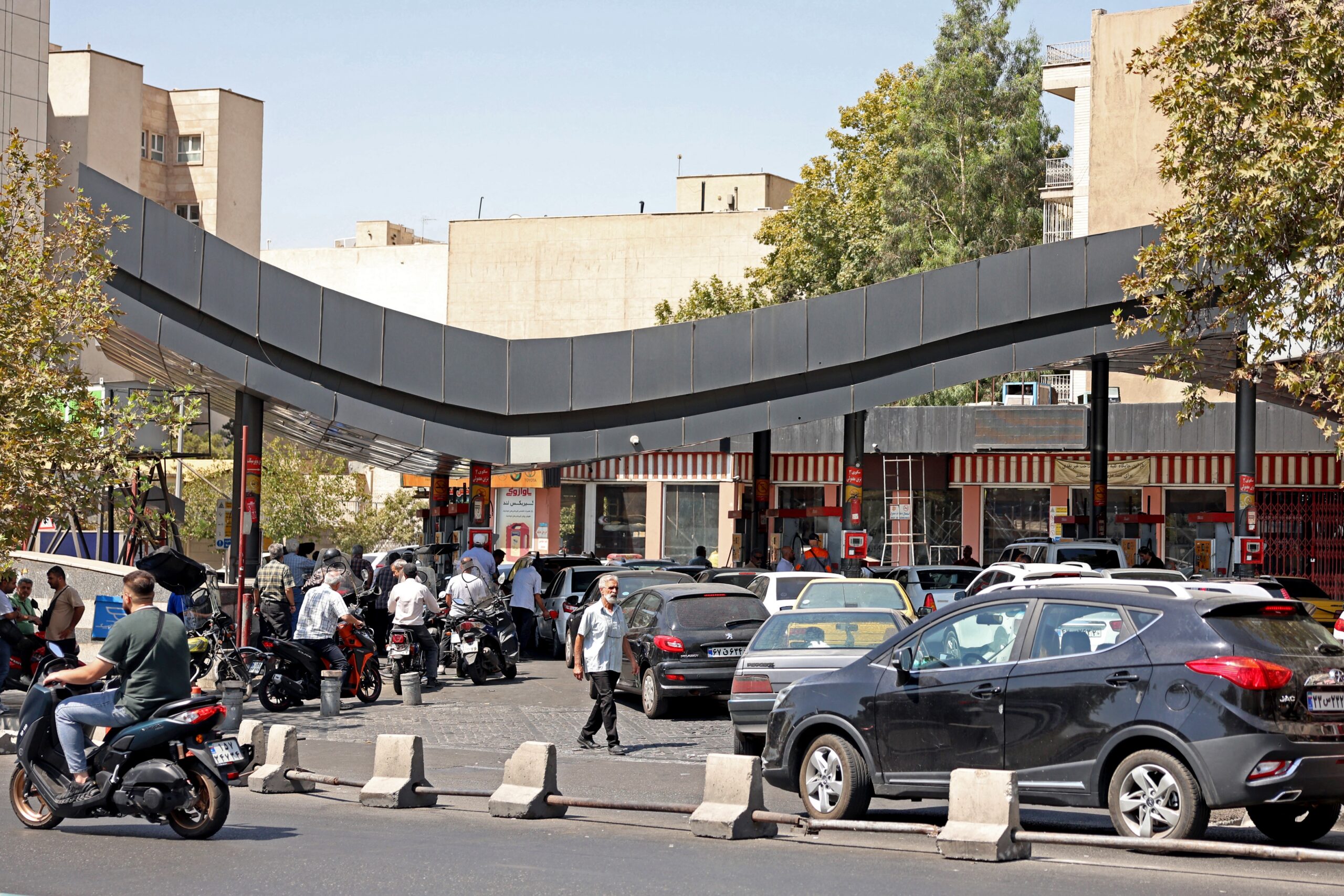
As the U.S. tightens sanctions further, economic pressure on Iran continues to rise. In recent weeks, long queues have formed outside gas stations in Tehran and other cities, with some people waiting for over two hours. The Iranian currency, the rial, has hit a historic low, leading to persistent price hikes. Some families are resorting to buying basic necessities on credit, and labor protests have emerged in certain industries.
U.S. Treasury Secretary Scott Bessent announced the launch of “Operation Economic Outcast” this week, aiming to sever Tehran’s connections to the global economic system. The U.S. government stated that this plan will cut off the economic lifeline of the Iranian regime and the Islamic Revolutionary Guard Corps (IRGC), warning countries still engaging in business with Tehran of potential secondary U.S. sanctions.
According to reports from the Associated Press, the lines outside gas stations in Tehran have been growing longer in recent weeks. Hashem Abadi, a 34-year-old barber, said, “We may face fuel shortages. As long as my tank is about half empty, I rush to the gas station.”
Iranian officials have also suggested that the government may reduce subsidies on gasoline.
Mahmoud Chavoshi, a 51-year-old taxi driver, mentioned, “I am trying to fill up my car with gas as much as possible now, because prices are expected to rise soon. In the past week, everything I buy has become more expensive, from milk to pasta.”
According to The Wall Street Journal, some supermarkets in Tehran experienced shortages of edible oil and rice due to panic buying. Residents reported that consumers are rushing to stockpile goods.
Authorities claim that essential supplies are sufficient to last for several months. However, the U.S.’s decision to further restrict Iran’s international trade has already had a psychological impact.
A translator in Tehran told a local newspaper, “There is extreme panic in some communities, with customers flooding supermarkets. The scarcity risks associated with U.S. sanctions threats have fueled this panic.”
While online retailers and upscale markets have relatively adequate supplies, the purchasing power of the public is rapidly declining.
On Monday, the Iranian currency hit a historic low, with over 2 million rials needed for one U.S. dollar, marking a 7% weekly plunge. Compared to a year ago, the same amount of Iranian currency now has only half the purchasing power in U.S. dollars.
Many consumers are now forced to accumulate debt to cover basic living expenses. Residents say people are even resorting to buying meat on credit and then gradually paying it back with interest.
Iran’s reformist newspaper Etemad commented, “This phenomenon is not a new payment method, but a sign of a major shift: poverty.”
The economic crisis has also sparked labor protests.
In Asaluyeh, offshore oil and gas workers protested the worsening livelihoods and rent pressures this week; around 100 laid-off workers from the Shadegan Steel Factory in western Iran also staged a demonstration. Additionally, strategic industries such as telecommunications and petrochemicals have seen sit-in protests due to delayed wages in recent months.
At the same time, external pressure on Iran is increasing. Last week, the United Arab Emirates declared a halt to all trade, commercial activities, and financial transactions with Iran.
The UAE is one of Iran’s largest commercial partners, second only to China. Bessent praised the UAE as a “very good partner” and stated that the actions taken by the UAE last week were “not a coincidence.”
“As we continue to engage, I expect to see a wide range of countries taking similar actions,” Bessent mentioned.
Iran also faces structural weaknesses in fuel supply. The Iran Oil Export Employees Union spokesperson Hosseini pointed out that Iran’s domestic fuel production is insufficient to meet demand, with some supply coming from Belarus, Turkmenistan, and Kazakhstan. As external sanctions tighten, import disruptions are more likely.
Facing U.S. sanctions, Iranian President Masoud Pezeshkian accused the U.S. of attempting to create “social problems and economic discontent to plunge Iran into chaos.”
He stated, “Should we bow our heads and surrender to the issue? Absolutely not.”
There is currently no indication that economic discontent has transformed into large-scale nationwide anti-government protests. However, Mohammad Farzanegan, a Middle East economics professor at Marburg University in Germany, pointed out that Iran’s “resistance and resilience always have limits.”
He said, “People’s purchasing power is eroding every day. All these factors, coupled with worsening diplomatic prospects and increasing pressure, could accumulate frustration and dissatisfaction to a point where the country can no longer effectively control it.”