
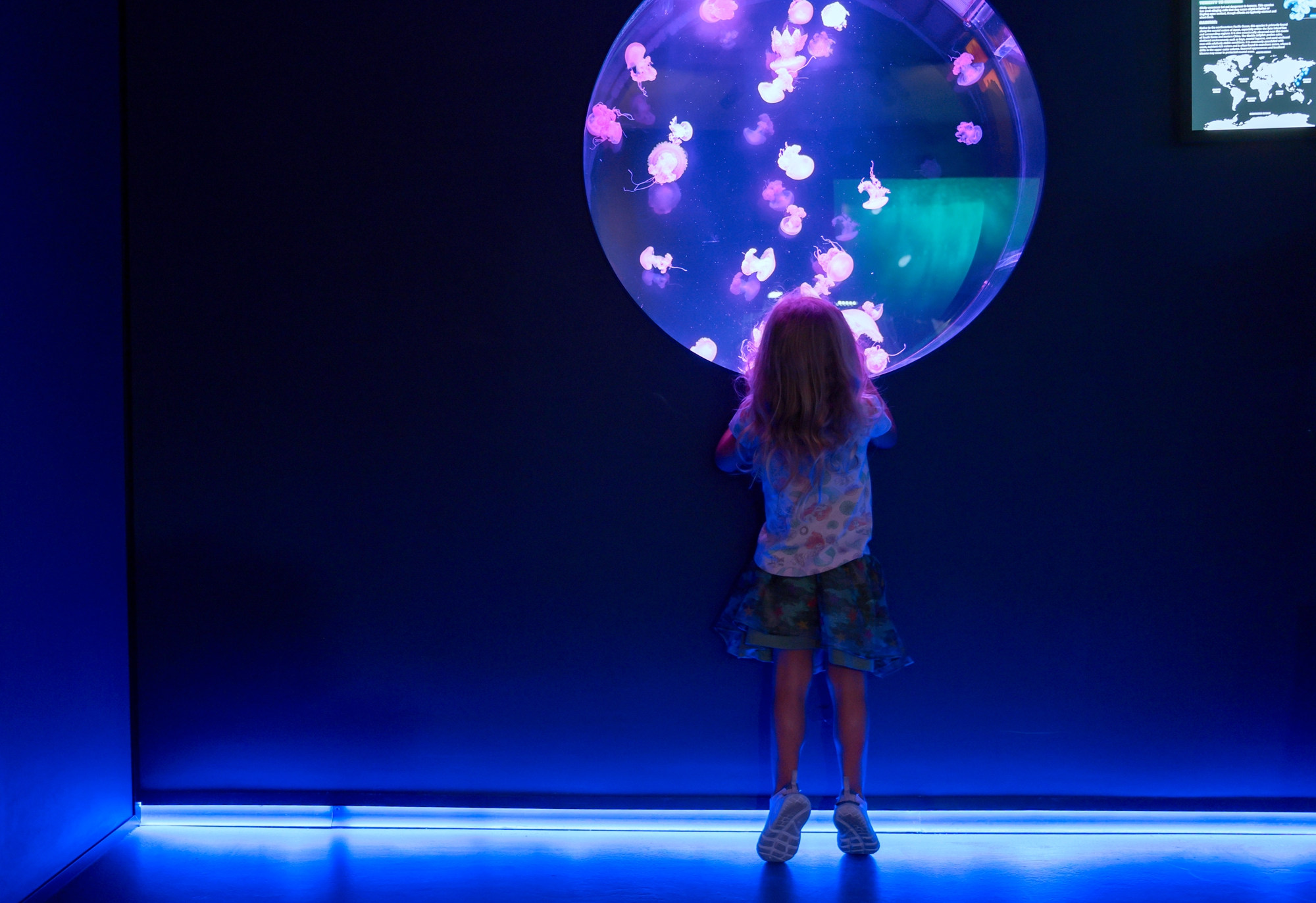
Recently, the United States’ first museum dedicated to showcasing jellyfish officially opened in Pompano Beach, Florida. The museum, transformed from an abandoned bank, displays approximately 20 species and thousands of unique jellyfish from both domestic and international locations, creating a tranquil and dreamy atmosphere with immersive 3D projections and glowing water tanks.
According to media reports, the private exhibition hall named the “Jellyfish Museum” was founded by Yana Yanovsky from Ukraine and her husband Alex. The couple had previously successfully established the first jellyfish museum in Kyiv and, after relocating to Florida due to conflicts, they were eager to continue their passion for marine life. With support from the local government’s $100,000 community redevelopment grant, they transformed a former branch of the Richland Bank into a jellyfish exhibition hall.
Spread across nearly 10,000 square feet of dark space, the museum features 21 dedicated tanks that rotate exhibitions of around 20 rare jellyfish species from Florida and around the world. The current display includes species such as the Japanese sea nettle, Moon Jelly, Papua jellyfish (also known as Pearl Jellyfish), and the Upside-down jellyfish found in Florida’s mangrove swamps.
Notably, the museum cleverly utilizes saltwater tanks with fluorescent lighting, a 5-meter high 3D projection, and soft colors to create a serene and meditative underwater ambiance for visitors.
Jellyfish are composed of about 95% water, lacking a brain, skeleton, or heart. These translucent invertebrates may appear fragile but have thrived on Earth for over 500 million years, even older than dinosaurs and trees.
Founder Yana stated that jellyfish are among the most resilient creatures on Earth, responding to their environment through a simple nervous system. The mesmerizing movement of these creatures as they float and swim in water can have a calming effect on the mind, and they play a crucial role in marine ecosystems.
There are currently about 4,000 known species of jellyfish in the scientific community, and the museum hopes to provide visitors with a deeper understanding of these floating predators and the importance of protecting marine ecosystems.