
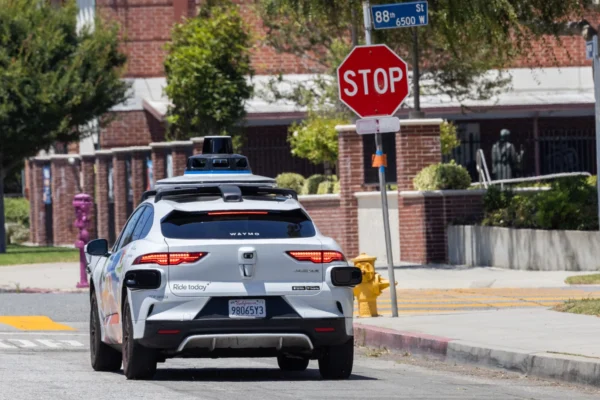
Waymo to Expand Autonomous Driving Ride-Hailing Service in California
Waymo has recently announced a significant expansion of its autonomous driving ride-hailing service in California, extending coverage from the San Francisco Bay Area and Los Angeles to a broader region including Sacramento and San Diego. However, experts say that due to various reasons such as safety and logistics, it will take some time for these changes to truly benefit passengers.
The company stated on August 14 on its X platform that the service coverage will “expand gradually and systematically according to our safety framework.” Passengers will need to wait for further notifications to truly enjoy the actual service.
Scott Moura, Professor at UC Berkeley and Director of the PATH program at the California Advanced Transportation Technology Institute, mentioned in an interview with a media outlet that he expects the expansion to take not just weeks but possibly months. Even after a few months, the service may not cover every corner of the region.
Waymo’s latest expanded map, known as the “Operational Design Domain,” will allow its autonomous driving fleet to operate in all nine counties of the San Francisco Bay Area, as well as in Sacramento County and Yolo County in Northern California.
This new map also covers Southern California, including Los Angeles County, Ventura County, Orange County, San Bernardino County, Riverside County, and San Diego County.
Moura highlighted that the most challenging aspect for companies like Waymo is enabling autonomous vehicles to operate on highways or bridges.
“In urban areas, if autonomous vehicles get confused or encounter issues, they can pull over at any time, which is relatively safe,” Moura stated. “This may cause some dissatisfaction, but compared to highways, the risk of collisions is relatively lower because vehicles on highways travel at high speeds.”
According to data from the National Highway Traffic Safety Administration (NHTSA), Waymo recalled over 3,800 vehicles set to autonomously drive on highways on June 17 due to the possibility of them “entering highway construction zones and traveling at a certain speed.”
Moura remarked that Waymo has actually reduced operations on highways. Although Waymo received approval from the California DMV last year to offer services in the San Francisco to San Jose area, there are not many Waymo vehicles seen on highways.
If vehicles break down on bridges and are unable to move, the situation could be more perilous. There are three major bridges from the Silicon Valley area to the East Bay—Golden Gate Bridge, San Mateo-Hayward Bridge, and Dumbarton Bridge.
Moura suggested that they could initially form a service area in the East Bay and reduce highway mileage, and not allow vehicles onto bridges until an extremely high level of confidence is achieved, in order to mitigate safety risks.
The San Diego Metropolitan Transit System has raised concerns to the California Public Utilities Commission (CPUC) regarding Waymo’s expansion plan, stating that Waymo vehicles could break down and cause street or light rail track congestion. The organization referenced the chaos caused by Waymo vehicles during the 2025 San Francisco blackout.
At the end of last year, Waymo also obtained approval from the DMV to use the Zeekr Ojai, a fully electric vehicle utilizing its next-generation autonomous driving technology.
Ahmed Banafa, Professor of Electrical and Computer Engineering at San Jose State University, stated via email to a media outlet that “Waymo is expanding both in terms of launching new generation vehicles and significantly expanding the geographical service area, making the expansion more complex.”
Banafa mentioned that if a company has thousands of robot taxis running 24/7, they would need large charging facilities to support dozens or possibly hundreds of vehicles charging simultaneously.
“This not only puts pressure on charging stations but also on the power grid,” Banafa added.
Banafa expects that Waymo will gradually expand the service area in the next 6 to 18 months.
“We must remember that obtaining regulatory approval to operate in a certain area does not mean Waymo is ready to provide ride-hailing services everywhere in that area,” Banafa emphasized.
In Waymo’s passenger safety plan submitted for CPUC review in January, it stated, “Before our vehicles start operating in a new area, our team works hard to understand the details of the local driving environment and updates the software to ensure the vehicles can operate safely and adequately.”
CPUC approved the updated plan on August 14, marking the final hurdle for Waymo before implementing its expansion plan.