
On August 20, the founder of China Evergrande Group, Xu Jiaying, was sentenced to life imprisonment for crimes including fundraising fraud and embezzlement. Discussions about “What will happen to the owners of the unfinished buildings of Evergrande” surged on Weibo. The issue of compensation for victims of unfinished buildings has been widely debated among the public, but the official approach mainly focuses on “completing the buildings” and judicial recovery and compensation. What does the conclusion of the Evergrande case mean for the victims? Who are the biggest beneficiaries and victims in the entire Evergrande incident?
Xu Jiaying was sentenced to life imprisonment on August 20 and had all his personal assets confiscated; illegal gains continue to be recovered, and the shortfall is ordered to be repaid. Evergrande Group and Evergrande Real Estate were fined 8.82 billion yuan and 7 billion yuan respectively (a total of 15.82 billion yuan).
In other Evergrande cases, Zhen Litao, Ke Peng, Xu Zhiqiang, Xu Tenghe, and 56 others were sentenced to imprisonment ranging from 18 years to 1 year and 10 months, with fines or asset confiscation.
Evergrande’s total debt is approximately 24 trillion yuan, with the massive debt mainly including payments to suppliers, financial institution borrowings, and around 720 billion yuan of prepayment by homebuyers for about 1.62 million undelivered properties.
At the peak of the crisis, Evergrande left approximately 1.62 million units of undelivered properties, covering over 200 cities and involving about 6 million homeowners. There is still uncertainty regarding the delivery of a certain amount of homes, and some homeowners are facing issues such as delayed delivery, compromised quality, or diminished assets.
A video shows allegedly the tallest unfinished building owned by Evergrande domestically – Wuhan Evergrande Times New City, with dozens of super-tall buildings left unfinished without being capped, abandoned for years.
After Evergrande fell into crisis, discussions in the public regarding compensation for victims of unfinished buildings were common, but the official policy mainly follows the principles of “completing buildings” and judicial recovery and compensation.
Economic analyst David Huang told Epoch Times that Xu Jiaying being sentenced to life imprisonment solves the question of who committed a crime; however, dealing with the 24 trillion yuan debt left by Evergrande and the large number of unfinished buildings poses the question of who should bear the responsibility, which is an entirely different matter. “The heavier the punishment Xu Jiaying receives, visually making it seem like the problem is solved, in reality, the houses will not be automatically completed, and the creditors will not be able to retrieve their money just because Xu Jiaying has aged and been sentenced.”
Huang stated that who will handle the 24 trillion yuan debt is what truly needs to be clarified. The 158 billion yuan in fines will not be given to the Evergrande property buyers; the final result will go to the national treasury to support the country’s finances and will not be used to continue the construction of Evergrande’s unfinished buildings. Just like in the past when Xu Xiang swindled hundreds of billions, none of the money was returned to the shareholders. Xu Xiang was the general manager of Shanghai Zexi Investment Management Co., Ltd., known as the “Top Private Fund.”
Huang explained that the real losses of Evergrande have been broken down and socialized to be shared by the homebuyers, suppliers, and investors. The forfeited funds have no connection to whether homebuyers will receive compensation, suppliers will recover bad debts, or investors will retrieve their losses.
He believed that the current judgments by the authorities are more of a political statement, addressing Xu Jiaying politically; however, for investors and the real victims, it basically holds little significance.
There are opinions suggesting that in the past, the government sold land and accumulated substantial revenue, and now it has imposed huge fines on Evergrande; should this money be used to compensate the victims?
Huang stated that this request is legally and reasonably correct. According to Western economic perspectives, the biggest beneficiaries should bear the responsibility. Just like how in 2008, the U.S. government intervened to save Fannie Mae and Freddie Mac. On September 7, 2008, the U.S. government announced the formal takeover of the troubled housing mortgage giants Fannie Mae and Freddie Mac by the Federal Housing Finance Agency (FHFA) and replaced their executives. This was the largest single move to rescue the market since the subprime crisis erupted, aimed at preventing the bankruptcy of the two companies from causing a global financial market collapse.
Huang said, however, the CCP does not operate in the same manner because the CCP government plays three roles in the real estate system: as a monopoly land supplier, regulator, and beneficiary of a prosperous treasury, but it has never been a payer. “During the real estate boom, the government squeezes every penny through land transfer fees, land transfer taxes, layer by layer exploitation, squeezing out every last cent. When the real estate market bubble bursts, according to the CCP’s political model, the government will not bear any losses.”
Huang said that occasionally, the authorities might use some commercial banks for asset restructuring, which is essentially to write off debts, and in the end, the real victims will not receive repayment.
Huang concluded that while Xu Jiaying is imprisoned and his assets seized, the fines go into the national treasury without being utilized for tax cuts or lightening the burden for the common people, or taking any responsibility for the unfinished buildings. The homeowners of the unfinished buildings can only continue to wait for their money to develop, while the suppliers who have not received payments, the investors who have failed investments by purchasing Evergrande stocks, still have to bear the consequences themselves.
He stated that the authorities are only using Xu Jiaying’s imprisonment for political propaganda, while the common people have not seen through the essence of this economic system.
The largest abandoned hotel in Hubei – Xiangyang Evergrande Hotel, originally intended to be a high-end urban hotel, was abandoned before completion.
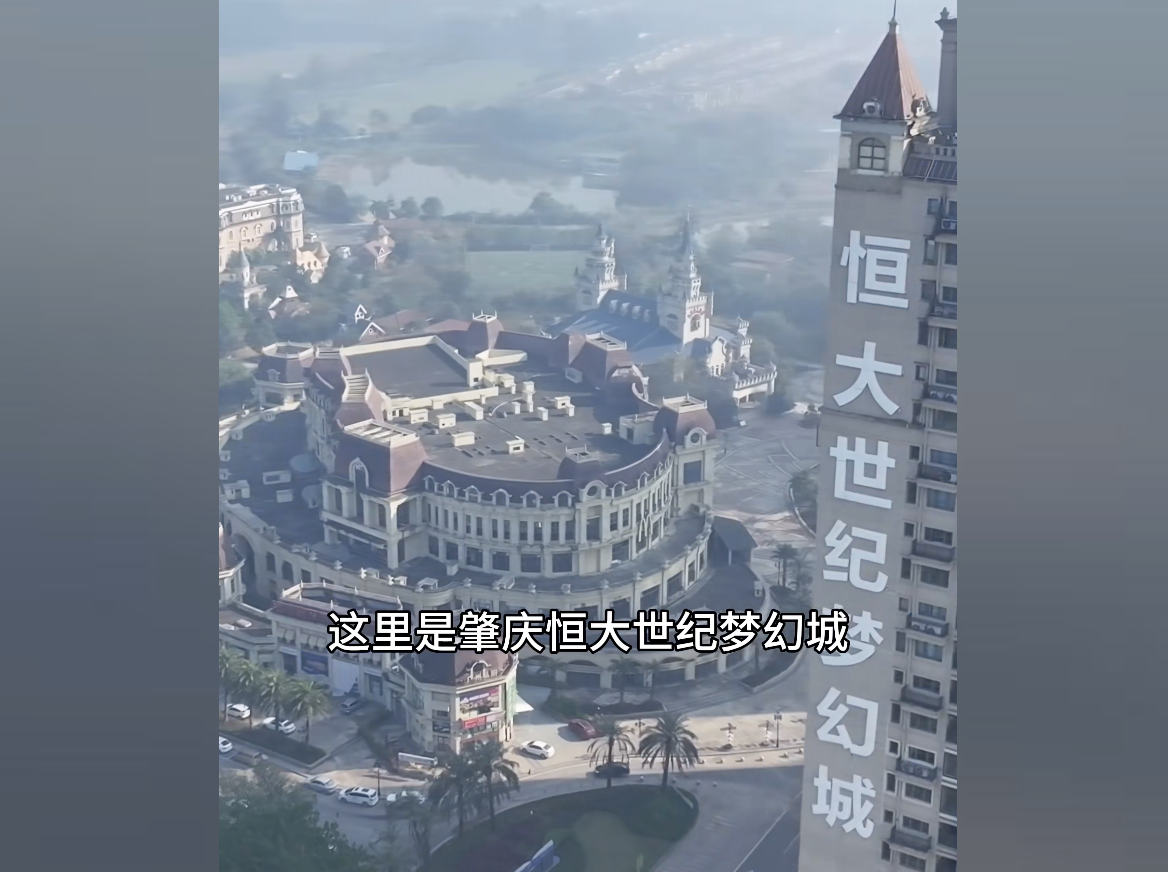
Guangdong Zhaoqing Evergrande “Century Dream City,” listed as the third phase of the “completing buildings” project last year, now has nearly 200 abandoned villas, becoming a “century ghost town” with an occupancy rate of less than 5%.
By the end of 2023, mainland media had listed Evergrande’s unfinished projects: 8 in Ningxia, 8 in Shanghai, 14 in Gansu, 15 in Beijing, 15 in Hainan, 18 in Yunnan, 19 in Tianjin, 21 in Jilin, 25 in Xinjiang, 25 in Shaanxi, 27 in Inner Mongolia, 28 in Guizhou, 29 in Heilongjiang, 35 in Shanxi, 37 in Jiangxi, 41 in Fujian, 45 in Guangxi, 49 in Henan, 50 in Anhui.
Moreover, there are over 50 Evergrande unfinished building projects in provinces: 58 in Zhejiang, 59 in Hubei, 60 in Liaoning, 64 in Hunan, 67 in Shandong, 70 in Hebei, 74 in Chongqing, and 85 in Sichuan; and the provinces with over 100 unfinished building projects include 115 in Jiangsu, and 157 in Guangdong.
Xu Zhen, a senior figure in mainland capital circles, told Epoch Times that in the entire Evergrande incident, local governments are the biggest beneficiaries, directly taking land transfer fees and taxes from Evergrande, estimated to be between 1.2 trillion to 1.7 trillion yuan from 2016 to 2021 – this money has indeed gone into the government’s pockets, unaffected by Evergrande’s subsequent bankruptcy or Xu Jiaying’s conviction, and will not be recovered. The next biggest beneficiaries are the central government of the CCP, with the 158 billion yuan in fines and penalties going to the national treasury, not to subsidize the victims’ homeowners.
Furthermore, banks initially benefited but eventually became victims. After Evergrande defaulted, many bank debts were eventually transferred at significant discounts; for example, Minsheng Bank had an Evergrande debt, finally sold at a discount of about 1.35 times.
Homebuyers are also victims, losing time. Despite the special financing for “completing buildings,” most people may eventually receive a property (even at a discount), but buyers waiting for property delivery with mortgages do not know how many years they might have to wait for their homes.
Xu Zhen stated that the suppliers are the biggest victims. According to the bankruptcy liquidation order, homebuyers rank first, construction engineering payments rank second, mortgaged banks rank third, and regular suppliers rank last – the suppliers’ debts exceed 1.06 trillion yuan, making it the largest amount among the four types of creditors, involving tens of thousands of small and medium-sized enterprises. Many small construction teams and material suppliers had their funding chain broken and went bankrupt due to not being able to recover a single commercial bill, resulting in a direct collapse. Taking Evergrande’s first bankrupt subsidiary as an example, the repayment rate for regular creditors is only 0.69%, meaning that for every 100 yuan, they can only recover less than 70 cents. They are the real victims.
In addition to the unfinished buildings causing harm to ordinary people, Evergrande illegally raised approximately 92.1 billion yuan through methods such as “guaranteed principal high interest,” and as of relevant disclosures, has unpaid principal and interest of around 34 billion yuan, affecting over 100,000 investors, with repayment programs largely stagnant.
Evergrande’s massive overdue construction payments and promissory notes have increased, with reports suggesting it has reached several hundred billion yuan; small and medium-sized enterprises have very low liquidation rates, some enterprise funds chains have broken, and workers face difficulties collecting wages.
Additionally, Evergrande stocks have been delisted, with their value basically reduced to zero, causing significant losses for retail investors.
Xu Jiaying was found guilty of eight crimes, including illegally raising public deposits and fundraising fraud.
Yasubei Akimoto stated in an interview with Epoch Times that Evergrande’s demise, on the surface, is due to the bursting of the real estate bubble, excessive leverage, and financial chain breaks. However, the deeper reason is the Chinese model of “power determines wealth” in the government-business mode reaching its inevitable end.
He analyzed that when Xu Jiaying opened doors through political-business relationships, with green lights for land, approvals, and financing, coupled with constantly rising property prices, companies could rapidly expand. This successful model from the start embedded seeds of failure because political support may retire, lose power, or even be purged and cleaned. New officials coming in would also need to establish their own interest networks, fostering their own “white gloves.” Businessmen who were once favored yesterday could become obsolete forces that need to be cut off today.
Akimoto stated that it is challenging for China to produce individuals like Soichiro Honda, Wang Yongqing, and Steve Jobs, who spent decades building business cultures and industrial foundations or innovating technology to change the world industry landscape. The CCP’s system churns out reproduced figures like Xu Jiaying and Hu Xin, who rapidly rise to power relying on authority and quickly fall with power shifts.
Regarding Xu Jiaying’s background, David Huang believed it is a way of symbiosis and collusion between politics and business. When successful, entrepreneurs and institutional power groups share the dividends; but in times of failure, the blame falls entirely on the individual. When the real estate market expanded significantly, the government wanted them to provide land finances, local governments needed GDP, and through them, GDP was created, enabling banks to fulfill their lending tasks. “All state-owned enterprises, central enterprises, governments, and finances have completely aligned interests, conspiring together.”
Huang said he visited the headquarters of Evergrande in 2018, conducted policy analysis seminars and forecasts, clearly telling Xu Jiaying that expansion beyond 2018 was not viable. Yet, they did not learn from the experience and advice, continuing the blind expansion. From this perspective, it cannot be said that Evergrande and Xu Jiaying themselves do not have responsibility.
Xu Zhen stated that in the CCP’s monopolistic real estate industry controlling land and capital, from laborer to scapegoat is the fate of private real estate bosses, with Xu Jiaying being a typical representative. Do well, and the CCP lets you reap fame and fortune; do poorly, and you become the scapegoat. Looking at the CCP’s handling of major bankruptcies of private enterprises over the past two or three decades, the CCP is seen to seize the opportunity amid chaos, adding insult to injury, grabbing high-quality assets for themselves without assisting the people and private enterprises in difficulty unless it affects political stability.