
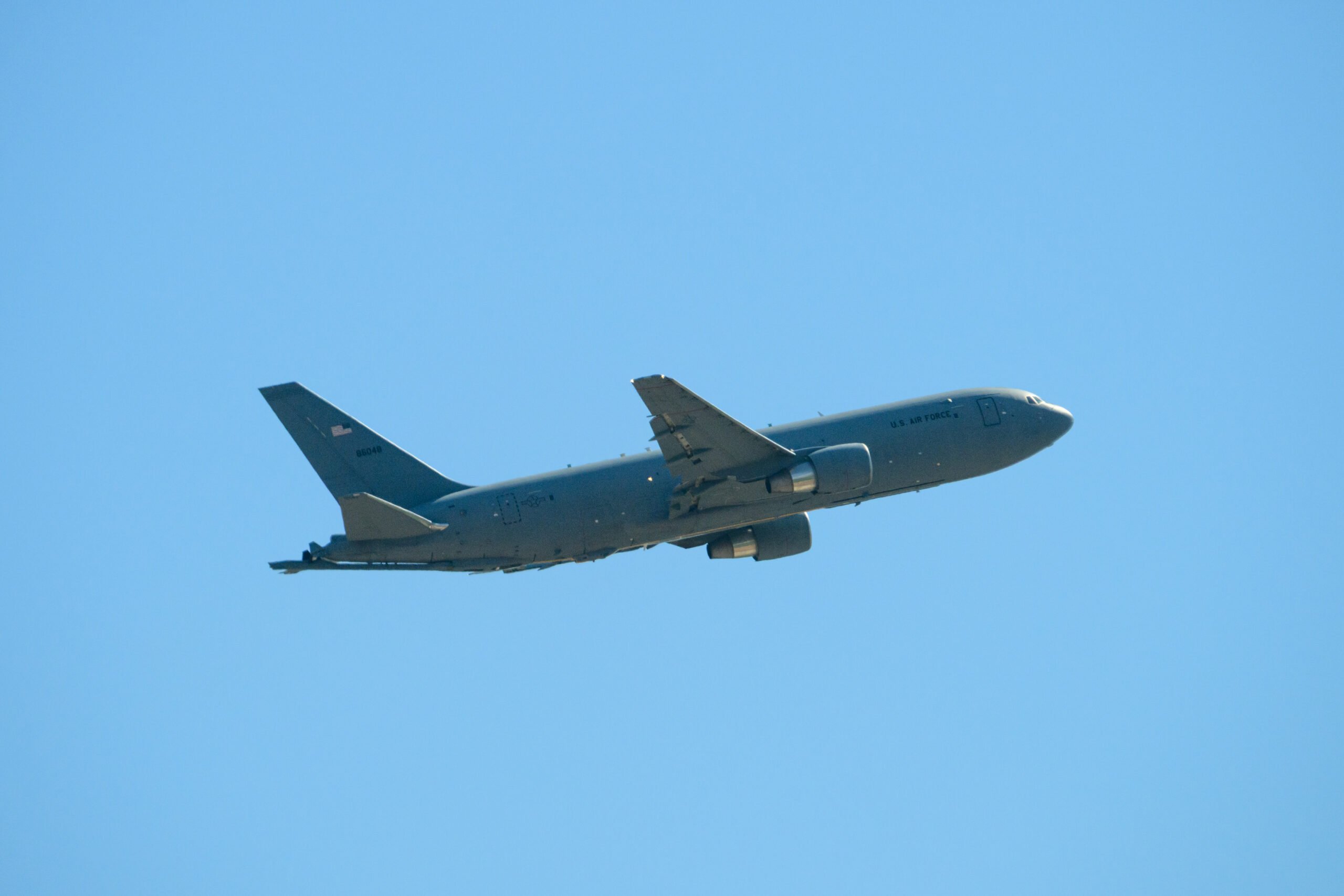
The U.S. State Department announced on Thursday (August 20) that it has approved a potential arms sale to Qatar, estimated at $4.5 billion, including up to 4 KC-46A “Pegasus” aerial refueling aircraft and related equipment. This arms sale is still a potential transaction, and specific quantities and prices may be adjusted in subsequent negotiations.
According to the arms sale notification submitted by the U.S. State Department to Congress, Qatar has requested to purchase up to 4 KC-46A aircraft, as well as 8 PW4062 turbofan engines (with 4 installed and 4 as spares).
The arms sale also includes 10 sets of AN/ALR-69A radar warning receivers, 15 sets of Guardian laser transmitter assemblies used for Large Aircraft Infrared Countermeasure System (LAIRCM), and 8 sets of LAIRCM system processor replacements.
Supporting equipment includes missile warning sensors, identification friend or foe devices, precision navigation systems, electronic warfare database support, encryption communication equipment, spare parts, maintenance and logistical support, software, technical documentation, and personnel training, among others.
The U.S. State Department stated that this arms sale will enhance Qatar’s defense capabilities against current and future threats, strengthen its interoperability with the U.S. and allied forces, and reinforce Qatar’s strategic role in regional security affairs. The U.S. also emphasized that this deal will not alter the fundamental military balance in the Middle East or have adverse effects on U.S. defense readiness.
The primary contractors for this potential arms sale include Boeing, Pratt & Whitney Military Engines, RTX, and Northrop Grumman.
The U.S. government noted that there are currently no offset agreements proposals related to this potential arms sale. If Qatar later requests compensation (such as investments in Qatar, technology transfer, local production of parts, or purchasing Qatari products) related to the sale, these offset agreements will be negotiated directly between the Qatar government and the contractors (Boeing, Pratt & Whitney, etc.), not by the U.S. government.
According to U.S. arms sale procedures, after the State Department approves and issues the arms sale notification to Congress, specific procurement quantities and final prices may still change in subsequent negotiations, and Congress can oppose and take measures to block the transaction through statutory review processes.
The KC-46A, developed by Boeing based on the Boeing 767, is an aerial refueling aircraft that can perform aerial refueling for fighter jets, bombers, and other military aircraft, while also having the capability for cargo and personnel transport.
If the transaction is completed, Qatar may become the third overseas customer to purchase the KC-46A after Japan and Israel.
The U.S. State Department emphasized that Qatar is an important strategic partner for the U.S. in the Middle East, and supporting its defense capabilities aligns with U.S. foreign policy and national security objectives.
The announcement of this arms sale comes amid continuing tensions in the Middle East security situation.
In recent months, the U.S. has also approved multiple potential arms sales to other Gulf countries, including approving in July the sale of approximately $1.96 billion of APKWS-II precision guided munitions to Saudi Arabia, and in June approving the sale of approximately $1.98 billion of anti-drone systems to Kuwait.