
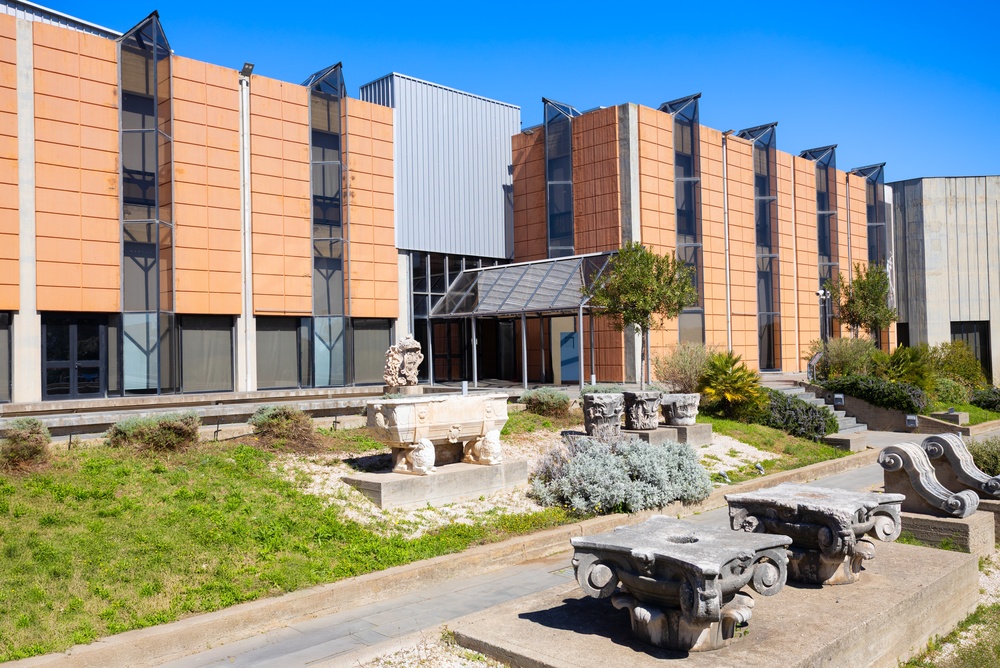
In a recent art theft case at the Museo Regionale Accascina in the Acachna area of Messina, Sicily, four works by the Renaissance master Antonello da Messina were stolen. As the investigation deepens, local officials have not ruled out the involvement of the mafia and are also investigating whether museum staff may have assisted in the theft.
The incident occurred on the evening of August 15th. At that time, Messina was celebrating the Feast of the Assumption of the Virgin Mary, with thousands of people gathering in the streets, providing an opportunity for thieves to enter the museum.
Among the stolen works were three panels from Antonello’s “Polyptych of Saint Gregory.” Originally consisting of six wooden panels, this altarpiece was created by Antonello for a local monastery, which was later destroyed in the 1908 Messina earthquake. Five panels had remained in the local area, making them the only works by Antonello to never leave Messina.
The thieves removed all five existing panels that night, but ultimately took only three. The other two panels were found by tourists about two hours later, discarded near the museum fence.
The fourth stolen work was a small double-sided wooden panel depicting the Madonna, Child, and a Franciscan friar on one side, and Christ on the other. This piece was sold to the Sicilian Region by Christie’s in 2003 and confirmed as an artwork by Antonello in the same year.
Enzo Caruso, the cultural affairs commissioner of Messina, told Reuters that the thieves took the works within minutes, indicating a good understanding of the museum’s layout necessary to pull off such a feat.
Renato Schifani, the president of the Sicilian Region, stated that the museum’s video surveillance and alarm systems were functioning properly at the time of the incident. Authorities have initiated an internal investigation to determine if museum staff were involved.
However, the process of moving the stolen works was not smooth for the thieves. Caruso suggested that they may not have anticipated the weight of the wooden panels. Unlike canvas that can be cut out of frames, transporting wooden panels is more challenging, possibly leading to the discarding of two panels.
Due to the high notoriety of the stolen works, they are nearly impossible to sell even on the black market. Caruso mentioned that such artworks could be used as collateral or “currency” in criminal activities. He did not rule out the possibility of mafia involvement and suggested that criminal organizations might use these works for government extortion.
Caruso previously stated to Reuters that he believed this was “almost certainly a commissioned theft.” He also mentioned that Italy’s Ministry of Culture’s purchase of another Antonello work in February for about $15 million may have brought the Messina museum’s collection to the attention of criminals.
Sicily has had famous art theft cases in the past. In 1969, a masterpiece by the Baroque painter Caravaggio was stolen from a church in Palermo. The case was long believed to be related to the Sicilian Mafia known as “Cosa Nostra” and remains unsolved with the artwork unrecovered.
Specialized investigators from the Italian police focusing on cultural heritage crimes are heading to Messina to take over the case. Currently, the whereabouts of the four Antonello works remain unknown. Caruso suggested that the thieves may have temporarily hidden the works, waiting for the situation to calm down, or they may have swiftly transported them by sea.