
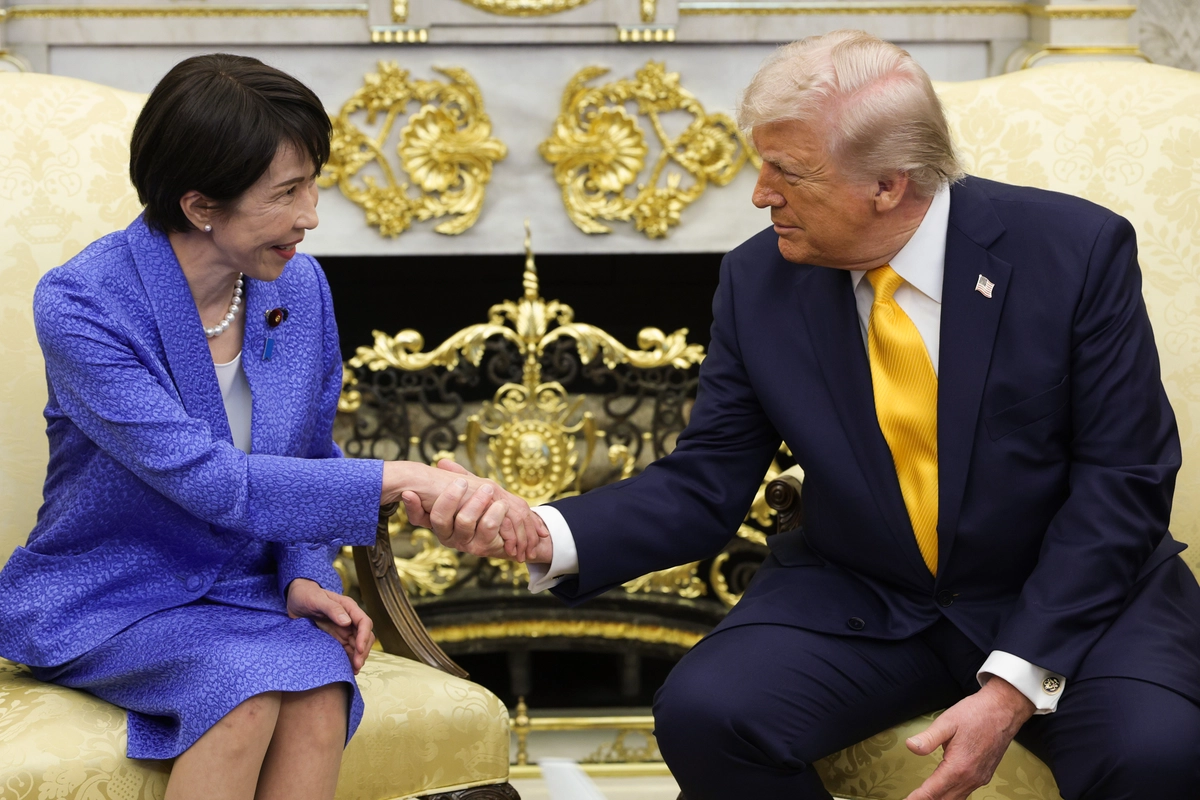
Since taking office as the Prime Minister of Japan last October, Sanae Takashi has visited 11 countries, with a focus on allies such as the United States and like-minded partners in Southeast Asia, aiming to strengthen Japan’s relationships with allies and partners amid increasing criticism from China on the international stage.
According to reports from Nikkei Asia, public records from the Prime Minister’s office and the Ministry of Foreign Affairs show that in the first 10 months of Takashi’s tenure, she conducted a total of 8 overseas visits, visiting 11 countries, including 6 in Asia and Oceania, and 3 in Europe. These visits also included the United States and South Africa.
Out of these 8 visits, 4 were related to major international conferences such as the ASEAN Summit and the G20 Summit. Before and after attending these international conferences, Takashi visited 7 countries: the United States, Vietnam, Australia, South Korea, the United Kingdom, Italy, and India – all of which are either allies or partners seen as sharing similar values with Japan.
An anonymous diplomatic source analyzed that due to Takashi’s limited experience in international relations, she prioritizes building relationships with countries that share Japan’s position.
During her visit to Vietnam in May this year, Takashi unveiled an updated version of the “Free and Open Indo-Pacific Region” concept, initially proposed by her political mentor, former Japanese Prime Minister Shinzo Abe in 2016.
In response to conflicts in the Middle East, Takashi announced the launch of the “Power Asia” initiative in April, a regional energy supply framework centered around Southeast Asia.
According to Nikkei Asia, these efforts to strengthen cooperation also take into consideration countering China’s influence. Under the “Power Asia” framework, Japan will provide $10 billion in support focusing on further deepening cooperation with countries closely tied to Japan. In April, Takashi explained that the funds would not only support Asian countries in purchasing crude oil and oil products and maintaining supply chain operations but also be used to establish energy reserve systems and ensure related minerals.
China has been using trade and economic aid to bring other countries into its sphere of influence. Japan is seeking to balance China’s assertive diplomatic moves.
In November last year, Takashi sparked a diplomatic dispute with China with her remarks on Taiwan during a parliamentary session. She stated that in the event of a conflict in the Taiwan Strait, it could be seen as a “threat to Japan’s survival.” This statement effectively provides a legal basis for Japan to exercise collective self-defense and intervene militarily in the event of a Taiwan Strait conflict.
Subsequently, China took a series of economic retaliatory measures against Japan, including warning Chinese tourists not to travel to Japan, suspending the resumption of importing Japanese marine products, halting the approval of new Japanese films for screening in China, and prohibiting the exports of dual-use goods with potential military applications to Japan. While exerting economic pressure, China demanded that Takashi retract her remarks on Taiwan, but she refused to do so.