
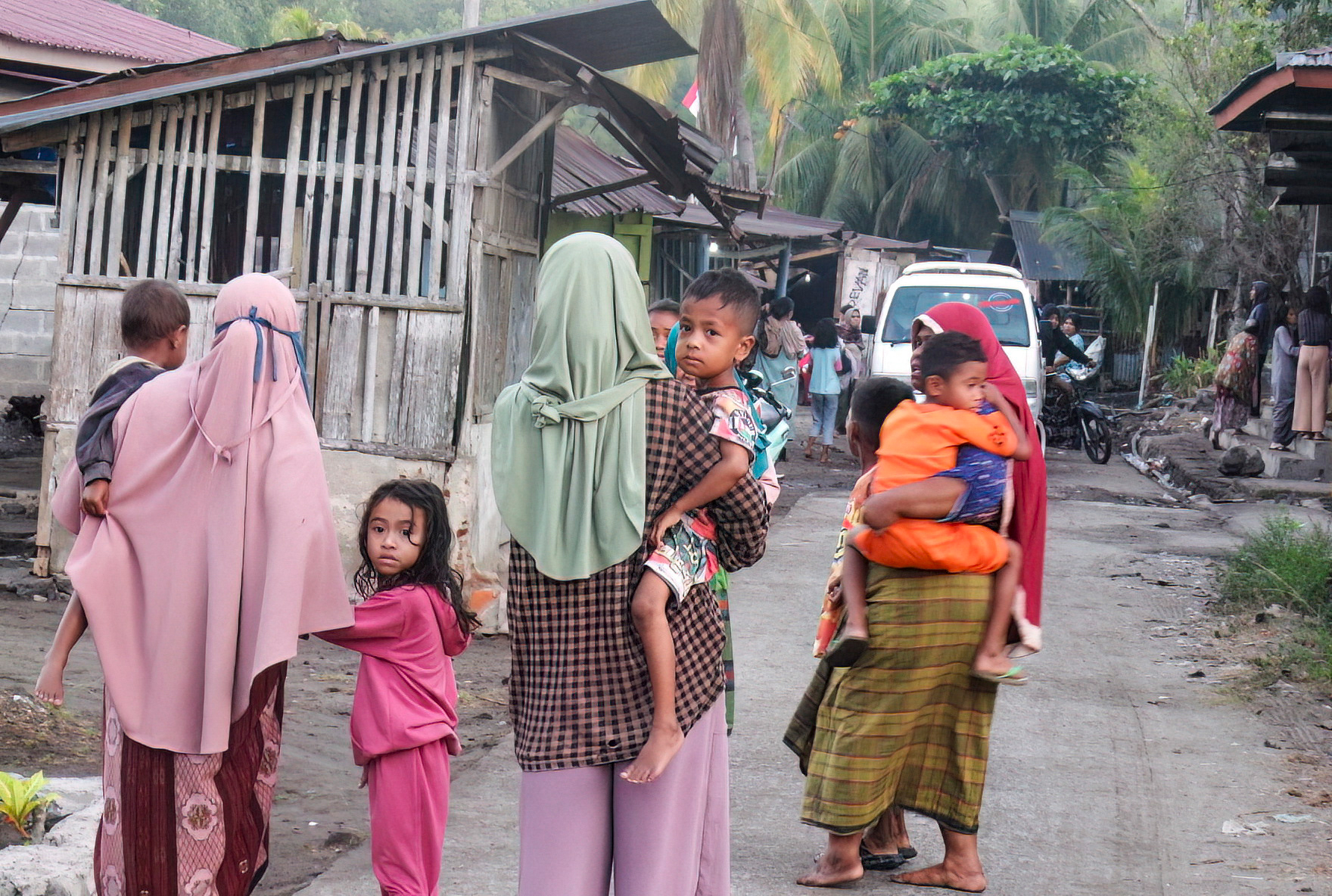
On Saturday, August 15th, a strong earthquake measuring 7.7 on the Richter scale struck eastern Indonesia, resulting in a death toll that rose to 53 people by Sunday, with over 130 others injured. Authorities reported that around 5,000 people have been evacuated from the affected areas, but rescue efforts have been hampered by road blockages, landslides, and ongoing aftershocks.
Rescue teams in eastern Indonesia discovered more bodies on Sunday, bringing the death toll to 53. The national search and rescue agency stated that over 900 buildings were destroyed and 450 others were damaged in the powerful quake, forcing around 5,000 people to seek shelter in temporary evacuation centers.
According to the U.S. Geological Survey, the 7.7 magnitude earthquake struck Flores Island in eastern Indonesia at 5:58 a.m. local time with a depth of 10 kilometers (6 miles).
Tsunami warnings were issued but later lifted. Residents fled their homes in panic, with many forced to set up temporary tents outdoors due to collapsed houses. Some of the wounded received treatment in makeshift medical tents set up outside hospitals, with several suffering from fractures.
The disaster area continues to experience aftershocks. Indonesia’s disaster management agency reported nearly 1,000 aftershocks following the main earthquake, preventing displaced residents from returning to damaged homes and complicating rescue operations.
In Maumere, a closed port, collapsed roofs and walls left behind heaps of rubble. Local residents told Reuters that many are afraid to return indoors due to the risk of aftershocks.
Hundreds of evacuated people gathered at a nearby stadium, which the local government designated as a shelter. In the evening, residents queued up for hot drinks, with mothers improvising makeshift baby cribs using tent poles and clothes while children played football outdoors.
Margaretha Movaldes Da Maga Bapa, head of the local disaster management department, reflected on the trauma caused by the earthquake, reminiscent of the 1992 disaster in the region. In 1992, a 7.5 magnitude earthquake struck, resulting in extensive destruction.
Suryaman, an official from the rescue agency, emphasized the urgent task of clearing debris in the hardest-hit areas of Manggarai, East Manggarai, and Nagekeo to search for those possibly trapped under collapsed buildings.
As of now, no reports of missing persons have been received, but landslides and ongoing aftershocks are impeding rescue efforts.
Teddy Indra Wijaya, the presidential cabinet secretary, stated that over 3,500 military and police personnel have been deployed to assist in search and rescue, evacuation, and maintaining order.
While power supply has largely been restored, state-owned power company noted that some transmission and distribution lines still require repairs.
The provincial government of East Nusa Tenggara has declared a state of emergency, allowing for swift mobilization of rescue resources and funding.
Indonesia, with a population of approximately 290 million, is an archipelagic nation located within the Pacific “Ring of Fire,” where multiple geological plates converge, leading to frequent seismic and volcanic activities.
Geological expert Dwikorita Karnawati explained that the earthquake occurred in an area affected by the “Flores back-arc thrust fault,” a significant east-west thrust fault system that increases the seismic risk in the region.
On November 21, 2022, a shallow inland earthquake measuring 5.6 magnitude hit West Java province, resulting in 602 fatalities. Despite its lower magnitude, it was Indonesia’s deadliest non-tsunami earthquake in the past decade.