
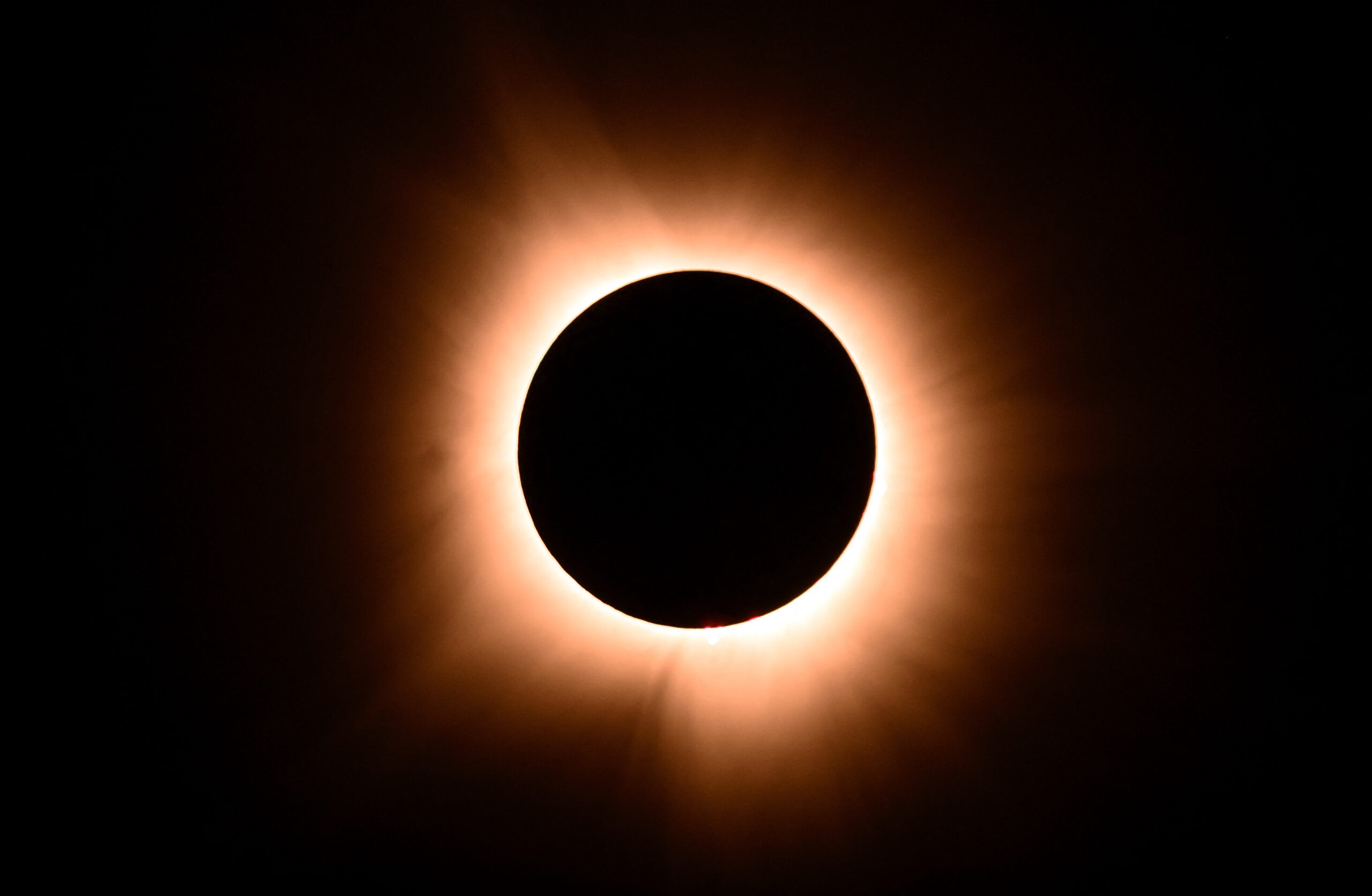
Following the appearance of an annular solar eclipse on February 17, this year’s second solar eclipse (total eclipse) is set to take place on August 12. During a total solar eclipse, the sky suddenly darkens, as if the sun has disappeared, which could potentially cause panic among animals. So, if you have pets, how should you protect them from being startled?
The National Aeronautics and Space Administration (NASA) stated that the total solar eclipse happening on August 12 will be visible to residents in Greenland, Iceland, and Spain, but not in Taiwan and Asia.
On the same day, there will also be the annual Perseid meteor shower event. If weather conditions permit, most regions around the world will have excellent viewing conditions. Regarding the solar eclipse happening on that day, a report from the UK’s “Daily Express” mentioned that most areas in the country will witness a partial solar eclipse, with 90% of the sun being obstructed by the moon. This will be the largest partial solar eclipse visible in the UK since the eclipse in 1999.
In London, the partial solar eclipse will begin around 6:17 pm, reach its maximum partial phase shortly after 7:12 pm, and end just after 8:00 pm, though specific times may vary across the UK.
As millions of people in the UK prepare to view the partial solar eclipse, veterinary experts have emphasized that the main risk pets face is not the eclipse itself but rather well-meaning owners who try to involve their pets.
Dogs and cats, unlike humans, usually do not stare directly at the sun, making it highly unlikely for them to suffer eye damage from viewing the eclipse without proper protection.
Rof Codina, Associate Professor of the Veterinary School at the University of Santiago de Compostela in Spain, stated that animals’ behavior is driven by instinct. She mentioned, “There is a risk if they stare at it, but they usually don’t. In normal situations, dogs will sniff around, not stare up at the sky.”
She added that there is no need to provide pets with eclipse-viewing glasses, as most pets are not accustomed to wearing them, and owners should not force pets to watch the eclipse.
During an eclipse, some particularly sensitive pets might be frightened by the sudden darkness. “The sudden change in lighting could indeed scare them, but under normal circumstances, nothing significant will happen.”
If pets do display signs of anxiety or disorientation, she recommends placing them in a familiar, quiet environment until they calm down.
This advice aligns with the guidelines of organizations like the American Kennel Club in the US. These organizations also stress that there is no need to equip pets with eclipse-viewing glasses since they naturally avoid staring at the sun.
Instead, owners should avoid taking easily anxious animals to crowded eclipse-watching events. When outdoors, dogs should be kept under control, allowing them to remain in their natural state during the eclipse.
During the total solar eclipse that spanned the US in 2017, researchers observed some unusual behaviors in animals. For example, birds suddenly stopped chirping and returned to their nests, crickets and cicadas began to sing as if night had fallen, and dogs sought comfort from their owners or lay down while cats often searched for hiding spots. Cows and horses slowly returned to their shelters.
These reactions are considered normal responses to the brief darkness experienced during an eclipse. Animals respond to the abnormal change in light intensity.
If you have pets and are experiencing a solar eclipse:
– Do not buy eclipse-viewing glasses for pets as it is unnecessary.
– Do not force your cats or dogs to watch the eclipse.
– If walking your dog during the eclipse, be sure to keep them on a leash to prevent them from reacting abnormally due to temporary confusion.
– Bring anxious pets indoors to a quiet, familiar room until sunlight returns to normal.
– Treat it as just another day. Most animals will hardly notice any difference.