
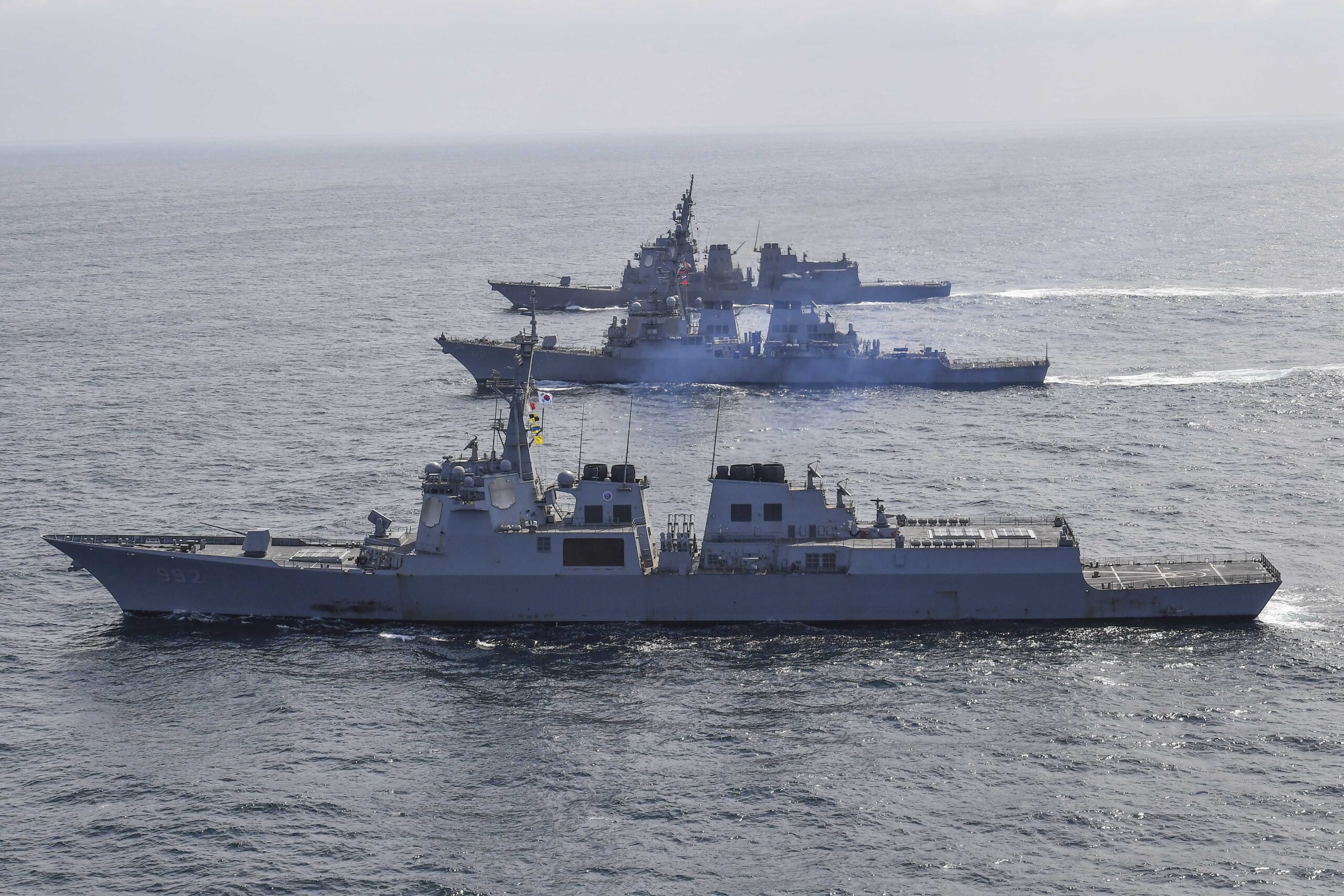
The joint military exercise “Keen Sword 27” between the US and Japan is set to kick off on October 19th. This military drill includes several first-time attempts by the US and Japanese military forces and is seen as a “combat rehearsal” by Japan for defending the Southwest Island Chain.
The “Keen Sword 27” joint military exercise will run from October 19th to October 29th, lasting for 11 days. This marks the first time the US and Japan have organized a joint Keen Sword exercise since the establishment of the Japan Joint Operations Command (JJOC). The Keen Sword series of exercises has been ongoing since 1986, with this being the largest-scale exercise gathering around 45,000 Japanese Self-Defense Forces personnel and 12,000 US military personnel.
General Hiroaki Nakakura, the Chief of Staff of the Joint Staff of the Japan Self-Defense Forces, stated during a routine press conference on Friday, October 16th, that one of the main objectives of the Keen Sword exercise is to strengthen the cooperation between Japan and the US in responding to the “gray zone” situations and armed attacks.
General Nakakura emphasized that the rapid deployment of Japanese and US forces and equipment to the Southwest Islands holds significant importance. He also clarified that this training is not aimed at any specific country but rather focused on building the necessary systems and capabilities to respond effectively to any situation.
The Southwest Islands of Japan, including the Ryukyu Islands, are a crucial part of the First Island Chain that spans from the Japanese archipelago, through Taiwan, to the Philippines, serving as a strategic defense line. For the Chinese Navy to enter the Pacific Ocean, they typically have to traverse the straits along this island chain.
These islands, such as Okinawa, Miyako, and Yaeyama, are vital for Japan’s defense in the southwest direction and serve as a strategic area for US-Japan military deployments, monitoring of Chinese naval and aerial activities, and addressing potential conflicts in the Taiwan Strait.
In Keen Sword 27, Japan deployed the long-range Type 25 anti-ship missiles beyond their original base for the first time to participate in the joint training with the US. On Sunday, October 18th, the Ground Self-Defense Forces transported the Type 25 missile launchers from the Kumamoto Ground Self-Defense Force Camp to the Onobaru Maneuver Area spanning Nagasaki and Saga prefectures.
The Type 25 anti-ship missile has a range of approximately 1,000 kilometers and is a key component of Japan’s “counterattack capability,” aimed at deterrence and striking enemy bases and other targets in the event of a conflict. The focus of Keen Sword 27 exercises is on procedural training for engaging maritime vessels, with no actual missile launches planned.
For the first time, the US deployed the Navy-Marine Corps Expeditionary Strike Craft Intercept System (NMESIS) in Okinawa Prefecture and on Ishigaki Island, located about 110 kilometers from the sensitive Taiwan region.
NMESIS is a mobile weapon system capable of launching anti-ship missiles from land to attack naval vessels, positioned by the US Indo-Pacific Command for maritime deterrence and coastal defense. The deployment of NMESIS in this exercise covers most of the sea areas north and east of Taiwan, thereby holding significant strategic importance for deterring Chinese actions.
The US aircraft carrier “USS Roosevelt” arrived in Yokosuka Port in Kanagawa Prefecture on Friday, marking the first non-homeport carrier docking in the area in four years; while the USS George Washington, based in Yokosuka, is currently on a mission in the Middle East.
Ahead of the Keen Sword 27 joint military exercise, China has intensified its military activities in the region. Recently, the Chinese Navy dispatched the Liaoning aircraft carrier battle group into the Western Pacific for training exercises. China has previously stated that large-scale US-Japan joint military exercises pose a threat to regional security and has expressed close monitoring of the exercise progress.