
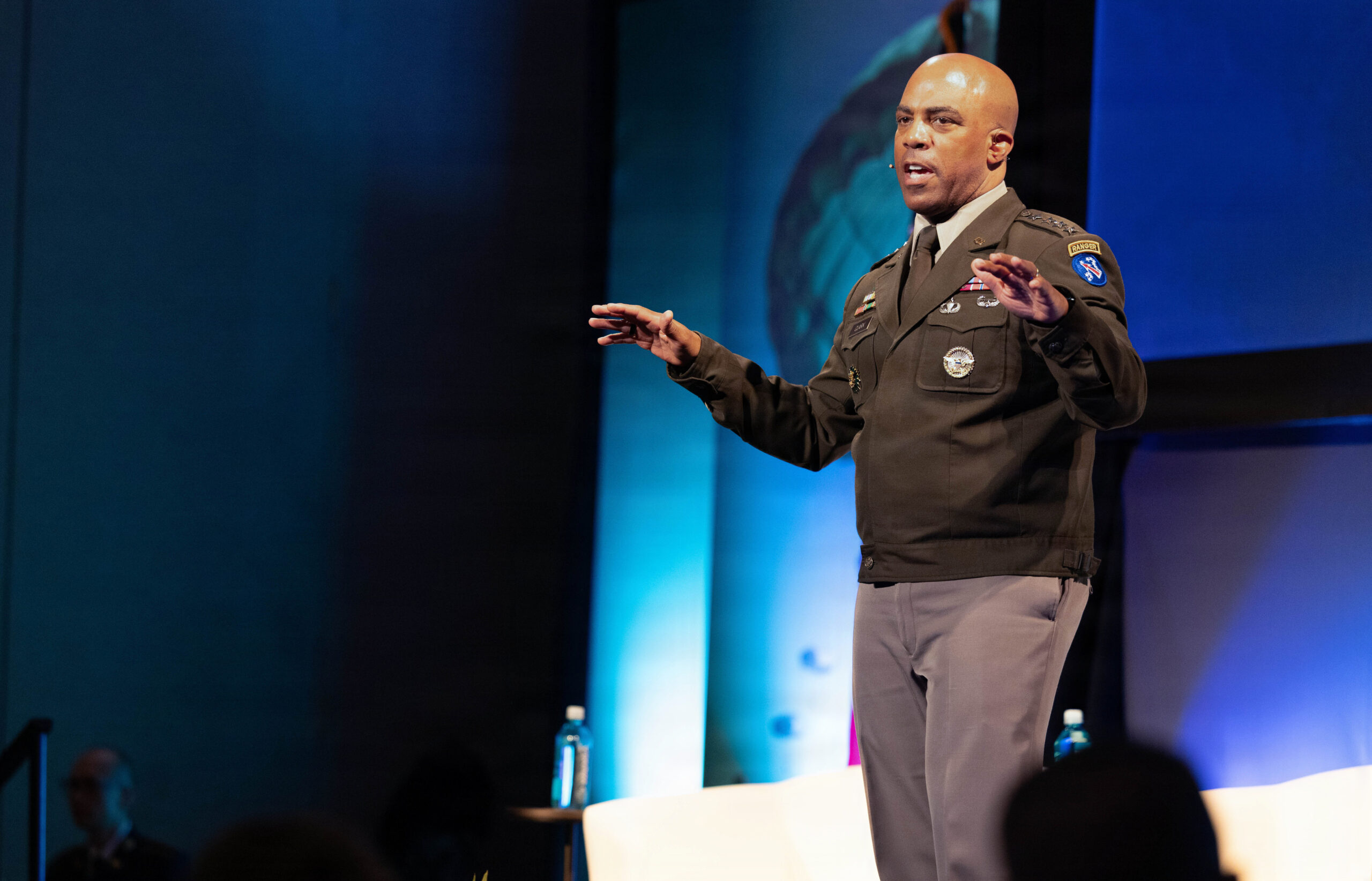
In a recent interview with the Financial Times, General Ronald Clark, the Commander of the U.S. Army Pacific, expressed the U.S. military’s intention to actively showcase advanced weaponry and operational capabilities in the Indo-Pacific region to enhance military deterrence against China. General Clark emphasized that by demonstrating strength, adversaries could better understand the capabilities of the U.S. military, which in turn could help reduce the likelihood of war.
According to the Financial Times report from Sunday, General Clark stated that amidst growing concerns over China’s military threat, the U.S. military is expanding its weapons deployment and joint exercises in the Indo-Pacific region. These actions include deploying missile systems capable of targeting China’s coastal areas and enhancing military presence during periods of heightened conflict potential.
“I hope to demonstrate sufficient operational capabilities and readiness during my command here to deter war,” General Clark said.
The U.S. Army Pacific has temporarily deployed weapons in locations such as the Philippines and Japan. In the event of a conflict erupting in areas like the Taiwan Strait, these equipment could play a critical role. The “Typhon” mobile missile system has been used in military exercises in the Philippines and Australia, capable of launching SM-6 missiles to attack ships and “Tomahawk” cruise missiles to strike certain coastal areas of China from the Philippines.
The U.S. military has also showcased its joint operational capabilities with allies through the “HIMARS” high-mobility artillery rocket system.
For example, in a recent exercise, the U.S. military transported long-range precision strike weapons from the United States to the Philippines, then shipped ammunition from South Korea to execute live-fire shooting missions. The entire process could be observed by potential adversaries, serving as a part of the deterrent strategy.
“You can see it actually in operation, and we can execute these actions on a large scale at the time and place of our choosing. Thus, demonstrating capabilities is about making adversaries think twice,” General Clark explained.
According to a press release from the U.S. Army on October 16, General Clark mentioned at the AUSA annual conference that the U.S. Army Pacific is ensuring the ability to deploy sufficient forces at designated times and locations through forward deployment and cooperation with allies.
He pointed out that the U.S. military’s “Operation Pathways” plan includes 54 exercises throughout the year, allowing the U.S. military to train together with partner nations in their territories to enhance readiness and collaborative operational capabilities.
General Clark further disclosed during the Financial Times interview that although these exercises are spread throughout the year, they also specifically cover high-risk periods when the U.S. military believes adversaries are most likely to take harmful actions.
“These exercises are arranged quite intensively, covering periods we believe adversaries are most likely to have the opportunity to take harmful actions against a partner or ally,” General Clark said, noting that even though weapons are not permanently deployed, they can still play a crucial role in deterrence and actual conflicts.
In addition to missiles and traditional land combat forces, the U.S. Army Pacific is also enhancing its information warfare, cyber warfare, and electronic warfare capabilities.
The Financial Times noted that the U.S. Army Pacific established the “1st Theater Information Advantage Detachment” in November 2025, aiming to integrate military intelligence, psychological operations, cyber capabilities, and electronic warfare tools to support operational needs in the information age.
Lieutenant Colonel Sean Heidgerken, the commander of the detachment, stated that the unit’s mission includes identifying locations within the Pacific region where U.S. forces may encounter restrictions and assisting allies in addressing threats to infrastructure such as ports.
General Clark highlighted that the resources and capabilities currently deployed by the U.S. Army in the Pacific region, including new division-level forces, corps-level commands, and multi-domain task forces, have reached unprecedented levels in his military career.
“I have never seen the Army allocate such resources and capabilities to the Pacific during my military career,” he said.
General Clark also emphasized that the U.S. is continuously deepening its military cooperation with Indo-Pacific countries. He pointed out that the joint military exercises held from the Philippines to Australia in the past year set records both in terms of the number of participating countries and the scope of the exercises.
General Clark informed the Financial Times that the U.S. plans to resume the “Angkor Sentinel” joint military exercise with Cambodia in February 2027. This exercise was suspended for nearly a decade due to deteriorating bilateral relations.
He noted that after assuming command two years ago, Cambodia was his first country to visit, and he has since established a close relationship with the country’s army commander.
Amidst the U.S. strengthening its Indo-Pacific deployment, the conflict in Iran also affects the U.S.’s global military resources. Some “Patriot” air defense systems have been transferred from the Indo-Pacific region to the Middle East, and the U.S. Forces in Korea have deployed the “THAAD” interceptor missile system to support local military operations.
Previously reported by Fox News on October 14, General Clark stated in an interview with a small group of journalists in Washington that these movements did not increase the risks faced by the Indo-Pacific forces.
“In fact, this gives us the opportunity to modernize the systems here,” General Clark pointed out, noting that troops involved in Middle East air defense missions gain practical experience in repelling enemy attacks, while equipment upgrades also enhance the combat capabilities of individual air defense missile units.