
The European Union (EU) is reportedly considering taking a harder stance against China in response to the annual trade deficit with China, which continues to expand. According to sources familiar with the matter, the EU is fed up and is beginning to simulate a trade war with Beijing and the countermeasures it will face post-escalation.
Bloomberg reported on Friday, citing insider sources, that EU leaders met in Brussels this week and unanimously supported the introduction of a tougher set of trade measures. This includes giving the EU the authority to restrict imports of all Chinese products, effectively severing ties with the market of 450 million consumers.
Multiple anonymous informants revealed that leaders from various countries, including German Chancellor Friedrich Merz and French President Emmanuel Macron, have demanded the European Commission to propose more aggressive trade measures by the end of the year.
EU Commission President Ursula von der Leyen’s statement to reporters on Friday corroborated the above information. She stated that the leaders unequivocally support a more forceful approach, with the EU ready to take additional safeguard measures. The EU will implement new tools to swiftly and decisively act when in the EU’s interest, cutting off channels for opponents to enter the entire EU market.
This move is seen as the EU’s most robust and confrontational effort to date, aiming to reduce the substantial trade deficit with China. The EU-China trade deficit has been increasing annually and reached €360 billion (US$404 billion) last year.
Reports suggest that the EU’s new trade restriction tools will be designed as “Second-Strike” measures, meant to deter opponents, prevent them from using unfair policies to dump and weaken European businesses.
Merz stated on Friday that the EU needs to establish a trade tool system to address issues such as overcapacity, substantial subsidies, and currency manipulation from opponents, continually expanding its scope and implementing when necessary.
Macron also mentioned that Europe’s trade policy has undergone significant changes, and more pragmatic measures will be taken to protect local industries. The EU Commission has initiated an assessment of trade data to identify cases of surging imports, the first step towards setting quotas for more product categories from China and other countries.
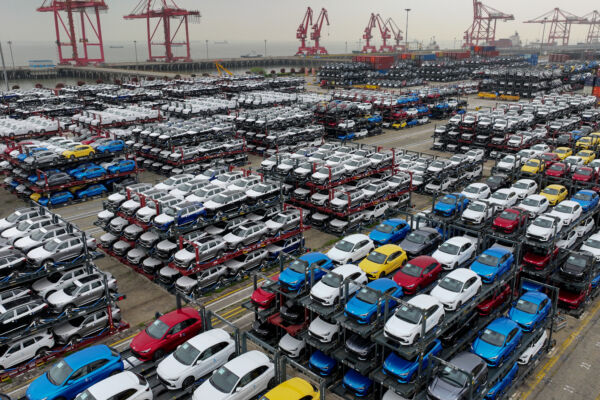
The EU may use the recent agreement reached with Beijing on hybrid car imports – where the EU announced an annual cap of 350,000 cars – as a blueprint to apply to other industries. If the Commission detects a surge in a specific product category, it can activate quota and other protective measures to limit imports.
The EU Commission is evaluating the chemical and machinery sectors, and EU leaders also brought up areas such as robotics, solar and wind energy, and healthcare on Thursday.
The key driver behind this shift is the new consensus developed by countries like Germany, as the German automotive industry admitted for the first time the need for swift action to protect itself against the influx of Chinese products.
In response to calls for European unity against Beijing’s dumping practices, the Chinese Ministry of Commerce warned on Friday that “Europe cannot expect to benefit from pressure or underestimate China’s determination and ability to defend its own interests.” The Ministry urged Europe to work together with China and noted that claims of the EU pressuring China to concede on hybrid cars were unfounded, stating that the consensus reached benefits both sides and complies with WTO rules.
According to sources speaking to Bloomberg, China has long been trying to test and undermine EU unity, stirring discord between member states and EU officials. EU officials anticipate that Beijing will resort to similar tactics once again.
Bloomberg pointed out that if the EU engages in a trade war with China, China still has retaliatory measures at its disposal. For example, China dominates the rare earth supply, with 46% of the rare earths imported by the EU coming from China, and all heavy rare earths originating from China. Heavy rare earths are crucial materials for producing permanent magnets used in defense systems and electric vehicles.
EU Trade Commissioner Maros Sefcovic emphasized on Friday that while the EU will take necessary actions, it will continue dialogue with China. He noted that the electric vehicle agreement is just the beginning, and more actions are required to rebalance the relationship between both parties.