
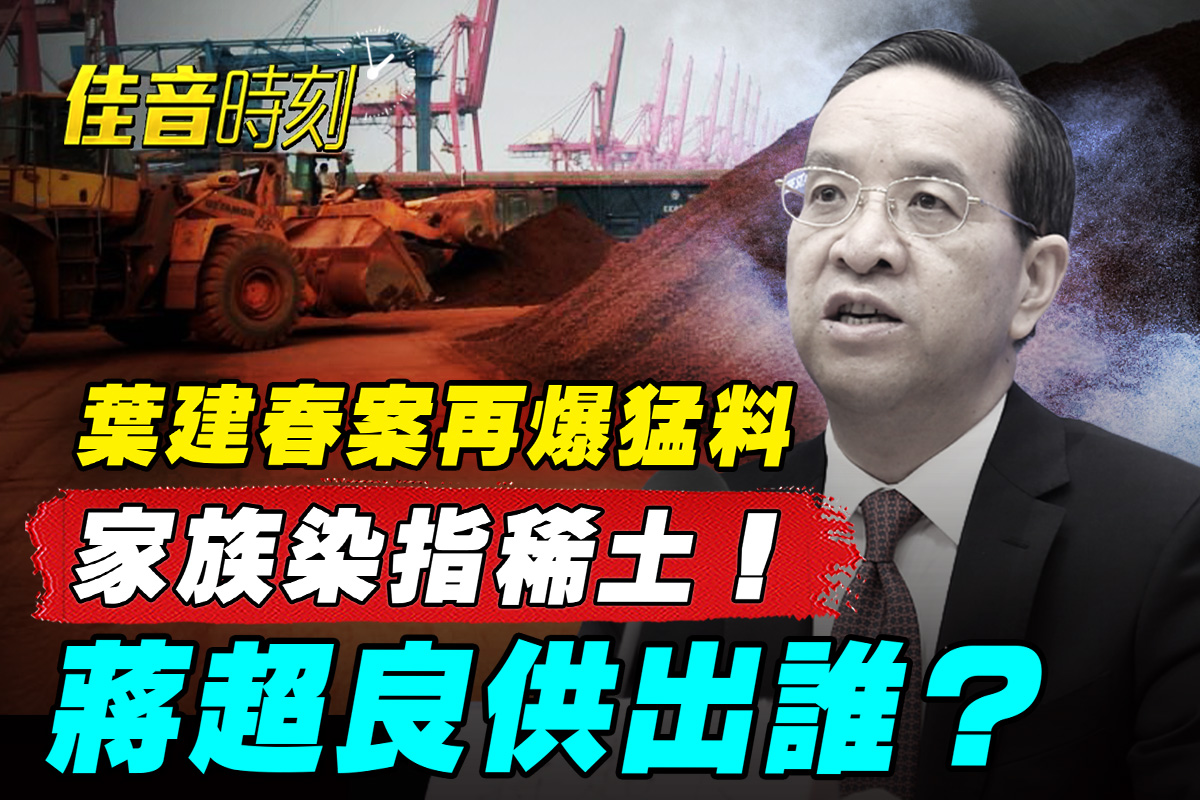
Recently, Ye Jianchun, the Governor of Jiangxi Province, has been unexpectedly removed from his position. Just one day later, more details have emerged.
On August 28th, Chinese media revealed that Ye Jianchun had been taken away by personnel from the Central Commission for Discipline Inspection two days before the official notification. Informed sources disclosed that Ye Jianchun’s family had involvement in rare earth business, and his wife was also taken away.
Meanwhile, on the same day, the case of Jiang Chaoyang, the former Secretary of the Hubei Provincial Party Committee, was sentenced. The court determined that Jiang Chaoyang had taken bribes exceeding 746 million yuan, and he was sentenced to death with a reprieve and life imprisonment. It is worth noting that the official release specifically mentioned that Jiang Chaoyang was given a lighter punishment for reporting and exposing others, which has sparked speculation from various quarters about who Jiang Chaoyang had exposed.
These recent developments in high-level corruption cases have once again brought the spotlight on the anti-corruption campaign in China. The crackdown on corruption has been a priority for the government, aiming to clean up malpractices within the Party ranks and improve governance.
The cases of Ye Jianchun and Jiang Chaoyang serve as a warning to officials across the country, emphasizing that corruption will not be tolerated, and those involved will face severe consequences. These cases also showcase the ongoing efforts to uphold party discipline and maintain a clean political environment.
As the investigations progress and more details come to light, the public remains vigilant and curious about the outcomes of these high-profile corruption cases, as they reflect the commitment of the Chinese government to combat corruption and uphold integrity in governance.
The unfolding events surrounding these cases underscore the complexities and challenges in eradicating corruption at all levels of government, requiring continuous efforts to promote transparency, accountability, and ethical conduct among officials.
In conclusion, the fall of high-ranking officials due to corruption allegations highlights the ongoing fight against graft in China and underscores the government’s resolve to ensure probity and accountability in public service.
We will continue to monitor developments in these cases and the broader anti-corruption campaign to provide updates on the outcomes and implications for governance and accountability in China.