
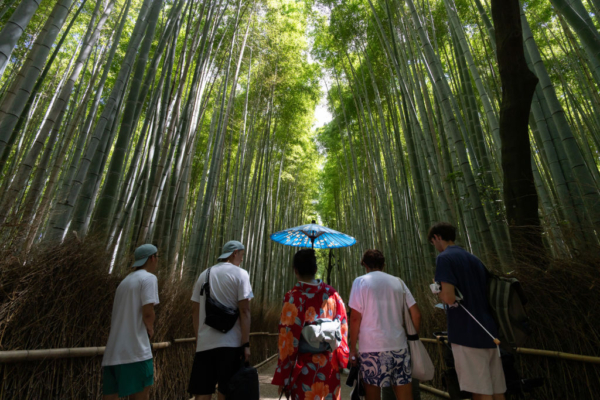
Before traveling to Japan, foreigners always encounter some unexpected surprises, no matter how much research they have done. Some surprises are practical, while others involve cultural aspects. Many surprises often come from the little moments in daily life during traveling in Japan – making tourists stop, smile, and exclaim, “I never expected it to be like this.”
Traditionally, Japan has attracted tourists with its food, cleanliness, and traditional cultural experiences. However, nowadays, Japan feels more like a low-cost shopping paradise because of the continuous depreciation of the yen. Travelers can enjoy omakase dining or premium A5 wagyu beef at the best prices.
Data released by the Japan National Tourism Organization (JNTO) on August 19 showed that there were 3.4421 million foreign visitors to Japan in July, a year-on-year increase of 0.1%, reaching a new record high for the month of July and the first year-on-year increase in four months. The data indicated that the number of visitors from 17 countries and regions to Japan in July hit a historical new high for the month, including South Korea, Taiwan, the United States, Canada, the United Kingdom, France, Germany, Italy, Spain, and more.
In Japan, the most surprising and unforgettable sights are often not the famous landmarks but the quiet moments in between tourist spots: spotless streets, extremely thoughtful service, convenience stores offering delicious meals, or the silent train cars even during rush hours. These experiences often leave American tourists with memories they cannot forget even after returning home.
One of the first things many visitors notice is the sense of cleanliness in Japan. The streets are tidy and orderly, parks well-maintained, train stations immaculate, and public spaces meticulously tended to with great attention to detail.
What surprises people is the scarcity of public trash cans on Japanese streets. People do not rely on visible bins but carry their trash until they find a place to dispose of it at convenience stores, train stations, or hotels. Japan also places great emphasis on recycling, with waste sorting being a part of daily life.
In Japan, students cleaning their classrooms is a natural chore, instilling a habit of cleanliness and personal responsibility from an early age. This culture of personal responsibility explains why cities with millions of residents can maintain remarkable cleanliness. After a few days, many tourists adopt the same practices.
During the 2026 FIFA World Cup, the cleanliness habits of Japanese teams and fans also garnered worldwide attention.
While convenience stores are usually visited only out of necessity in many countries, in Japan, they might be where you stop by every day. 7-Eleven, FamilyMart, and Lawson sell surprisingly high-quality items. Visitors will find excellent sandwiches, freshly made rice balls, hot meals, desserts, coffee, salads, seasonal delicacies, and even restaurant-quality fried chicken. Most stores also have ATMs that accept international cards.
Forgot an umbrella or other daily essentials? Convenience stores have it all. You can find toiletries, socks, chargers, luggage accessories, and more.
Many visitors initially see convenience stores as emergency options but leave amazed at how they surpass convenience stores in their home countries. Interestingly, Japan has over 55,000 convenience stores nationwide, making them an indispensable part of people’s daily lives.
Japan’s trains are world-renowned, but the profound impression they leave is best felt through firsthand experience. The Shinkansen (bullet trains) are fast, comfortable, and extremely punctual. Local trains are clean, easy to ride, and efficiently connect cities, communities, and rural towns.
One thing that often surprises many American tourists is how quiet the train cars are. Even during busy commuting hours, people speak quietly, avoid phone calls, and many passengers read, work, or simply enjoy the journey in silence.
This serene atmosphere often pleasantly surprises first-time visitors and makes the journey feel relaxing and enjoyable.
Japan is renowned for its excellent hospitality, but it is only through firsthand experience that one can truly appreciate its essence. Hotel staff offer warm greetings, restaurant servers are attentive without being intrusive, store clerks meticulously package goods with utmost seriousness, and train attendants bow before leaving each train car.
These behaviors are not performative acts for tourists but stem from a concept known as “Omotenashi” (hospitality) – anticipating guests’ needs before they are even expressed.
Many American tourists state that this meticulous care has completely changed their views on customer service and become one of the reasons why many return to Japan repeatedly.
Japan’s train stations are massive, temples often take up more space than they seem on the map, historical districts invite leisurely exploration, and markets, gardens, shopping streets, and scenic areas are perfect for strolling.
Unknowingly, visitors walk over 15,000 steps per day, illustrating that walking is one of the best ways to experience Japan.
In recent years, credit card usage has become quite common in Japan, but cash is still widely accepted. Small restaurants, temples, local markets, family-run shops, and some rural attractions might accept only cash. Fortunately, withdrawing cash is convenient, with many convenience stores having ATMs that support international cards.
Many American tourists will also discover an unexpected phenomenon – the astonishing amount of coins. The frequent use of 100 and 500 yen coins means that you may soon find yourself carrying a small coin purse like many locals.
This small habit quickly becomes a part of the Japanese travel experience.
Many first-time American visitors to Japan often assume that the travel experience in Japan is monotonous. In reality, each region has its unique characteristics. Tokyo exudes modernity and vibrancy; Kyoto immerses in a rich historical atmosphere; Osaka is renowned for its passionate food culture; Takayama preserves mountain traditions with quaint streets; Kanazawa offers elegant gardens and superb seafood; Hokkaido provides a refreshing, nature-centric feel; Okinawa boasts a subtropical climate, unique dining culture, and cultural influences from the past Ryukyu Kingdom.
Even the local specialty foods vary significantly depending on the travel destination.
Exploring multiple regions is one of the best ways to experience the diverse charms of Japan. This is also one of the reasons why many tourists opt for longer itineraries, including destinations beyond the classic routes.
For many American tourists, the most pleasant surprise about Japan is the sense of safety.
People can stroll city streets at night with peace of mind; children often travel to and from school alone; in cafes, leaving phones or wallets on the table to reserve a seat is common. However, this does not mean that tourists can be careless; basic safety awareness is still essential wherever you are.
Nevertheless, Japan consistently ranks as one of the safest travel destinations globally, providing a sense of security that enables many visitors to enjoy a relaxed and carefree experience like never before.