
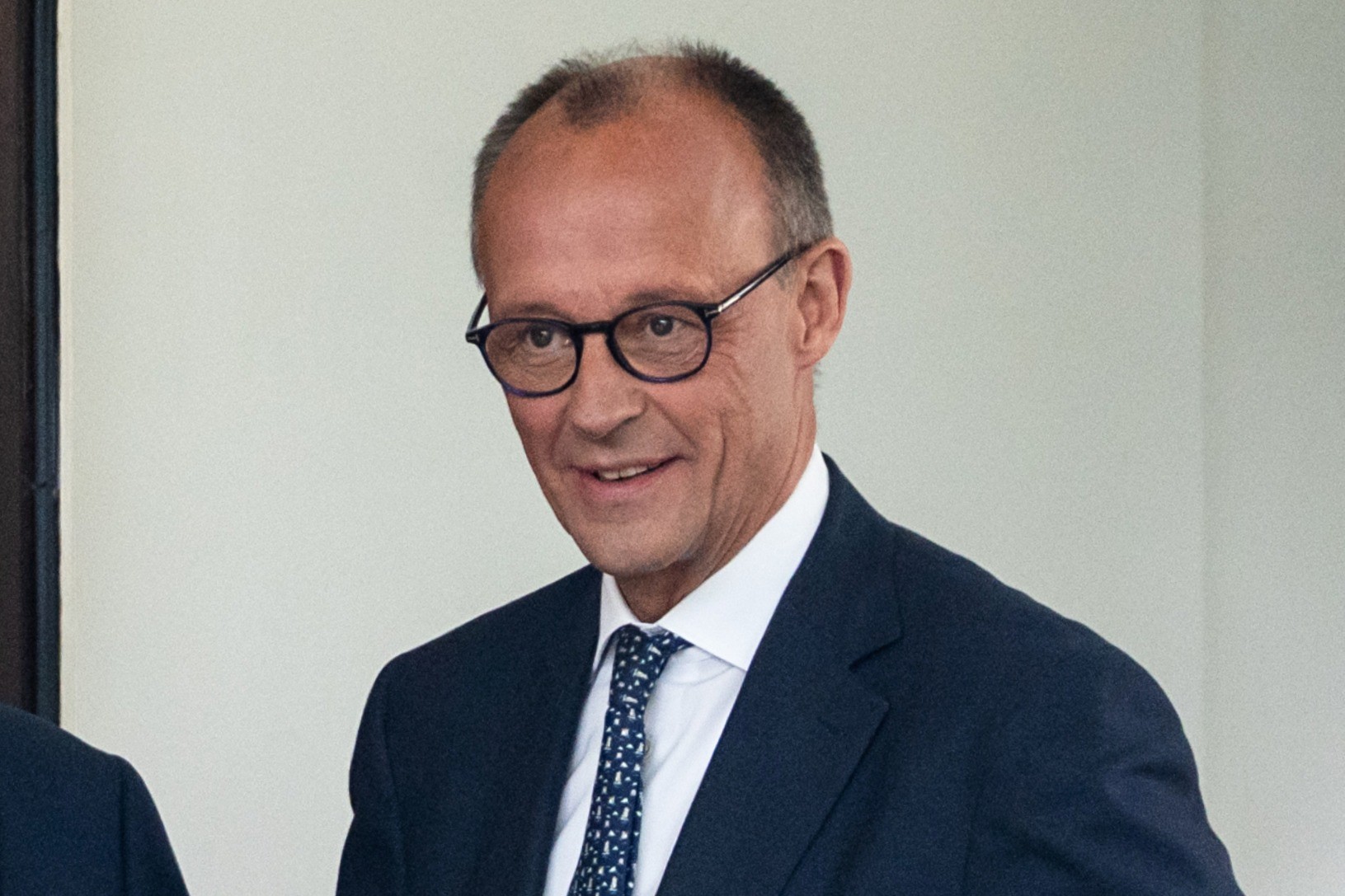
Germany’s industrial sector is ramping up pressure on the German government to take a tougher stance against China due to the long-standing trade deficit between the two countries. Industry leaders are urging Chancellor Friedrich Merz to adopt more assertive measures to address the unfair competition from China.
According to reports from Reuters, Germany has refrained from setting up trade barriers in fear of economic retaliation from China, allowing Chinese products such as electric cars, machinery, and steel to flood the German market.
In 2025, Germany’s trade deficit with China, its largest trading partner, expanded by approximately 22 billion euros, reaching a total of 893 billion euros (around 1,040.5 billion US dollars). This was mainly due to an 8.8% increase in imports and a 9.7% decline in exports.
A report by the Organization for Economic Cooperation and Development (OECD) in June of this year revealed that Chinese enterprises receive subsidies that are 3 to 8 times higher than those of their competitors in other OECD countries when calculated as a proportion of revenue. Between 2005 and 2024, nearly 60% of China’s global market share growth can be attributed to these subsidies.
Despite China’s denial of unfair subsidies and currency manipulation, the Federation of German Industries (BDI), representing major manufacturers in Germany, estimates that Chinese products can be priced 30% to 40% lower than German products due to the impact of both the yuan exchange rate and Chinese subsidy policies.
Wolfgang Niedermark, a member of the BDI’s board of directors, stated that the significant price pressure from Chinese suppliers is exacerbating the situation, emphasizing that Europe’s actions should not be constrained by potential retaliatory measures from China.
Jacob Gunter from the Mercator Institute for China Studies pointed out that the once mutually beneficial relationship between German automakers and China has turned sour, with Chinese automakers now causing challenges for German counterparts in their domestic, European, and third-party markets.
Chinese brands such as BYD have surpassed Volkswagen in sales in the domestic market and are experiencing rapid growth in the European market, leading to concerns among German automakers about losing market share in Europe and triggering trade conflicts with China.
Oliver Blume, CEO of Volkswagen, recently called for the establishment of a “fair competitive environment” in Europe during an earnings conference call. This includes imposing tariffs on Chinese plug-in hybrid cars and implementing rules to increase the proportion of European-manufactured components.
Chinese state media criticized Germany’s actions as protectionist, prompting Volkswagen to downplay such statements. Analysts believe that German automakers are caught in a dilemma between “fearing the loss of market share in Europe” and “provoking a trade conflict between China and Germany”.
Christian Bruch, CEO of Siemens Energy, expressed in June that treating Chinese and European products equally is “unacceptable” and advocated for considering regulations and local content quotas.
Volker Treier, responsible for foreign trade at the Association of German Chambers of Commerce and Industry (DIHK), stated that there should be sufficient mechanisms within the framework of the World Trade Organization (WTO) and the European Union to defend European industries, advocating for simplifying and expediting decision-making processes.
Chancellor Merz announced on Wednesday that the cabinet has been tasked with developing a plan to address trade imbalances between the European Union and China. He noted that while representative organizations like the German Association of the Automotive Industry (VDA) had previously opposed imposing tariffs on electric cars from China, they are now reconsidering whether to support trade protection measures.
Matthias Bianchi from the German Association of the Mittelstand, representing over half of Germany’s workforce, mentioned that while businesses are still concerned about retaliation from China, inaction is now seen as a risk.
In addition to a potential shift in Germany’s stance, several EU member states, including France, Italy, and Spain, have pushed for reforms to the EU’s trade defense measures in a joint position paper released on May 22.
Furthermore, trade negotiations between the EU and China are expected to take place in October. As the largest economy in the EU, Germany’s final position will significantly influence the EU’s trade policy towards China.