
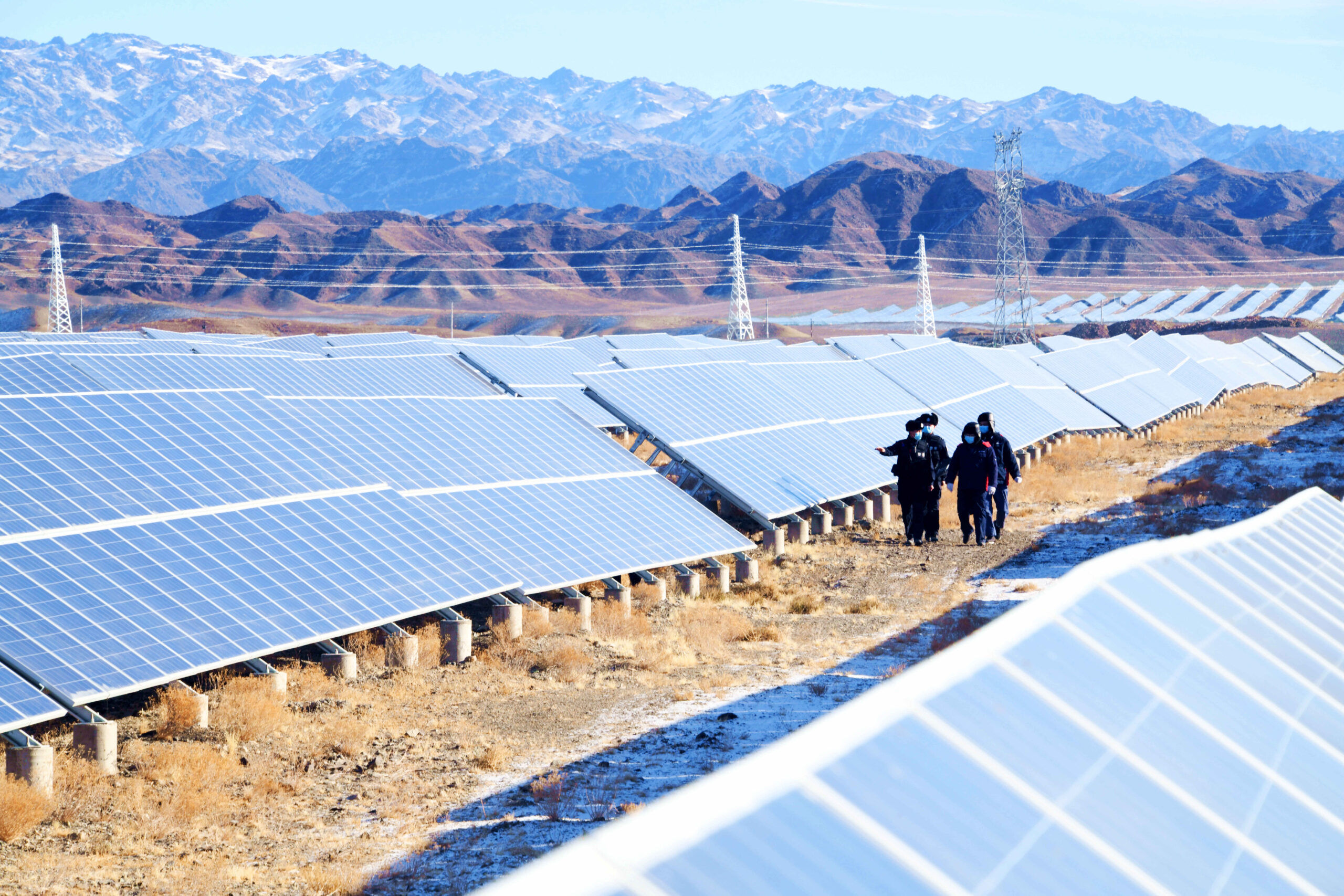
In the first half of 2026, China’s abandoned new energy electricity reached approximately 360 terawatt-hours (TWh), a significant increase of 49% compared to the same period last year. This amount is equivalent to the electricity consumption of Mexico or the UK for a whole year and is enough to cover the growing electricity demand in China during the same period.
The phenomenon of extensive electricity abandonment highlights the dilemma in China’s energy transition. Experts point out that the issue is not a temporary bottleneck but a long-term result of structural oversupply and mismatched infrastructure, deviating from actual market demand and reverting to the old path of planned economy.
According to the latest research report released in August by the Global Energy Monitor (GEM) and the Center for Energy and Clean Air (CREA), wind and solar power generation in China faced restrictions of 26.1% in the first half of this year, considerably higher than the official figures of 8.6% for solar and 9.1% for wind released by the Chinese National Energy Administration.
China issue expert Mike Li told reporters that the current electricity grid in China does not match the capacity of new energy sources, leading to the large-scale abandonment of electricity as a last resort.
The Chinese National Energy Administration stopped publishing monthly electricity abandonment data since March this year and has not responded to requests for comments from the public. This not only exposes the long-standing fact of data falsification by the Chinese government but also underscores the severe challenges facing China’s energy transition with the increasing pressure to consume new energy.
Data from the two research institutions show that in the first half of 2026, China added 30GW of coal-fired power generation, a 43% increase from the same period last year, while only retiring 2.7GW. The newly added capacity is approximately ten times the retired capacity. Currently, there are 274GW of coal-fired power generation pipelines under construction, equivalent to 22% of the existing coal capacity.
Coal-fired power generation operators usually lock in 60% to 70% of the previous year’s output with long-term supply contracts, squeezing the grid integration space for renewable energy. In the first half of this year, coal-fired power generation increased by 3.4% compared to the same period last year, reversing the trend of decline seen for the first time in nearly a decade.
Yuan Ren, a senior analyst at the UK-based energy analysis company Wood Mackenzie, told Reuters that China’s output restrictions are not temporary but a structural issue that is expected to persist in the coming years.
One aspect of China’s energy problem that cannot be ignored is energy security. Due to the concentration of large-scale wind and solar power in resource-rich regions in the northwest, while demand is mainly in the eastern coastal areas, there is a lag in cross-regional transmission and energy storage infrastructure. This results in a situation where “generation capacity expands rapidly, but consumption and dispatching capacity cannot keep up”.
Mike pointed out that the severe mismatch between the existing grid and new energy capacity is a direct cause of electricity abandonment. Additionally, renewable energy is highly influenced by weather conditions, with more pronounced fluctuations during typhoon and rainy seasons. Thermal power generation still plays a crucial role, especially in the eastern and southern regions, relying on coal power support from other provinces (mainly Shanxi, Inner Mongolia) or imported coal.
According to the latest data released by the Chinese National Bureau of Statistics, from January to July 2026, the cumulative industrial thermal power generation in the country reached 3.6127 trillion kilowatt-hours, an increase of 1.8% year-on-year.
China’s energy policy cannot be simply understood through maximizing economic efficiency or pure market logic. It is a result of multiple policy objectives intertwining: energy security, local investment and GDP incentives, the development of the new energy industry chain and employment, power system stability, and carbon reduction goals.
For local governments, the construction of coal-fired power plants, new energy sources, transmission lines, and related industries may bring investment and GDP growth. For the power grid, coal-fired power provides flexibility and stability. For the central government, new energy is related to energy security and reducing dependence on imported fossil fuels. However, to ensure there is no widespread shortage of electricity supply, expansion of coal-fired power has had to be relaxed.
These goals do not contradict each other, but the priorities and implementation mechanisms often do not align, leading to the situation where “there is a vast construction of new energy sources while also expanding coal-fired power significantly; emphasizing green transformation while ensuring long-term contracts for coal-fired power; expanding generation capacity while not having enough capacity to absorb new electricity”.
The deeper problem lies in the disconnect between the Chinese government’s policy orientation and the reality of the market. According to data from Zero Carbon World, as of April 2026, China’s cumulative installed solar capacity reached 1.25 billion kilowatts, equivalent to 4.5 times that of the United States; however, the solar power generation in April was only 57.06 billion kilowatt-hours, just 1.25 times that of the US. In the same period, the US solar capacity was about 280 million kilowatts, with an April monthly generation of about 45.5 billion kilowatt-hours.
The huge installation scale coupled with very low actual effective power generation highlights the severity of the electricity abandonment issue. This not only results in significant resource waste but also jeopardizes the future of new energy sources.
The inability to synchronize the grid and energy storage infrastructure means that the electricity abandonment issue is difficult to resolve thoroughly in the short term, as it involves multiple structural factors such as territorial spatial planning, grid investment cycles, long-term supply contract systems, and regulatory coordination.
As grid consumption capacity continues to deteriorate, combined with the abolition of fixed-price purchase systems and financial subsidies for new energy sources in recent years, China saw a sharp 66% decrease in newly installed solar capacity in the first half of this year.
Investors are becoming increasingly cautious about the financial viability of standalone solar projects, with a shift towards the combination of “solar energy + energy storage” to mitigate electricity abandonment risks. Reuters cited an analysis report by Zhang Shuwei, Chief Economist at the Draworld Environment Research Center in Beijing, stating that as electricity abandonment worsens, “evaluating the financial feasibility of planned projects becomes increasingly difficult”.
Major Chinese state-owned enterprises are actively selling equity in new energy. According to statistics from Foreseeing Energy, there were 37 transactions involving new energy companies’ equity in the first half of 2026 alone, with transferors with state-owned backgrounds accounting for 65%, and transactions involving controlling stakes accounting for 60%.
In this wave of equity sales, large state-owned enterprises such as State Grid, Southern Grid, China Power Construction, and China General Nuclear were prominently involved and drew significant attention.
Mike stated that the significant development of new energy by the Chinese government is primarily aimed at reducing dependence on external fossil fuels. However, under the current energy policy guidance, the development of renewable energy has to some extent deviated from actual market needs, resulting in overcapacity and supply-demand imbalances, leading back to the old path of planned economy.