
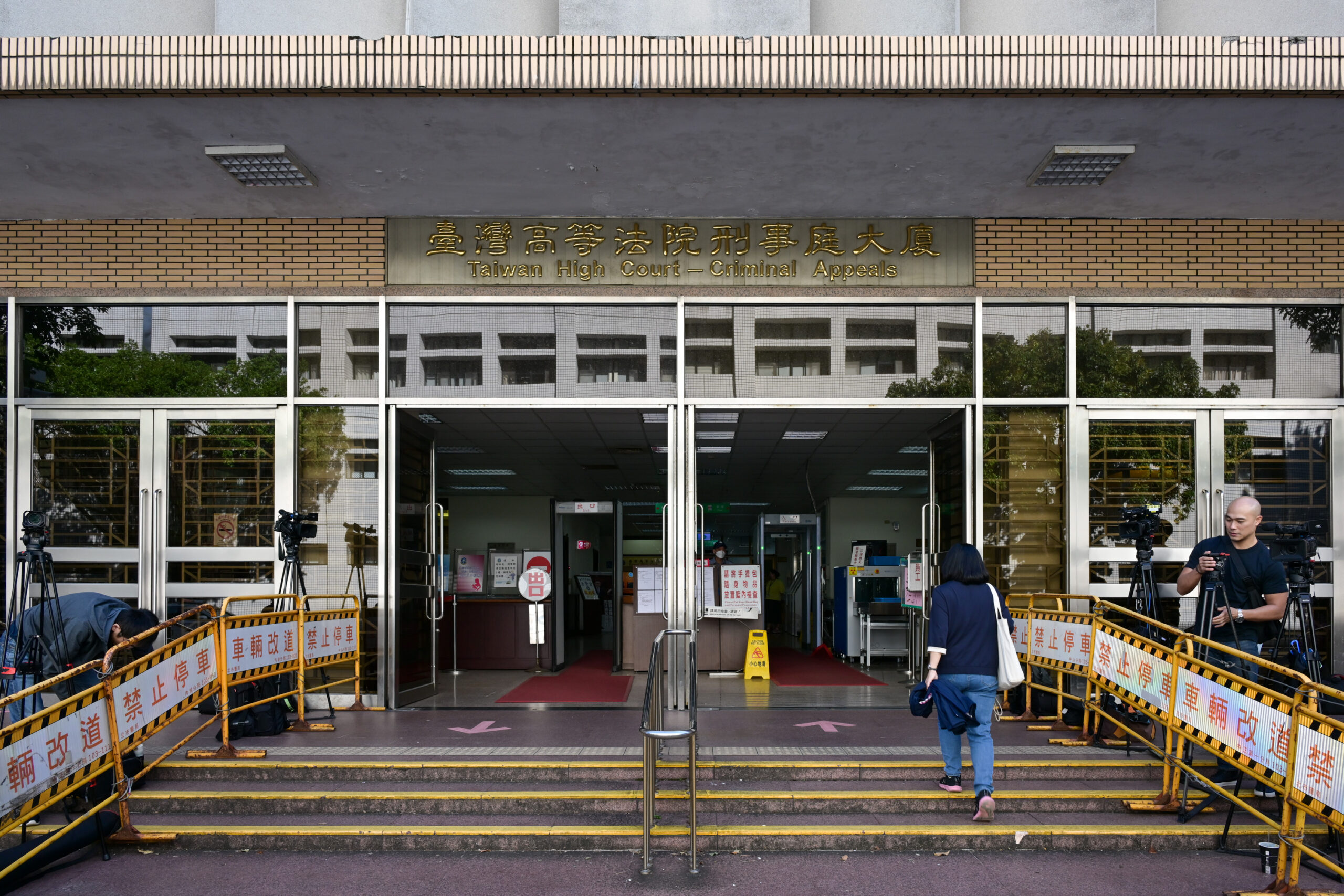
Taiwanese retired Lieutenant Colonel Li Haipeng, who had gone into business after retiring from the army, was recruited by the Chinese Communist Party (CCP) to act as a spy, obtaining military secrets and passing them on to the CCP. He even requested his two sons who were in active service, Li Yusheng and Li Chuxiang, to provide classified documents. In the second trial at the Taiwan High Court today (25th), Li Haipeng was sentenced to 11 years and 6 months in prison for charges including bribery, while Li Yusheng received a 2-year and 1-month sentence, and Li Chuxiang was sentenced to 16 years.
Li Haipeng, a retired Taiwanese army lieutenant colonel, was implicated in obtaining classified information through then-Lieutenant Colonel Li Wensheng of the Hualien Air Force Base, and passing it on to the Chinese military personnel. In the first trial, Li Haipeng was initially sentenced to 4 years in prison for the crime of “collecting national secrets” under the National Security Act. Li Yusheng and Li Chuxiang were charged with the crime of passing on military secrets they held due to their official duties under the Army, Navy, and Air Force Criminal Law, receiving sentences of 2 years and 2 months, and 2 years and 4 months, respectively. Li Wensheng was sentenced to 3 years and 2 months, a ruling later overturned by the Supreme Court for retrial.
After the second trial at the High Court, Li Wensheng was sentenced to 15 years in prison for the crime of “aiding enemy spies in their activities”, while Li Haipeng was sentenced to 12 years, and Li Yusheng to 2 years and 1 month, under the National Security Act. Li Chuxiang, on the other hand, received a sentence of 10 years and 6 months.
The Taiwan Prosecutor’s Office directed an investigation revealing that 24 years ago, after his retirement, Li Haipeng, once a lieutenant colonel, became involved in recruiting Chinese tourist groups but was later absorbed by the CCP to gather military secrets of the Republic of China.
The Taiwan High Court pointed out that Li Haipeng persuaded Lieutenant Colonel Li Wensheng to provide him with classified documents, which were then passed on to the CCP, using methods such as hosting tours, sharing profits, and bribery. Li Wensheng continuously provided classified documents labeled as “secret” and “classified” in hard copies or scanned formats stored on memory cards and USB drives to Li Haipeng, who further handed them to CCP personnel, receiving a reward of $10,000 and enjoying trips to South Korea.
After retiring, Li Wensheng’s son, Li Chuxiang, an army sergeant at the time, under his father’s request, collected various military-classified documents, scanned them into digital forms, stored them on memory cards, and transferred them to Li Haipeng for further transmission to the CCP. Li Chuxiang even wrote statements such as “willing to support cross-strait peace and reunification” to express his loyalty.
In 2012, Li Haipeng, along with his wife, Li Chuxiang, and his girlfriend, accepted a free trip to Malaysia from the CCP, where they met with CCP personnel. The court determined that at that time, Li Chuxiang was fully aware of his father’s espionage activities for the CCP, yet upon returning to Taiwan, he continued to provide military information and assisted Li Haipeng in scanning and storing classified documents obtained from Li Yusheng.
In the second trial, Li Haipeng was found guilty of violating the Anti-Corruption Act by engaging in misconduct by offering bribes and improper benefits. Li Haipeng admitted his crimes during the investigation and trial, leading to a reduced sentence, ultimately receiving a term of 11 years and 6 months in prison.
Li Chuxiang admitted to some of his wrongdoings, but the court, considering discrepancies between his testimony and the evidence in the case file, sentenced him to 16 years for aiding enemy spies in their activities under the Army, Navy, and Air Force Criminal Law, acknowledging the relatively minor nature of his involvement despite the short duration and quantity of classified documents handed over.