
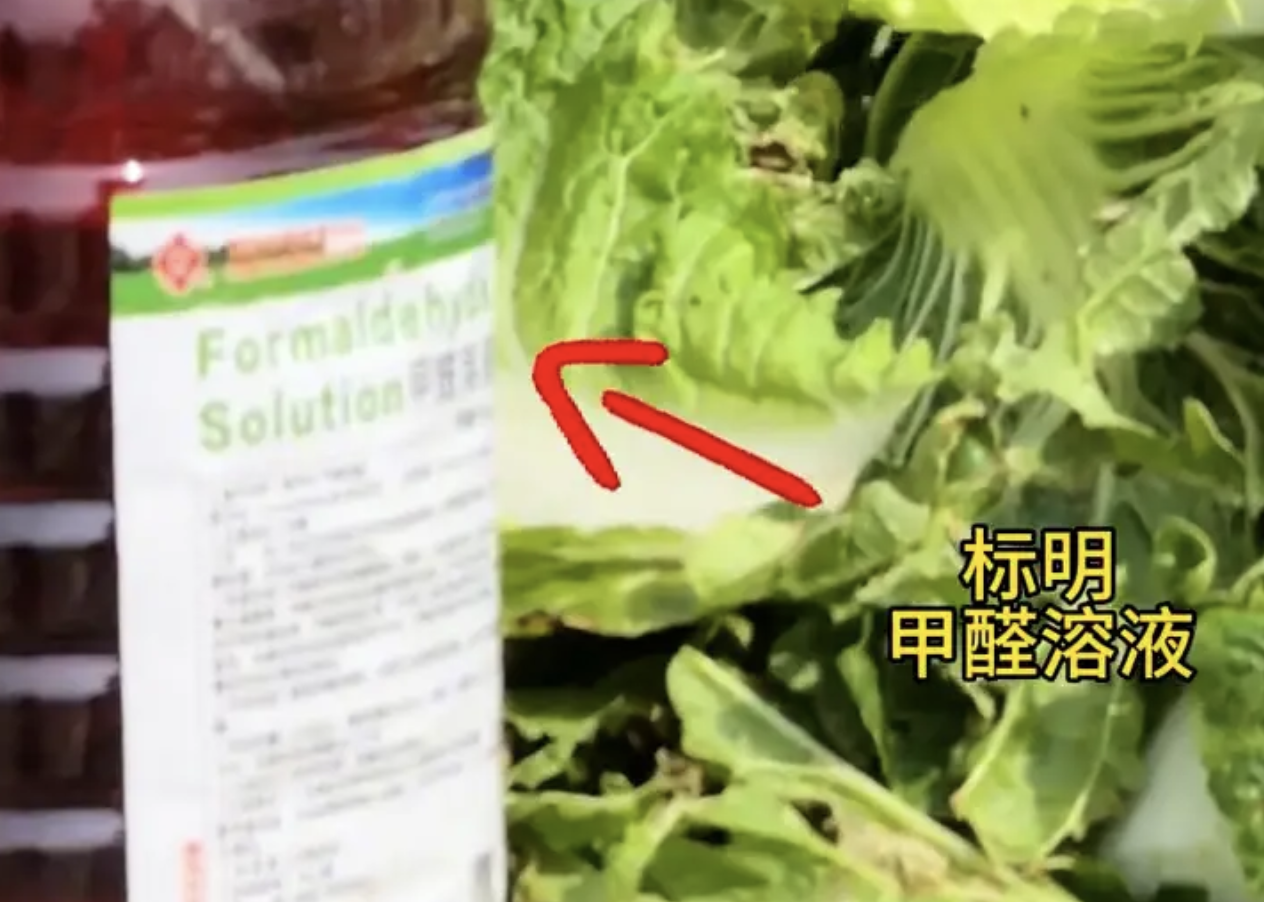
In a recent incident that has sparked panic among the people of South Korea, it was revealed that a cabbage purchasing merchant in Kangbao County, Zhangjiakou City, Hebei Province, China, illegally used formaldehyde solution (formalin) for preserving napa cabbage, most of which is imported from China for making kimchi.
On August 23, a South Korean individual shared a video on X platform showing cabbage roots being soaked in formaldehyde solution by purchasing merchants in Hebei Province, China, to ensure freshness of the vegetables and extend their shelf life during long-distance transportation. This revelation has led to calls for the temporary suspension of importing Chinese-made kimchi.
South Korean netizens reacted to this news, expressing concerns and frustrations about the situation, with some questioning the safety of consuming kimchi in restaurants and wondering if it comes from China. There were also comments indicating mistrust towards products labeled as foreign-made instead of specifically mentioning China.
According to a report by the South Korean newspaper “The National,” from January to September 2025, South Korea imported 250,000 metric tons of kimchi, with 99% of it coming from China. With the increasing dependency of consumers on Chinese kimchi and the rise in cases of counterfeit Korean-made kimchi, consumer trust has been put to the test.
Official reports from China Central Television in 2024 revealed that 99.98% of the 310,000 metric tons of spicy napa cabbage South Korea imported from abroad came from China.
In 2020, Chinese kimchi exports to South Korea reached 281,860 metric tons, accounting for 99% of South Korea’s kimchi imports that year. This figure has remained relatively consistent over the past five years, from 2015 to 2019.
A survey conducted by the South Korean Agricultural and Fisheries Food Distribution Corporation in 2024 revealed that among 1,517 South Korean restaurants surveyed, 55.4% used imported kimchi as the main ingredient in their dishes.
Public data shows that the majority of Chinese kimchi exports to South Korea come from Shandong Province. The cabbage used in these products is sourced nationwide to ensure year-round supply, with Hebei and Inner Mongolia being important supplementary sources, especially during specific seasons. Kangbao County, as a major vegetable production area in northern Zhangjiakou, has a considerable output of napa cabbage, with some being processed in Shandong before being exported to South Korea and other countries like Thailand and Vietnam.
Previously, a Chinese blogger uploaded a video on August 22, showing napa cabbage being dipped in formaldehyde solution for preservation before transportation in Kangbao County. Local authorities have confirmed this practice, which raises concerns about the safety and quality of the exported products.
The Hong Kong Centre for Food Safety reported on August 24 that between January 2023 and July 2026, over 51,000 vegetable samples and products were tested for various substances, including formaldehyde, with an overall compliance rate of 99.8%, and no samples were found to have failed the formaldehyde testing.
As of now, official statements regarding the formaldehyde cabbage incident in Hebei, China, have not been issued by South Korea or Taiwan. However, the incident has garnered significant attention and concern among the public in both Taiwan and South Korea.
Political commentator Zhou Weihang in Taiwan cautioned on social media about the prolonged illegal use of chemicals in Chinese cabbage production, highlighting the potential risks posed by Chinese cabbage and related products being exported to countries like Japan and South Korea, urging consumers to be vigilant when purchasing imported goods.
Formaldehyde is a colorless chemical with a strong irritating odor commonly used in industrial processes. Ingesting high levels of formaldehyde can cause varying degrees of damage to the respiratory, digestive, circulatory, and nervous systems, with potential risks of leukemia and cancer. The World Health Organization has classified formaldehyde as a carcinogen.
As early as May 2012, the official media in Hunan, “Xiaoxiang Morning News,” reported that vegetable vendors in Shandong and other areas sprayed formaldehyde solution to preserve cabbage during long-distance transportation. This unethical practice has raised concerns about food safety and quality in the industry.