
Since the eruption of the Ukrainian crisis in 2022, as well as escalating tensions between the US and Iran, and the ongoing blockage of the Red Sea shipping route, the global geopolitical and economic order has experienced a series of fractures and reorganizations. The Chinese Communist Party (CCP) has been adopting a strategy of “indirect non-participation” in current conflicts.
In the short term, leveraging its vast industrial manufacturing capacity and pivotal position in the Eurasian continent, the CCP has gained some tangible benefits in terms of energy, markets, de-dollarization, and strategic relief. However, as conflicts prolong, the penetrating impact of secondary US-EU sanctions, the erosion of trust in Western core markets, and the sharp deterioration of security environment in Northeast Asia would result in significant costs for the CCP.
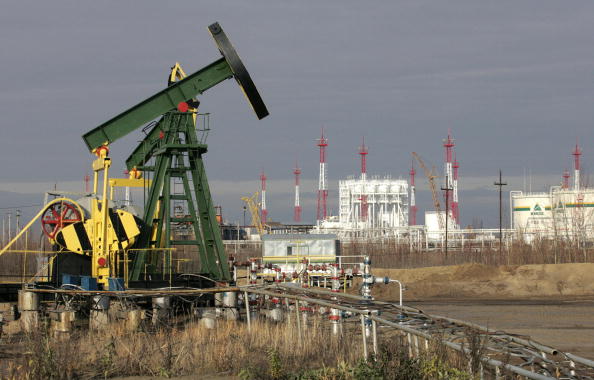
During the Russia-Ukraine war, after Europe cut off energy supplies to Russia, Russian oil and natural gas shifted significantly eastward, with China becoming its core buyer, importing nearly one billion tons of Russian crude oil annually. According to authoritative think tank data from customs and the Gaidar Institute, Russian oil enjoys a continuous discount compared to international benchmark prices during wartime. From the outbreak of the conflict until recent years, the CCP has profited nearly $12 billion solely from oil purchases.
The “Power of Siberia-1” natural gas pipeline has a yearly gas delivery capacity exceeding 388 billion cubic meters, with the advancement of a new supply channel for the Far East. The land-based pipeline network has provided the CCP with an energy security buffer zone during wartime to mitigate the energy price fluctuations caused by the turmoil in the Persian Gulf and the Red Sea.
On the one hand, as Western multinational companies withdraw from Russia and Iran, the CCP also seizes opportunities to profit from the conflicts.
Prior to the conflict, the bilateral trade volume between China and Russia hovered around $100 billion. With the breakdown of Western supply chains, the bilateral trade volume quickly surpassed the $200 billion mark and has been steadily maintained above $240 billion, although it began to decline in 2025. The trade volume between China and Russia approached $160 billion in the first seven months of 2026.
In the automotive sector, Chinese brands in Russia’s market share soared from less than 10% before the conflict to over 60%. In the machinery and electronics fields, Chinese smartphones occupy over 70% of the market share in Russia, while high-end CNC machine tools, engineering machinery, and heavy trucks have completely replaced products from Europe, America, Japan, and South Korea.
The disruption in the flow of oil and gas through the Hormuz Strait has triggered global concerns about supply disruptions and high oil prices, prompting Europe, Southeast Asia, and other countries in the Southern Hemisphere to accelerate the transition to alternative energy sources. Leveraging its superior production capacity in photovoltaic components, wind power equipment, power batteries, and electric vehicles, China has increased its share in the global market as a “green energy equipment manufacturing center.”
Furthermore, China plays a crucial role in supplying weapons and components needed in the conflict, which continuously flow to Russia and other countries. The vast majority of components for millions of homemade FPV drones in Ukraine, including key electronic systems such as brushless motors, electronic speed controllers (ESCs), lithium polymer batteries, flight control boards, image transmission modules, and carbon fiber frames, are directly or indirectly sourced from supply chains in Shenzhen and eastern China. The EU and the US also continue to import necessary Chinese components and critical minerals.
The US and Europe have utilized the SWIFT system and frozen tens of billions of US dollars of Russian overseas assets.
Prior to the conflict, less than 2% of China-Russia trade settled in yuan. Currently, over 90% of trade between China and Russia is settled in yuan and rubles directly. The yuan has become the most significant currency in the Moscow Exchange’s foreign exchange trading volume.
The participation of institutions in China’s Cross-border Interbank Payment System (CIPS) has seen a continuous increase in both numbers and cross-border settlement amounts at an average annual rate of over 30%. Gulf countries have expanded non-dollar settlement scales to hedge against risks, and the proportion of settlements in yuan for China’s economic and trade cooperation and energy purchases in the Middle East has significantly increased, promoting the implementation of the yuan cross-border payment system (CIPS) in the Gulf region.
The two conflicts have heavily consumed resources from Western camps. The US and Europe have collectively provided over $250 billion in funding and military assistance to Ukraine, significantly depleting NATO’s conventional ammunition depots and military manufacturing capabilities. The US’s presence in the Middle East-Iran confrontation and the Red Sea escort operation has long kept US double carrier strike groups and high-end air defense missile resources tied up. This disruption has disrupted the Pentagon’s plan to concentrate all military resources towards the Indo-Pacific (Indo-Pacific strategy) and objectively eased the immediate military pressure the CCP faces in the Taiwan Strait and South China Sea.
Supporting Russia and Iran, the CCP faces a series of European and American sanctions lists, high tariffs, and other challenges.
1. Increased impact from US-EU secondary sanctions
As the conflicts persist, the US and Europe are gradually transitioning sanctions towards third-party entities that provide support to Russia and Iran.
The number of Chinese companies sanctioned in relation to Russia has surged. The US Department of the Treasury (OFAC) and the Department of Commerce (BIS) have included hundreds of CCP entities (including trade intermediaries and technology companies in mainland China and Hong Kong) on the “Specially Designated Nationals List” and “Entity List” for providing “dual-use materials such as microchips, drone components, optical sensors, nitrocellulose,” leading to destructive blows to assets and international businesses of relevant companies overseas.
Under the US’s enhanced secondary sanctions on foreign financial institutions engaged in Russia-related transactions, major state-owned Chinese banks such as ICBC, CCB, and BOC, along with some mainstream city commercial banks, have taken preventive measures to avoid being removed from the US dollar clearing system (CHIPS), significantly tightening or even interrupting fund settlements related to Russia and Iran. Up to 70% to 80% of direct cross-border remittances between Chinese and Russian companies have faced rejections or months-long compliance background checks, resulting in severe fund detentions and increased transaction costs in supply chain.
2. Erosion of trust in mainstream Western markets and accelerated “de-risking” of industrial chains
Despite the prosperity in China-Russia bilateral trade, the foundation of China’s foreign trade still highly depends on mainstream European and American markets.
China’s trade volume with Russia (approximately $240 billion) is far lower than its trade with the EU (approximately $780 billion) and the US (nearly $600 billion) combined. Due to its economic support for Russia, China has been directly classified by NATO and the EU officials as the “Decisive Enabler” of the Russia-Ukraine crisis, leading to a substantial decrease in political mutual trust between China and Europe.
Trade sanctions and tariff barriers. The Comprehensive Agreement on Investment (CAI) between China and the EU, negotiated for many years, has been indefinitely suspended. The EU has accelerated its “de-risking” strategy towards China and shifted to a “minimum pricing” mechanism to replace tariffs on pure electric vehicles imported from China starting in 2026, severely impacting the CCP’s strategies to expand into the European market with new energy vehicles.
China has heavily invested in ports, power stations, oil fields, and industrial zones in the Middle East (including Iran, Iraq, UAE, Saudi Arabia, etc.). The spread of war and regional security disorder has directly led to the suspension of some industrial projects, halting of flights and logistics, and impacting exports of new energy vehicles and industrial goods to the Middle East.
The investment losses in Iran for China primarily manifest in the forced suspension of large-scale oil and gas and infrastructure projects, shrinking profits due to currency devaluation, and secondary sanctions faced by small and medium-sized export companies. These factors could potentially result in losses of billions of US dollars for the CCP.
3. Escalation of security situation in Northeast Asia and polarization of confrontations
North Korea has formed a substantive military alliance with Russia, directly undermining China’s control over North Korea.
North Korea has shipped millions of rounds of artillery shells to Russia and dispatched elite ground forces in exchange for Russia’s intercontinental ballistic missile reentry technology, nuclear submarines, and advanced anti-air algorithms. This exchange has significantly enhanced North Korea’s nuclear deterrence capabilities and reduced China’s geopolitical constraints towards Pyongyang.
The radical military bonding between North Korea and Russia has directly stimulated the formalization of trilateral military security cooperation between the US, Japan, and South Korea. The US and Japan have established a normalized real-time warning data sharing mechanism for ballistic missiles, with US strategic nuclear submarines, nuclear-powered aircraft carrier battlegroups, and strategic bombers stationed in the Yellow Sea and the edges of the Sea of Japan reaching historical peaks in frequency.
In the short to medium term, China may gain some economic benefits from the conflicts; however, in the long term, due to its supportive actions behind the scenes, the rift between China and the West may deepen, prompting Western markets to accelerate detaching their reliance on China’s industrial chains and imposing high tariff barriers to exclude China from the free market. Additionally, China faces an uncontrollable situation in the Korean Peninsula due to the close military ties between North Korea and Russia.