
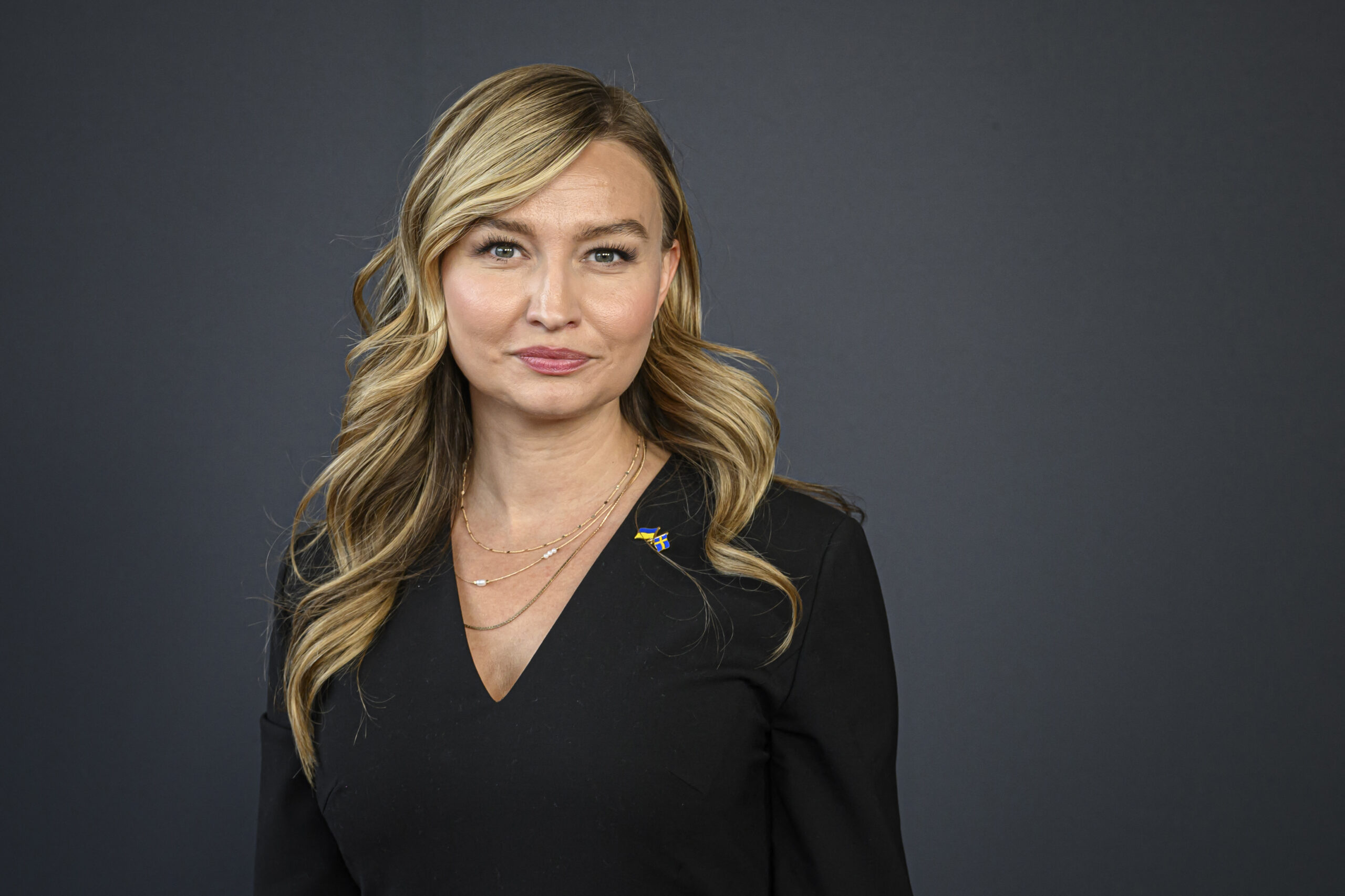
Sweden’s government announced on Thursday, July 23, that the extraction of critical metals and rare earth minerals will be considered a matter of national security interest. Swedish Deputy Prime Minister and Minister for Energy and Enterprise, Ebba Busch, stated the necessity of formulating a new mining strategy to reduce dependence on China.
This move reflects the European Union’s overall strategy to decrease reliance on critical mineral imports from China. China holds dominance throughout the entire supply chain from mining to processing, and these rare earth minerals are essential for clean energy generation, national defense, and electric vehicle production. Export controls have become a significant leverage for Chinese authorities in their trade war and other disputes with Washington.
Sweden is the largest producer of iron ore in the EU and also boasts abundant reserves of graphite, cobalt, and rare earth elements. One of the flagship projects aimed at reducing reliance on China is the “Per Geijer” deposit near the Kiruna mine owned by the Swedish state-owned mining company LKAB.
The deposit hosts a total mineral resource of 1.2 billion tons, including 2.2 million tons of rare earth oxides, which are crucial for European interests. LKAB previously stated that in the long term, this mine located in the northern Arctic region could fulfill 18% of Europe’s rare earth demand. Sweden hopes to fully exploit rich resource reserves like “Per Geijer” by prioritizing the mining sector as a national imperative.
Busch mentioned that designating mining as a matter of national security interest will expedite planning and permitting processes, thereby attracting investments. She boldly stated during a press conference, “We believe this will make a significant contribution to the defense capabilities of Sweden, the EU, and NATO.” She also referred to Europe’s industrial dependence on China as a “systemic risk.”
Busch pointed out that the new strategy will make it easier for the government to allocate land for mining projects, and there are discussions underway regarding the possibility of establishing a state-owned investment company for Sweden’s mining sector.
According to Busch, despite Sweden’s abundant mineral wealth, the country only attracts 1% of global investments in base metals and critical metal exploration.
She emphasized, “Frankly speaking, the government currently lacks specific tools to intelligently promote and attract funding for core projects in critical strategic areas.” She added, “Sweden must become a leading mining nation.”
(This article was referenced from reports by Reuters and others)