
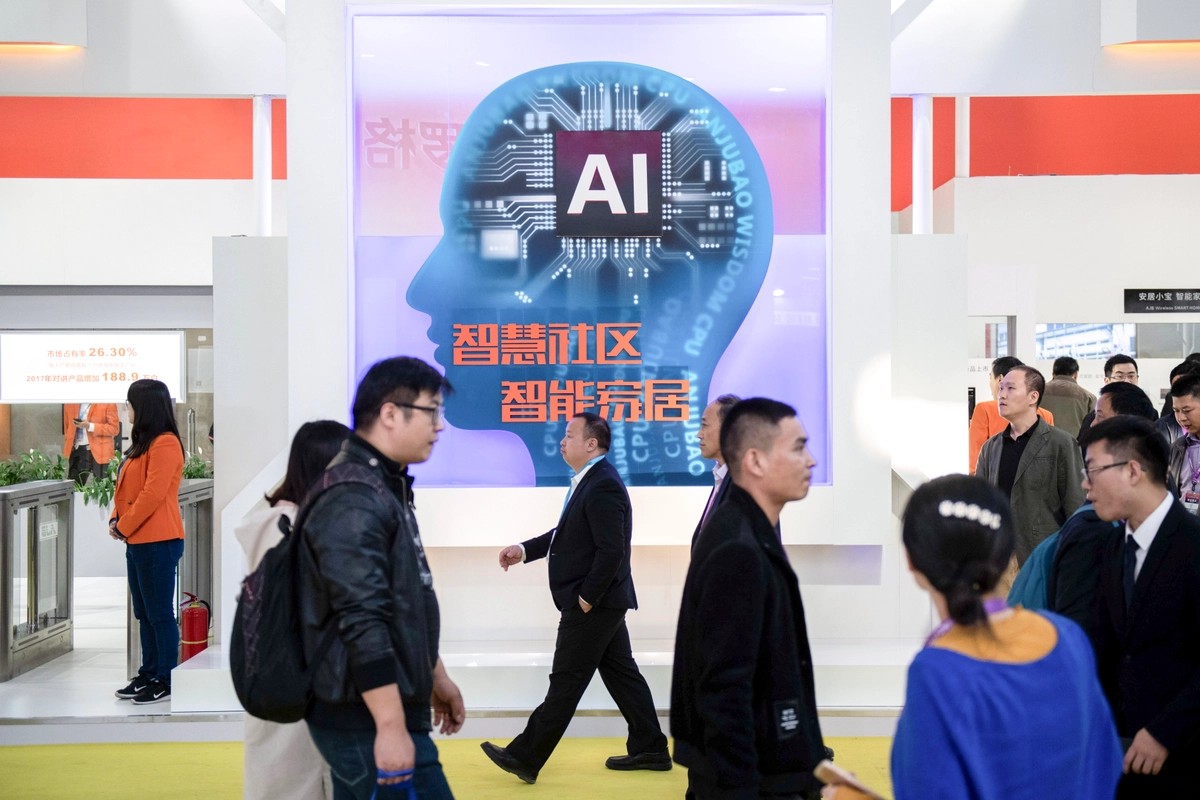
It is well known that China is excelling in certain indicators of artificial intelligence (AI), such as cost and algorithmic efficiencies. It considers the most advanced AI models as national security assets and is considering implementing export controls and investment restrictions on AI technology and startups.
Beginning in June, Beijing authorities convened discussions with three Chinese companies — ByteDance, Alibaba, and Z.ai — on control issues.
Meta, formerly known as Facebook and headquartered in California, invested $2 billion to acquire the Chinese AI startup Manus. In the most extreme case, the Chinese government ordered Manus to withdraw the acquisition, alleging possible violations of laws on foreign investment, technology transfer, and export controls.
Subsequently, the Chinese government accused Manus of relocating to Singapore and selling to Meta in an attempt to deplete China’s technological foundation. Beijing ordered the two co-founders of Manus to stay in China, causing a chilling effect on China’s AI ecosystem and potentially leading to some Chinese AI researchers fleeing the Communist rule.
In addition to the AI models developed by the aforementioned companies, any new Chinese export control measures could impact DeepSeek, an AI company based in Hangzhou, releasing new Chinese models.
The discussed control measures could have a greater impact on closed-source and newly developed open-source weight models compared to already released open-source weight models such as Z.ai GLM-5.2 and DeepSeek V4 Pro. Unlike closed-source models, once downloaded into user systems, open-source weight models can be customized and operated independently of companies. This makes them almost untraceable or retractable and easier to be exploited by terrorists and hackers.
China’s open-source AI models are up to 60 times cheaper than leading US products, leading to rapid adoption among price-conscious American consumers. However, these models are often based on the “distillation” of hard-earned achievements of US AI companies, which can be considered as theft. This may result in US buyers not only relying on China for cheap consumer goods, pharmaceuticals, and rare earth elements but also on stolen AI technology.
It is rumored that Washington will restrict the application of Chinese models in the US to avoid further reliance on China. To maintain its own advantage, the US should plan to prohibit the global use of Chinese stolen AI technology and encourage the development of domestic AI technology, including through subsidies.
The US cannot afford to hand over the strategic resource of AI and its growing capability to infiltrate government and business information systems to Chinese companies.
The US should not allow the Chinese regime to continue its unprecedented theft against the Chinese people since its founding in 1921. Through the act of “distillation,” acquiring AI is the latest act of plunder in the Communist Party’s long history of theft, including stealing technology from the Soviet Union and now extensively from the West.
We must not further entangle the world in the whirlpool of Chinese AI, as it would provide a legitimate reason for further theft, even if this theft manifests in different forms related to so-called “private” Chinese AI companies.
The free market will lead to AI talents flowing out of China, and users will be more inclined towards American models. China may implement export controls on its AI products, which could decrease its reliability to foreign users and the profitability of Chinese AI developers. Beijing only advocates for scientific freedom when it lacks relevant technology itself.
In the past month, China has had a limited advantage over US AI due to the temporary export controls imposed on Anthropic by the US in June, while OpenAI also took voluntary export restriction measures. This suppression hindered overseas markets, including Europe, from procuring products from these companies. The US is trying to incentivize companies to voluntarily comply with these restrictions by providing a 30-day evaluation period before the release of new AI products.
However, despite the attractive lax regulatory policies in the US in most cases, it may not be enough to prevent American companies from seeking higher profits by selling AI to China. It has been reported that Google and OpenAI have provided AI technology to subsidiaries of blacklisted Chinese companies as long as these subsidiaries are located outside China. This practice is reportedly legal, so Congress should enact stricter laws to prevent the leakage of AI technology to hostile nations without burdening AI companies excessively, leading to talent outflows from the US. Incentives may be needed, such as subsidies.
Compared to China, the US remains a more livable and freer place. If it can ensure the long-term preservation of the American way of life, the cost paid to fight for AI support will be worthwhile.
Author’s bio:
Anders Corr, received Bachelor’s and Master’s degrees in Political Science from Yale University in 2001 and a Doctorate in Government Management from Harvard University in 2008. He is the President of Corr Analytics Inc., publisher of the Journal of Political Risk, with research spanning North America, Europe, and Asia. His latest works include “The Concentration of Power: Institutionalization, Hierarchy, and Hegemony, 2021” and “Great Powers, Grand Strategies: the New Game in the South China Sea, 2018.”
Original Title: The US–China AI War: China’s Opportunistic Export Controls
Published in the English edition of Epoch Times.