
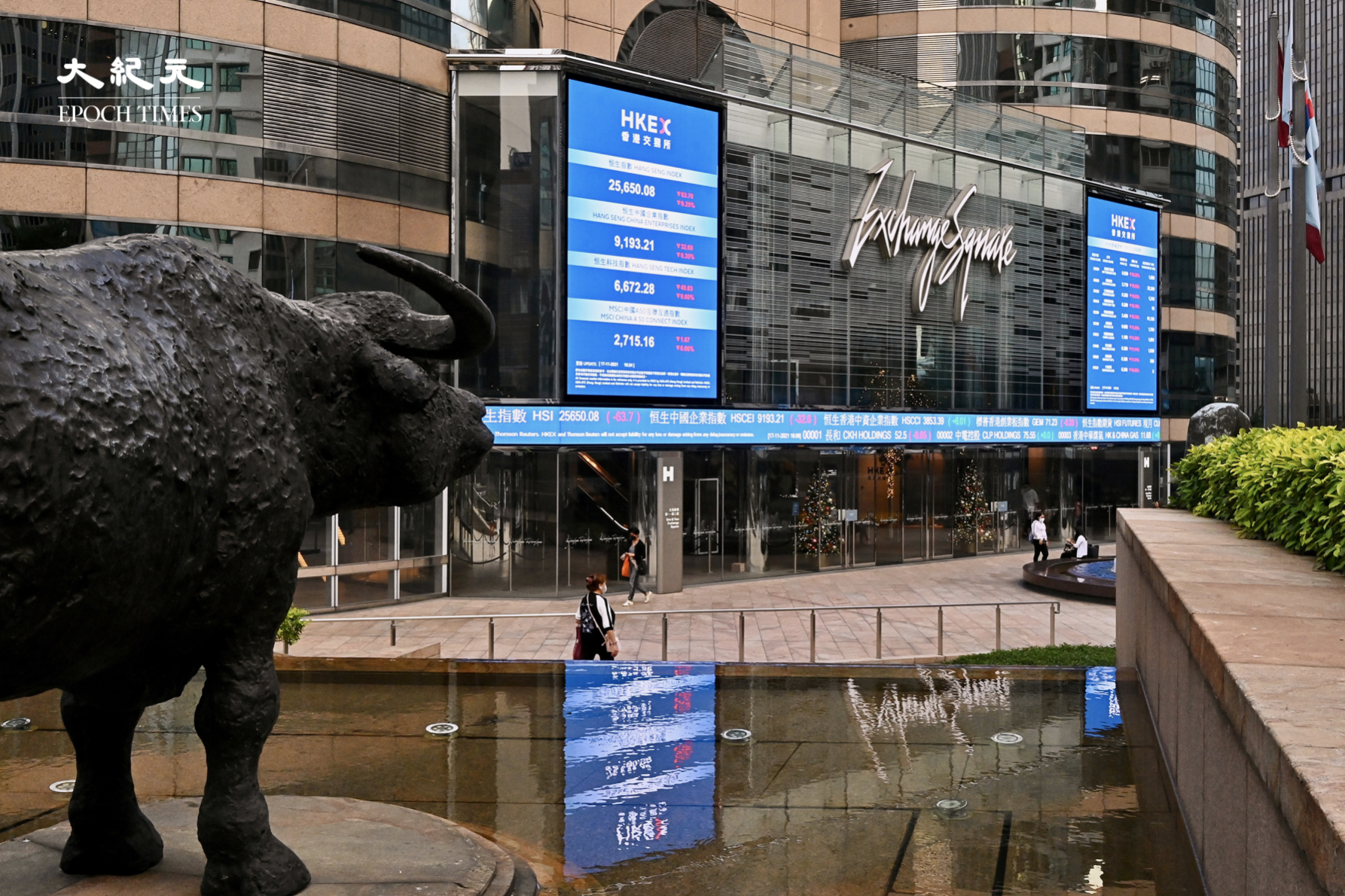
Chinese Mainland Companies Rush to Hong Kong Stock Exchange Listing
Amidst concerns over financial fraud and initial public offering (IPO) scams, a wave of Chinese mainland companies have sought listings on the Hong Kong Stock Exchange. Over a hundred companies have been suspended from trading, with some being forcefully delisted by the exchange.
According to a report by “Securities China” on October 18th, the so-called “zombie companies” in the Hong Kong stock market are being swiftly cleared out. Data from Wind shows that as of October 15th, 36 Hong Kong-listed companies have been delisted this year, with over 80% originating from mainland China. Out of these, 25 were forcibly delisted by the Hong Kong Stock Exchange, while several others have received approval from the exchange’s listing committee for delisting, signaling their imminent departure from the market. Compared to the same period in 2025, the pace at which long-term suspended companies are delisted has accelerated.
In the past week alone, companies like Aidi Palace, Kun Group, and 21st Century Education were forcefully delisted from the Hong Kong Stock Exchange. On the same day, the delisting process initiated by China Aviation Technology Holdings became effective. Adding to this, the Chinese New Energy Group, which was delisted on October 12th, five Chinese-owned Hong Kong-listed companies bid farewell to the exchange in just two trading days.
Since the implementation of the rapid delisting mechanism by the Hong Kong Stock Exchange in 2018, the number of forcibly delisted companies has significantly increased. In 2019, there were 19 such cases, reaching a peak of 47 in 2022. Between 2020 and 2025, a total of 219 companies have been delisted from the Hong Kong stock market, with the annual number of forced delistings remaining consistently above 30.
Currently, there are still several suspended companies in the market that are on the verge of delisting. According to the data from the Hong Kong Stock Exchange as of September 30th, there are a total of 98 companies that have been suspended for over 3 months, with 8 of them having received approval for delisting from the listing committee.
This year’s 25 forcibly delisted companies share common characteristics: generally low market values, mostly concentrated in the consumer sector, lack of substantial business operations, inability of performance to support the market value, and suspicions of being “shell” companies.
In the financial market, “shell” refers to companies or institutions that, after acquiring control of a listed company, delay injecting their core business assets and instead wait for a suitable buyer to conduct a backdoor listing at a higher price.
Analysts from Beijing Deheng (Guangzhou) Law Firm pointed out that after years of case accumulation and judicial practice, the fast delisting rules of the Hong Kong Stock Exchange have transformed from mere paper regulations to strict regulatory tools in standard practice. Currently, the regulatory authorities have tightened the approval criteria for extension periods, with only a few companies eligible to apply for an extension due to procedural obstacles. Additionally, the exchange has also tightened the stringent standards for continued listing. Wrongdoings by some mainland companies seeking listings in Hong Kong make it easier for them to cross the red line of forced delisting.
On October 13th, the Securities and Futures Commission of Hong Kong suspended the trading of the mainland company “Tea Hundred Ways,” suspecting that its IPO may have been manipulated to create a false demand for its shares.
The Commission further stated that upon investigation of other listed companies, it found certain IPOs involved suspicious arrangements, prompting deep concern. Some IPO applicants are suspected of providing undisclosed subscription funds or guaranteed returns to designated investors or their related parties. Such arrangements distort genuine investor demand, compromise market integrity, weaken the fairness of price discovery mechanisms, and cause harm to the public investors through misleading disclosures and potential market manipulation post-listing.