
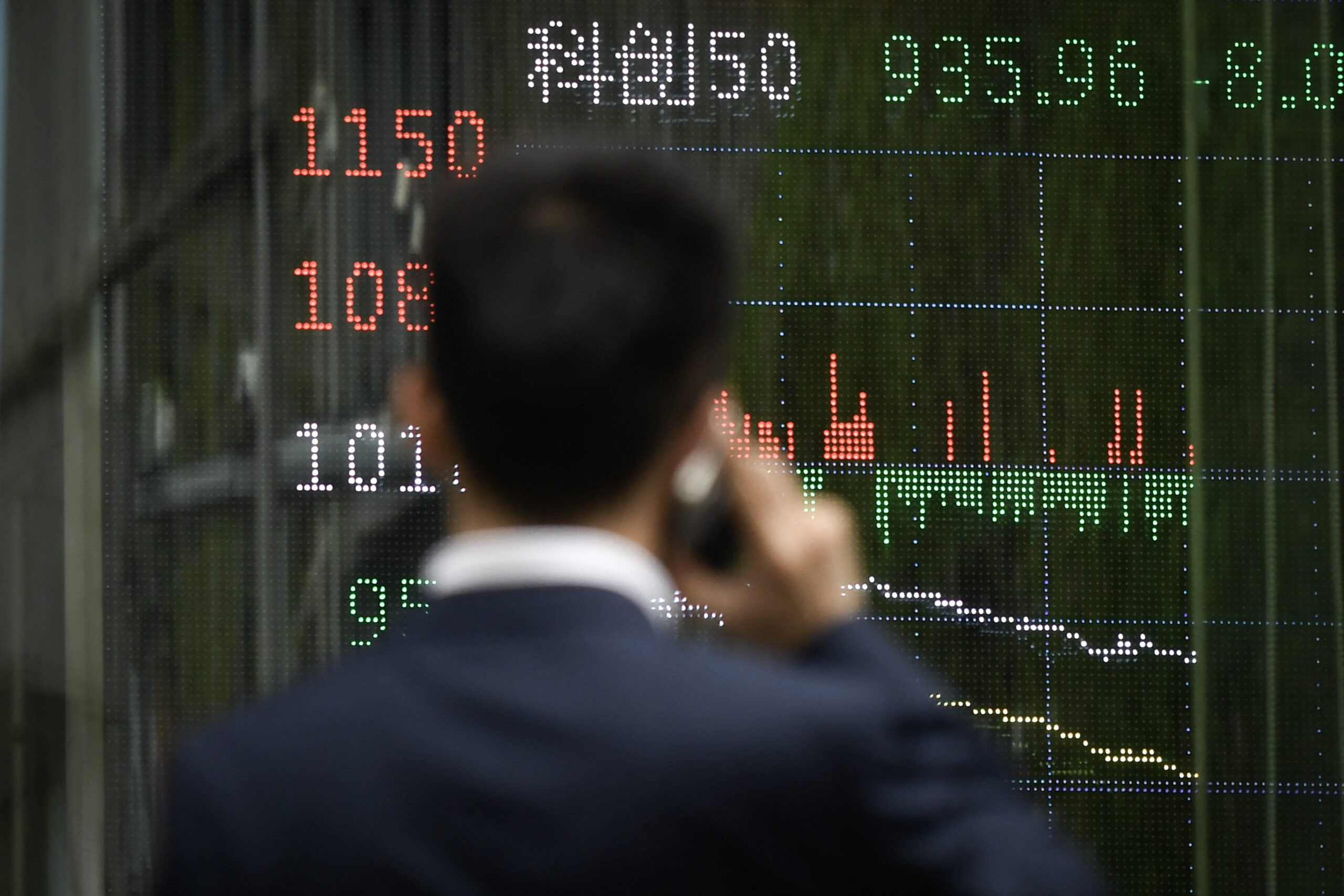
As the global artificial intelligence (AI) investment frenzy cools down, Chinese enterprises have emerged as the biggest losers. This has also hindered the Chinese Communist Party’s ambition to accelerate the realization of technological hegemony through the stock market.
Since the second half of this year, the Science and Technology Innovation 50 Index (Star50 Index), known as the “Chinese version of Nasdaq,” has plummeted by approximately 38.5%. From 2207.86 points on June 30 to 1358.65 points on October 16, it has become the worst-performing major technology stock index globally.
The market capitalization of major chip manufacturer MetaX Integrated Circuits Shanghai Co. and Moore Threads Technology Co. has both shrunk by about half during this period.
The ChiNext index, a growth enterprise board index, has dropped by 36.16% since the second half of this year, falling from 4342.71 points on June 30 to 2772.38 points on October 16. This decline has exceeded the 33.83% decline in 2022.
Bloomberg analysis indicates a reversal compared to earlier this year. Investors previously disregarded the high valuations and bet on policy support from Beijing, riding the wave of the global AI boom that propelled the Science and Technology Innovation 50 Index through a staggering rise. However, as the market began to more cautiously evaluate future demand and profit prospects, the previous enthusiasm has now waned, with the Chinese stock market bearing the brunt of the impact. Considering the high dependence of Chinese enterprises on equity financing, this trend is worrying.
From April to June of this year, driven by optimism about technical breakthroughs of Chinese enterprises and strong government support, the Science and Technology Innovation 50 Index surged by approximately 75%. On June 30, when the index reached its peak, the expected P/E ratio exceeded 80 times. However, as market sentiment suddenly reversed, the previous overvaluations in this sector now act as a drag on stock prices.
Bloomberg cited Leonid Mironov, portfolio manager at Gavekal Capital, saying, “If tech stocks continue to be under pressure, China’s difficulty in achieving its AI goals will greatly increase.”
“If this weak trend continues for more than six months, it will not only increase financing difficulties but also mean that the market does not fully appreciate the technological progress made so far,” Mironov added.
Recent selling pressure has also weighed on some of China’s most eye-catching newly listed stocks. Storage giant Changxin Technology, listed in July of this year, has seen its stock price fall by 27% from its post-listing high. In the past two months, Changxin Technology’s market value has eroded by 1 trillion yuan: on August 17, the closing price was 61.8 yuan per share, with a market value of 4.2 trillion yuan. By October 16, Changxin Technology’s stock price had dropped to 45.02 yuan per share, evaporating 1.09 trillion yuan in market value, down to 3.11 trillion yuan.
Similarly, robot company Yushu Technology went public on August 19, closing with a market value of 341.772 billion yuan. By October 16, the total market value was approximately 172.7 billion yuan, with a loss of 169.07 billion yuan in market value over nearly two months. The stock price decreased by about 50% during this period.