
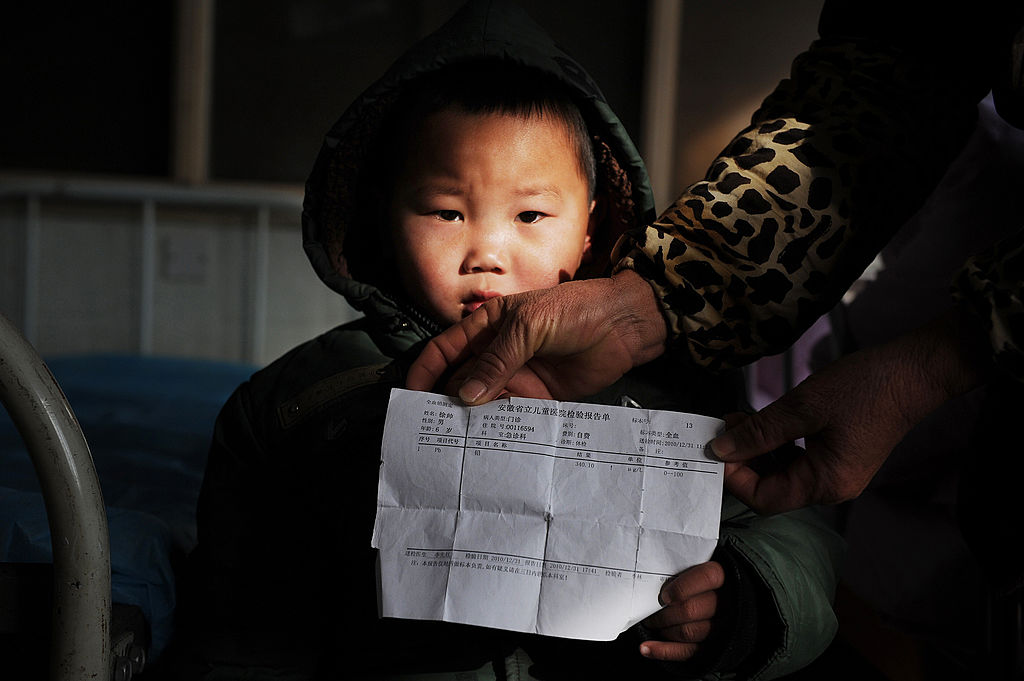
On October 17, 2026, the first trial of the lead poisoning case at the Ganzi Tianshui Heshi Peixin Kindergarten resulted in significant judgments. The actual person in charge, Li Huifang, was sentenced to life imprisonment, while five others received sentences ranging from 6 to 15 years. This comes after official reports from the Chinese Communist Party revealed blood lead abnormalities in 247 current students, 5 former students, and 28 staff members at the kindergarten.
The Lanzhou Intermediate People’s Court in Gansu Province convicted Li Huifang of producing and selling toxic and harmful food substances, resulting in a life sentence and a confiscation of 500,000 RMB from personal assets. The principal, Zhu Jinglin, was sentenced to 15 years in prison and fined 300,000 RMB.
The kitchen staff, including Niu Aiyuan, Wen Yafang, He Xuxia, and An Chunling, were sentenced to 6 to 8 years in prison and fined accordingly.
The court stated that Li Huifang and Zhu Jinglin instructed and arranged kitchen staff to add toxic and harmful non-food substances to the food consumed by children and staff, leading to the charges against all six individuals.
The incident was first exposed in July 2025. Initial reports from the Chinese authorities on July 8 stated that out of 251 current students, 233 showed blood lead abnormalities. By July 20, the number was revised to 247 current students with abnormalities, 28 out of 34 staff members with abnormal readings, and 5 former students also displaying abnormal blood lead levels.
The authorities attributed the incident to the kitchen staff adding non-edible colored pigments to Three-Color Red Jujube Cakes and Corn Sausage Rolls labels as “inedible”. The kindergarten sought to enhance the food’s appearance for photos and videos to attract parents, providing such food about 6 times a month from May 2024 until the incident.
The lead content in the Three-Color Red Jujube Cakes and Corn Sausage Rolls was significantly higher than the standard limit of 0.5 milligrams per kilogram, reaching 1052 milligrams and 1340 milligrams per kilogram, respectively.
BBC reports from July quoted parents saying their children started showing symptoms like abdominal pain, leg pain, and loss of appetite since March. The World Health Organization data highlighted that young children are particularly susceptible to lead poisoning, causing severe and permanent damage to their neural development.
After the incident, parents raised concerns about the local test results. Some parents reported their children having blood lead levels of over 400 micrograms per liter in Xi’an, compared to just over 30 micrograms per liter detected in Tianshui, showing a significant difference.
Former Guizhou Province judge Lin Xiaolong, in a July 17 interview with Epoch Times, questioned the official explanation regarding the food additives, suggesting that attributing blame to the kindergarten staff might be an attempt to find a scapegoat.
The authorities later admitted errors in blood lead tests conducted at the Tianshui Second People’s Hospital, where results were initially reported as 292.37 and 440.14 micrograms per liter, but later corrected to 42.37 and 103 micrograms per liter. Accusations were also raised against Gansu Provincial Center for Disease Control and Prevention personnel for violating operating procedures, leading to distorted results and obstructing investigations post-incident.
Officials stated that a total of 17 individuals from the Gansu Provincial CDC, Tianshui Second People’s Hospital, local education, and market supervision departments were under investigation, with 10 officials facing accountability. However, the recent trial did not disclose the outcomes of these individuals’ subsequent actions.
As per official reports from July last year, out of 235 hospitalized children, 234 completed their initial treatment and were discharged, with one remaining in the hospital. However, the latest sentencing news did not update on the current health and follow-up treatment of these affected children.
Weibo user “Li Qingchen” questioned whether anyone evaded accountability and inquired about the institutions that initially provided incorrect lead poisoning test results. They stressed that if those responsible for the cover-up do not face consequences, justice cannot be served.
User “Zeng Ziyan” expressed that the sentencing of the six individuals does not erase the harm caused by lead poisoning to the children. They expressed concern about the current status and future lives of these children, emphasizing that justice serves the adults, while what the children need is support for the years to come.