
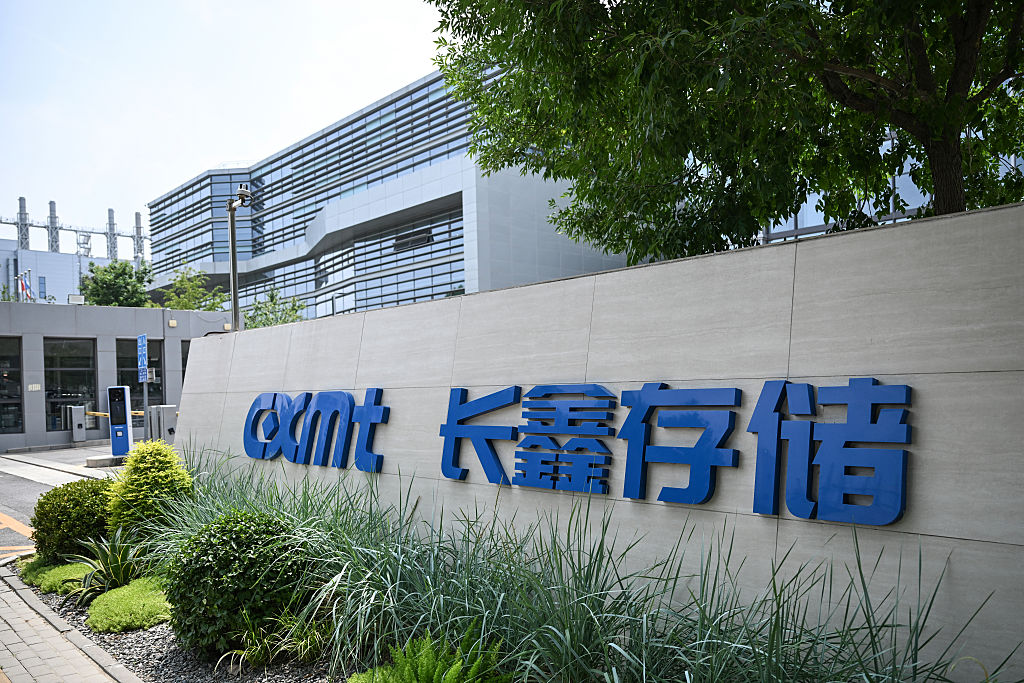
Chinese chip storage company Changxin Technology announced a key breakthrough in the 4F² architecture, causing the stock prices of chip giants like Micron and Samsung to decline. However, analysts point out that recent competitive threats might be overstated.
This week, Changxin Technology, the largest DRAM manufacturer in China (also known as “Changxin Storage”), announced a critical breakthrough in next-generation memory technology by completing the design of the new 4F² architecture. This technology utilizes vertical transistor design to reduce unit area. Compared to the current mainstream 6F² planar architecture, it allows for smaller chip size, higher storage density, and lower costs. Changxin Technology also announced plans to launch DDR5 products designed using this architecture by the end of this year, specifically tailored for enterprise servers and AI data centers. This move symbolizes their transition from low-end consumer electronic chips to high-end chip sectors.
Samsung and SK Hynix are expected to introduce the 4F² architecture design in 2028, leading the market to worry about Changxin Technology’s competitive threat potentially eroding industry profits.
DRAM is an essential storage component for computers, phones, servers, and AI computing power. The market has long been dominated by South Korea’s Samsung, SK Hynix, and Micron Technology, with a combined global market share of 90%. Data shows that Changxin Technology held a global market share of 10% in the second quarter of this year, up from 4% in the same period last year.
Meanwhile, global tech stock markets experienced fluctuations, with shares of chip giants like Micron Technology in the U.S. and Samsung in Korea being sold off. The Korean stock market even triggered circuit breakers. Some analysts attribute this to Changxin Technology’s announcement of progress on the 4F² architecture.
However, Investor’s Business Daily cited analysts on October 14 who believe that investors’ reaction to Changxin Technology’s achievement in the “4F² architecture” is exaggerated. They argue that since the mass production and yield of related technologies are uncertain, Changxin Technology at best poses minimal challenge to established memory companies like Micron.
Rosenblatt Securities analyst Kevin Cassidy stated, “This reaction overstated recent competitive threats, overlooking the structural changes in reshaping DRAM demand.” He added that Changxin Technology still has a long way to go in expanding the production scale and improving yields for new chip types. Without clear disclosures on manufacturing yields or wafer output, it is challenging to prove the competitiveness and high yield efficiency of their products.
Some analysts also point out that Changxin Technology’s information release does not mean the market has been overturned. The root cause of this week’s chip stock sell-off is the significant rise in AI-related stocks so far this year. Market concerns about an AI bubble and funding disruptions have been growing. Thus, any news on technological competition or negative developments may give investors a reason to profit from the trend.