
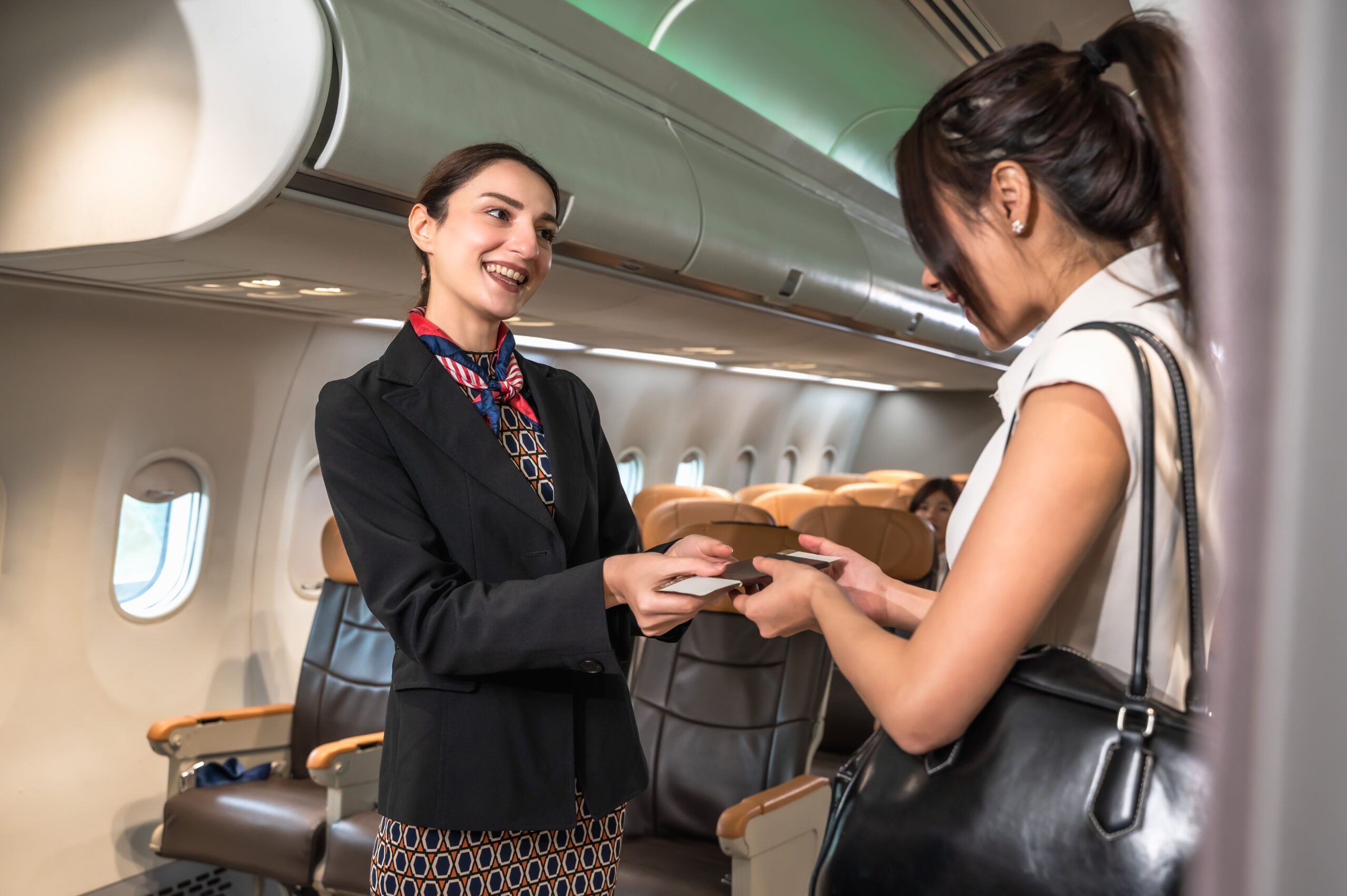
Each time flight attendants are on duty, they come into contact with many passengers, making them skilled at reading people and able to assess passengers’ overall situations at a glance, including first-time flyers. So how exactly do they make these judgments?
Patricia Green, who has over 20 years of experience as a flight attendant with British Airways and private jet companies, shared her insights on the aviation news website “Simple Flying.” She pointed out that boarding time is typically the busiest for flight attendants.
During this period, they pay close attention to each passenger’s behaviour in order to quickly spot potential issues, such as identifying if a passenger is intoxicated, likely to cause trouble, or in need of extra assistance during the flight.
When it comes to first-time flyers, flight attendants can also identify them at a glance. They base their judgments on several factors:
First-time flyers may exhibit signs of nervousness, which flight attendants can pick up on through their body language, such as hesitating at the boarding gate, tightly gripping their bags, or appearing anxious. If flight attendants notice such behaviour, they usually approach these passengers, engage in brief conversations to reassure them, and help alleviate their pre-flight nerves.
Flight attendants may consider switching seats for these passengers, arranging for them to sit in areas with less turbulence. During takeoff or landing, if space allows, flight attendants might seat them closer to the flight crew, so they can explain various sounds during the flight and reassure them that everything is normal, easing their anxiety.
If you feel dizzy during turbulence on a flight, focusing on a fixed point, like the emergency exit sign in the center of the cabin, can help.
First-time flyers may feel confused when locating their seats. Holding their boarding passes, they often stand in the aisle to find their seat numbers. Flight attendants are usually dispersed throughout the cabin to assist passengers who are visibly confused, as such situations can slow down the boarding process.
Inexperienced flyers often place items they need during the flight in overhead bins, sometimes even several rows away from their seats. This not only blocks the aisle during boarding but could also cause inconvenience during the flight as they retrieve these items. In fact, these items can be stored in backpacks under the seats.
Passengers have two places to store carry-on luggage – overhead bins and under-seat compartments. When placing luggage in the overhead bins, it’s best to store them sideways with the wheels facing inward to maximize space.
Experienced passengers, if not seated by the window, usually wait until other passengers in the same row have seated before fastening their seatbelts. They only do so immediately upon sitting when in a window seat.
However, first-time flyers often fasten their seatbelts upon sitting, then undo them when other passengers in the row arrive, allowing them to be seated before fastening their seatbelts again.
They may also not realize the importance of fastening seatbelts or misunderstand the meaning of the “fasten seatbelt” indicator, thus undoing it when they should keep it fastened during necessary times.
First-time flyers may be unfamiliar with in-flight entertainment systems and the services provided by flight attendants, as well as the etiquette they should observe. These etiquettes include wearing shoes when using the restroom, passengers in middle seats being allowed to use both armrests, and those in window seats having control over window shades.
Additionally, maintaining quiet during the flight and avoiding loud noises is essential. When flight attendants are serving meals, refrain from reclining your seat. When a flight attendant addresses you, it’s polite to remove your headphones as a courteous gesture.