
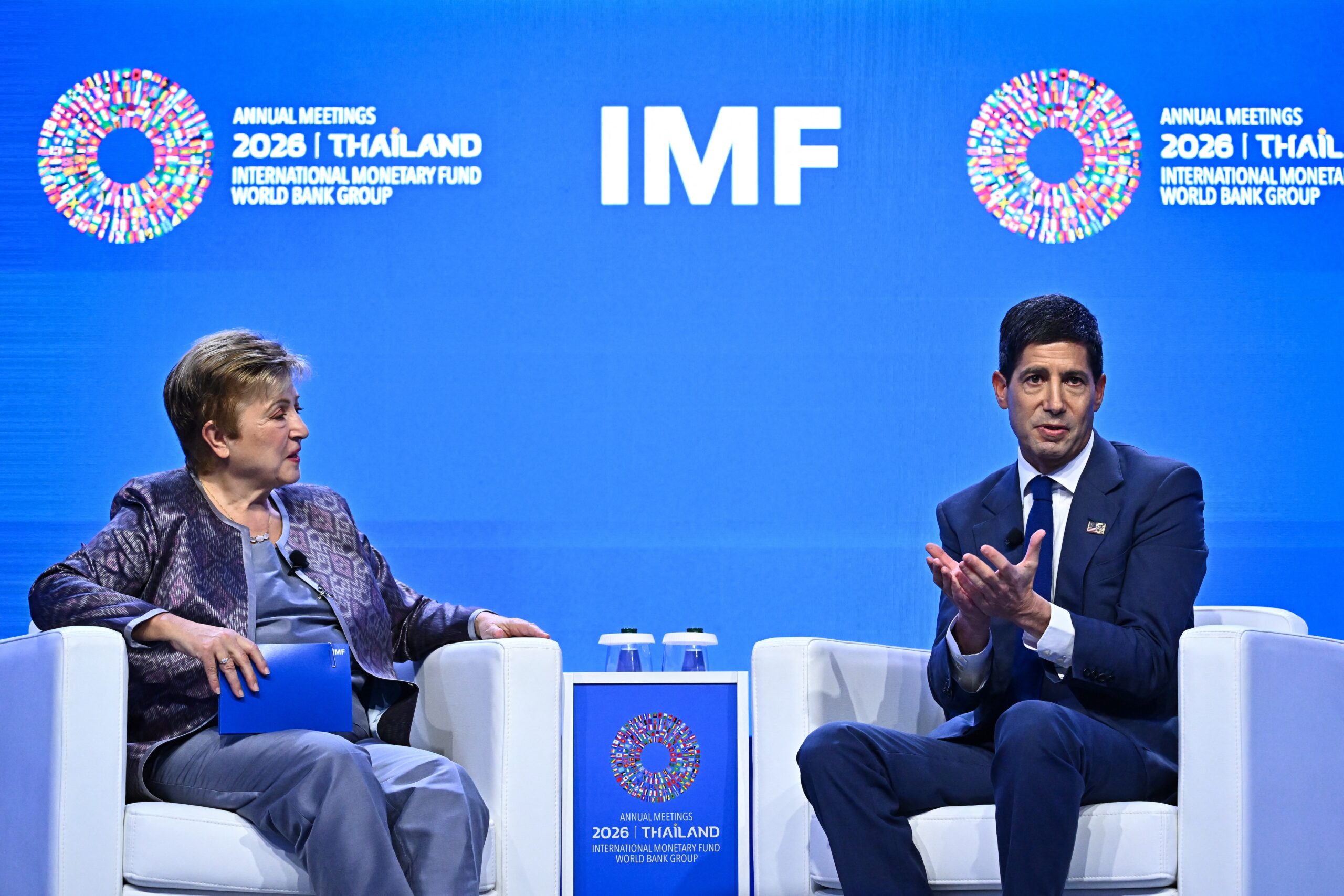
On October 16, 2026, Federal Reserve Chairman Kevin Warsh stated in Bangkok that the US economy is showing strong resilience driven by investment enthusiasm, and he remains optimistic about future growth. However, when faced with market concerns about the next interest rate direction, he refused to disclose whether the Fed will raise interest rates again this month or provide guidance on policy for the remaining time this year.
Warsh’s remarks come at a time when the Fed is facing sustained inflationary pressure. In September, the Fed raised the benchmark interest rate to 3.75%–4% for the first time since 2023. Two inflation indicators released this week have both exceeded expectations.
Despite this, financial markets still tend to believe that the Fed will keep rates unchanged at the meeting on October 27-28.
According to Reuters, nearly all public remarks by Fed officials discussing the interest rate direction suggest a possible need for further monetary policy tightening; however, most officials prefer to wait for more economic data to assess inflation trends. This leads the market to believe that the Fed is unlikely to raise rates again this month.
Based on the latest data from the CME FedWatch tool on Friday, traders estimate an 89.5% probability that the Fed will keep rates unchanged in October, while the probability of a 25 basis point rate hike has fallen to 10.5%. Reuters notes that the market generally expects the Fed to wait until December to raise rates again.
During the International Monetary Fund (IMF) and World Bank annual meetings, Warsh reiterated the Fed’s commitment to maintaining price stability in a conversation with IMF Managing Director Kristalina Georgieva.
He said, “We have made it very clear that we will achieve price stability, and about a month ago, we withdrew some of the accommodative measures.”
As for whether a rate hike is needed next, Warsh did not provide a definitive answer.
He said, “I will not prejudge the outcome of the meeting. I do not think it is appropriate to indicate what actions I may take at the remaining meetings this year.”
Warsh has long been opposed to using forward guidance to hint at policy direction to the market in advance, advocating for the market to make judgments based on economic data. His response on Friday continued this existing stance.
Despite ongoing inflationary pressure, Warsh remains optimistic about the growth momentum in the US. He pointed out that not only is the US economy showing resilience, but investments are also significantly increasing, and this wave of enthusiasm is expanding beyond artificial intelligence (AI) into other areas.
He said, “This means we have many favorable factors adding strength and endurance to the US economy… This kind of momentum is clearly not present everywhere in the world.”
Warsh is optimistic that the US is poised to emerge from the current situation with a stronger and more resilient economy, playing a greater leadership role in global economic growth.
Regarding artificial intelligence, Warsh said, “I would say that the emergence of this new technology may be the most profound change in the US and global economy in my lifetime.”
He believes that economies that harness AI will increase productivity, become more prosperous, and bring significant benefits to the US and global economy in the long run. However, he also cautioned that the development process could be “very bumpy,” and uncertainties remain about the short-term impact of AI on employment.
Warsh stated that while he remains optimistic about the future of AI, he also approaches this transformation with seriousness. He expects that looking back in ten years, people will recognize its profound impact.
Warsh pointed out that rising prices are a common challenge faced by central banks worldwide. While each central bank makes decisions based on its own responsibilities, the result is that “monetary policy in most regions of the world is synchronously tightening,” meaning that “no one can hitch a ride.”
He stated that despite recent geopolitical disruptions worldwide, the global economy continues to show resilience, surpassing his expectations from five to six months ago.
Warsh believes that countries facing similar challenges and taking action is a positive development.