
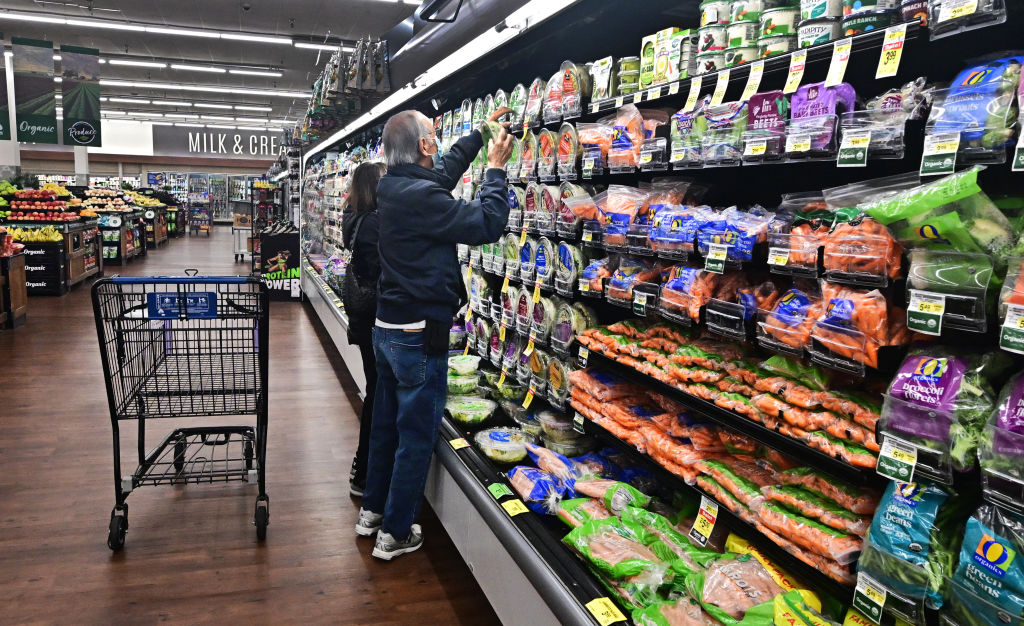
On Thursday, October 15th, the US government released the Producer Price Index (PPI) for the month of September, which far exceeded economists’ expectations, highlighting the inflationary pressure continuing to be driven by energy prices amidst heightened tensions in the Middle East.
According to data from the Bureau of Labor Statistics, the PPI, a key indicator measuring potential inflationary pressure, rose by 1.3% on a monthly basis and 6.3% year-on-year in September. These figures marked the largest increases since March 2022 (monthly) and December 2022 (year-on-year).
Both of these figures surpassed the expectations of economists surveyed by Dow Jones, who had predicted a monthly increase of 0.6% and a year-on-year increase of 5.5%.
One of the main factors contributing to the widened increase in prices is energy costs. The conflict in the Middle East has restricted oil supplies, leading to higher oil prices. Excluding the more volatile food and energy prices, the “core PPI” rose by 0.7% on a monthly basis and by 5% year-on-year.
Moreover, there are indications that the soaring energy prices are exerting a chain effect on other categories of goods. The report released by the Bureau of Labor Statistics on Thursday revealed that nearly half of the increase in prices of “processed goods for immediate demand” in September was linked to the surge in diesel prices.
This latest report is part of a series indicating that inflation continues to impact consumers and businesses.
On Thursday, both the S&P 500 index and the Nasdaq Composite index experienced declines. Concerns over excessive spending by technology companies in the field of artificial intelligence (AI) intensified, while traders also grappled with US economic data indicating ongoing inflation.
The Consumer Price Index (CPI) released on Wednesday showed a 0.6% monthly increase and a 3.7% year-on-year increase in September. Economists surveyed by Dow Jones had previously forecast increases of 0.6% and 3.6%, respectively.
After excluding food and energy, the core CPI rose by 0.3% on a monthly basis and 2.6% year-on-year. Economists’ prior expectations were for increases of 0.2% and 2.5%.
CNBC reported that according to analysis by Bespoke Investment Group, the frequency of inflation-related terms in the Federal Reserve’s Beige Book released on Wednesday reached a historical high. A government report released on Thursday showed that retail sales in September grew by 0.8%, surpassing economists’ earlier expectations of 0.4%. Compared to the over 1% growth in retail sales the previous month, this growth rate has slowed down.
Excluding spending on cars and gas stations, retail sales in September increased by 0.25% compared to August, a growth rate lower than the approximately 1.1% seen the previous month. This slowdown indicates that the high prices related to fuel are prompting consumers to tighten their belts in other areas of spending.
The data released this week has led more and more federal funds rate futures traders to anticipate that the Federal Reserve will raise rates at its meeting later this month. According to the FedWatch tool from the Chicago Mercantile Exchange (CME), traders currently estimate a nearly 34% likelihood of a rate hike by the Federal Reserve on October 28, up from less than 18% a week ago. Around 90% of traders expect at least one rate hike before the end of this year.
Chris Zaccarelli, Chief Investment Officer at Northlight Asset Management, stated, “With inflation data coming in higher than expected for two consecutive days, the Federal Reserve may have no choice but to raise rates again this year.”
These reports provide crucial insights into observing the trend of inflation in the United States, happening just before the midterm elections. The outcome of these elections may impact the power dynamics of the various parties in Washington.