
On August 31, the Jiangsu Provincial Department of Civil Affairs in China announced the first batch of so-called “illegal social organizations” for the year 2026, targeting and cracking down on 12 civil organizations. Among them, 7 are involved in emergency rescue activities under the guise of providing aid, while the rest include churches, family associations, classrooms, and volunteer service teams. Respondents believe that the Chinese Communist Party is using registration systems to control civil society organizations, requiring approval from party and government departments for activities ranging from the establishment of organizations to cross-regional actions, indicating that the authorities’ control has permeated various fields.
The 7 emergency rescue organizations that were shut down include the International Emergency Rescue Center Jiangsu Provincial Headquarters, the China International Rescue Center Nantong Emergency Support Team, the China International Rescue Center Emergency Industry Alliance Nantong City Operations Center, the Guoying Rescue International Emergency Center Taizhou Support Team, the International Emergency Rescue Center Wuxi Support Team, the International Emergency Center Suzhou Support Team, and the International Emergency Center Suzhou Wujiang Brigade.
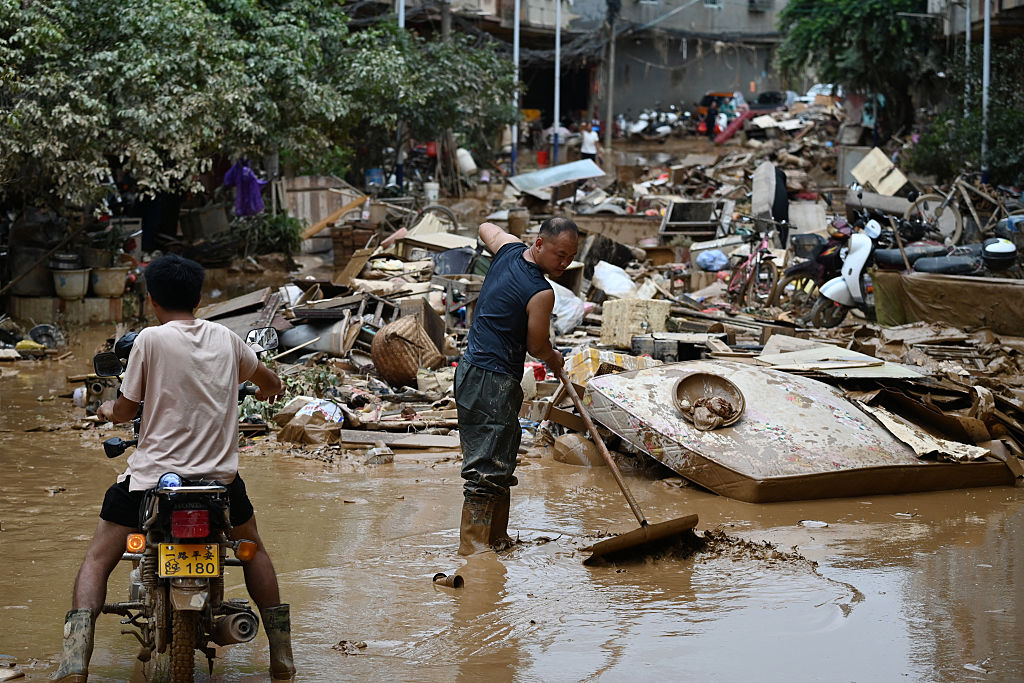
Regarding the authorities categorizing the aforementioned civil organizations as “illegal groups,” Mr. Zhong, a rights activist in Wuxi, expressed to the media that with recent natural disasters happening across China, civilian rescue teams provide support to affected areas, potentially exposing information that officials are unwilling to disclose. He stated: “Every time a civilian rescue team arrives at a location, they will share photos and videos, introducing the situation of the victims in the area, inadvertently revealing the incompetence, negligence, or indifference of officials. This type of information spreads quickly online, and the authorities naturally do not welcome civilian rescue efforts. The so-called crackdown on these ‘illegal organizations’ in Jiangsu is simply because they are worried that rescue teams will expose officials’ inaction; that’s their real intention.”
On August 12, the Jiangsu Provincial Department of Civil Affairs in China issued a separate announcement targeting the “International Emergency Rescue Center Jiangsu Provincial Headquarters.” The announcement only mentioned that the organization had not been registered and was engaging in activities under the name of a non-enterprise unit without authorization, without disclosing information about the responsible person, the number of members, funding sources, actual rescue experiences, and whether it involved illegal gains.
Another case publicized by the Chinese Ministry of Civil Affairs in July showed that the China International Rescue Center (Group) Jiangsu Province Emergency Rescue Headquarters Xuzhou Support Team used an overseas registered enterprise as a front, held establishment and flag-bestowing ceremonies in China, and appointed positions such as team leader, inspector, and political commissar. This organization was shut down in April 2025.
These organizations with similar names raised questions, as the official Chinese list did not indicate whether they had affiliations, personnel or financial relationships, or disclose how many of these organizations had participated in disaster relief efforts.
Zhu Tao, a public welfare advocate in Jiangsu, told reporters that the so-called illegal organizations targeted by the authorities have long been under the control of the Chinese Communist Party, unable to exist outside of official control. “It started ten years ago, with the police controlling non-governmental organizations. They demand information on funding sources, how the funds are utilized, who receives salaries, who works voluntarily. Organizations supported by international groups are under the supervision of state security. China no longer has independent non-governmental organizations; those that claim to be independent are still subject to police management.”
Mr. Su, a researcher on public welfare organizations in Henan, stated: “The authorities are concerned about the potential growth of civilian rescue organizations. If more and more people join and they form a network across regions, being able to allocate resources among themselves, in the eyes of the authorities, there is a potential threat to the stability of the regime. The Communist Party fears the day when these organizations break free from official control the most.”
Under the current system of the Chinese Communist Party, civil organizations that lack registration approval can be labeled as “illegal social organizations.” Mr. Su remarked that in the case of natural disaster relief organizations, the authorities are more worried about these groups collaborating with disaster victims to disseminate information that officials are unwilling to expose: “For example, during a flood in Henan where people died, the authorities publicly claimed that no one died and moved the residents, while civilian rescue teams reported the actual number of deaths. The CCP’s greatest fear is that you will expose what they are hiding, so they simply won’t allow you to participate in relief efforts and ultimately shut you down.”
The “Repentance and Holiness Ministry” church on the official Chinese list was shut down by the Changzhou Municipal Civil Affairs Bureau. Public records show that this church, also known as the “Kenyan Mission,” had previously been targeted for shutdown in places like Yiyang, Hunan, and Jilin, all for conducting activities under the guise of a social group without registration.
Christian Mr. Su stated that house churches have always been a target for the authorities: “In mainland China, unofficial churches are not allowed to exist. If you believe in Jesus, you must join the Three-Self Church, the official church that is controlled. Many believers do not want to join. The authorities will shut you down, preventing you from gathering or organizing church activities, including aiding disaster victims.”
In 2025, the first batch of 8 illegal social organizations in Jiangsu included the Mormon Church Nanjing Branch, The Church of Almighty God, Jiaxi Church, Jehovah’s Witnesses, the Mormon Church Lianyungang Branch, and The Church of Almighty God, all listed as targets. For two consecutive years, Jiangsu province has used the social organization registration system to label multiple unregistered churches as “illegal social organizations” and proceeded with crackdowns.