
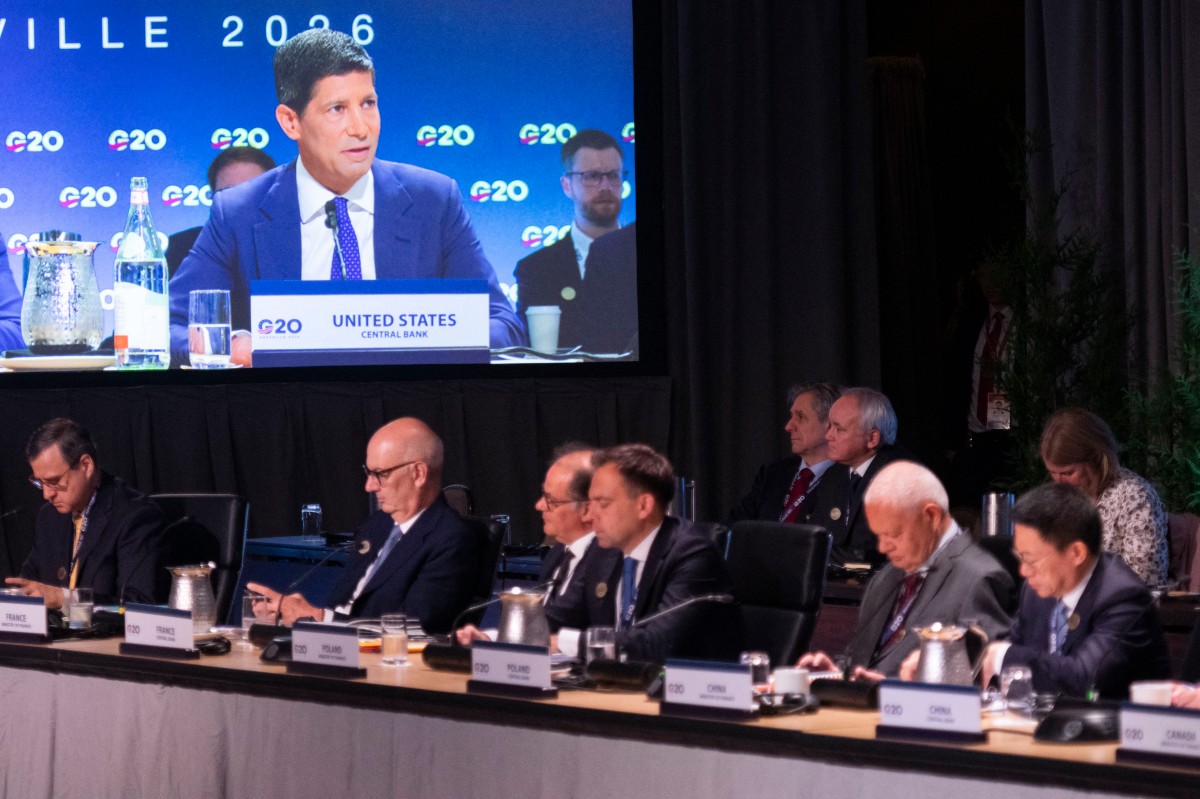
The Federal Reserve Chairman, Kevin Warsh, stated on Monday, August 31, that the global economy is shifting from a past of “savings surplus” towards a surge in investment, with a substantial amount of capital flowing into new investment areas, becoming a crucial force driving economic growth.
At the G20 Finance Ministers and Central Bank Governors meeting held in Asheville, North Carolina, Warsh highlighted that prior to and in the years following the 2008 global financial crisis, “global savings surplus” had been a significant topic of discussion within the G20. This was due to a lack of investment opportunities, leading to a large amount of capital being either idle or flowing into low-yield assets.
According to Warsh, this situation is now undergoing a transformation. With large projects like artificial intelligence data centers and infrastructure bringing forth new financing demands, more capital is seeking out fresh investment opportunities. He expressed that to summarize the current situation, “this is a global investment boom.”
Warsh pointed out that as investment activities accelerate, concerns about the global economy falling into “long-term stagnation” and lacking sufficient investment opportunities are no longer in line with the current economic environment.
This marked Warsh’s first participation in significant international economic policy meetings since assuming the role of Fed Chair in May of this year.
Warsh noted that the changing global capital allocation could also impact the U.S. financial markets. Previously, a substantial amount of global savings flowed into relatively secure assets like U.S. treasuries, helping to keep U.S. government financing costs and market rates low.
However, with large-scale investments in areas like artificial intelligence absorbing more funds, traditional safe assets like U.S. treasuries may face increased competition in capital allocation, potentially exerting upward pressure on U.S. bond yields and overall financing costs. This is also seen as one of the factors contributing to maintaining higher levels of interest rates in the near term.
The concept of “global saving glut” was systematically expounded by former Fed Chair Ben Bernanke around 2005, explaining the significant capital flowing towards developed economies like the U.S., driving global long-term interest rates lower.
Warsh expressed the desire to gain more insight into the growth prospects of G20 member economies and is contemplating the potential growth capabilities of the U.S. and other G20 economies, particularly focusing on changes in productivity and whether the future growth rates of these economies may exceed traditional forecasts.
Previously, the U.S. Congressional Budget Office (CBO) projected that the actual potential GDP of the U.S. would grow at an average annual rate of 2.1% from 2026 to 2030, declining to an average of 1.8% from 2031 to 2036. The CBO believes the later-stage slowdown in growth is primarily due to a deceleration in both potential labor force growth and productivity growth.
Last Friday, August 28, Warsh stated at the Jackson Hole Global Central Bankers annual meeting that U.S. inflation remains above the Fed’s 2% target, indicating that if inflation does not convincingly decline, further adjustments may be necessary in monetary policy.
(This article references reporting from Reuters)