
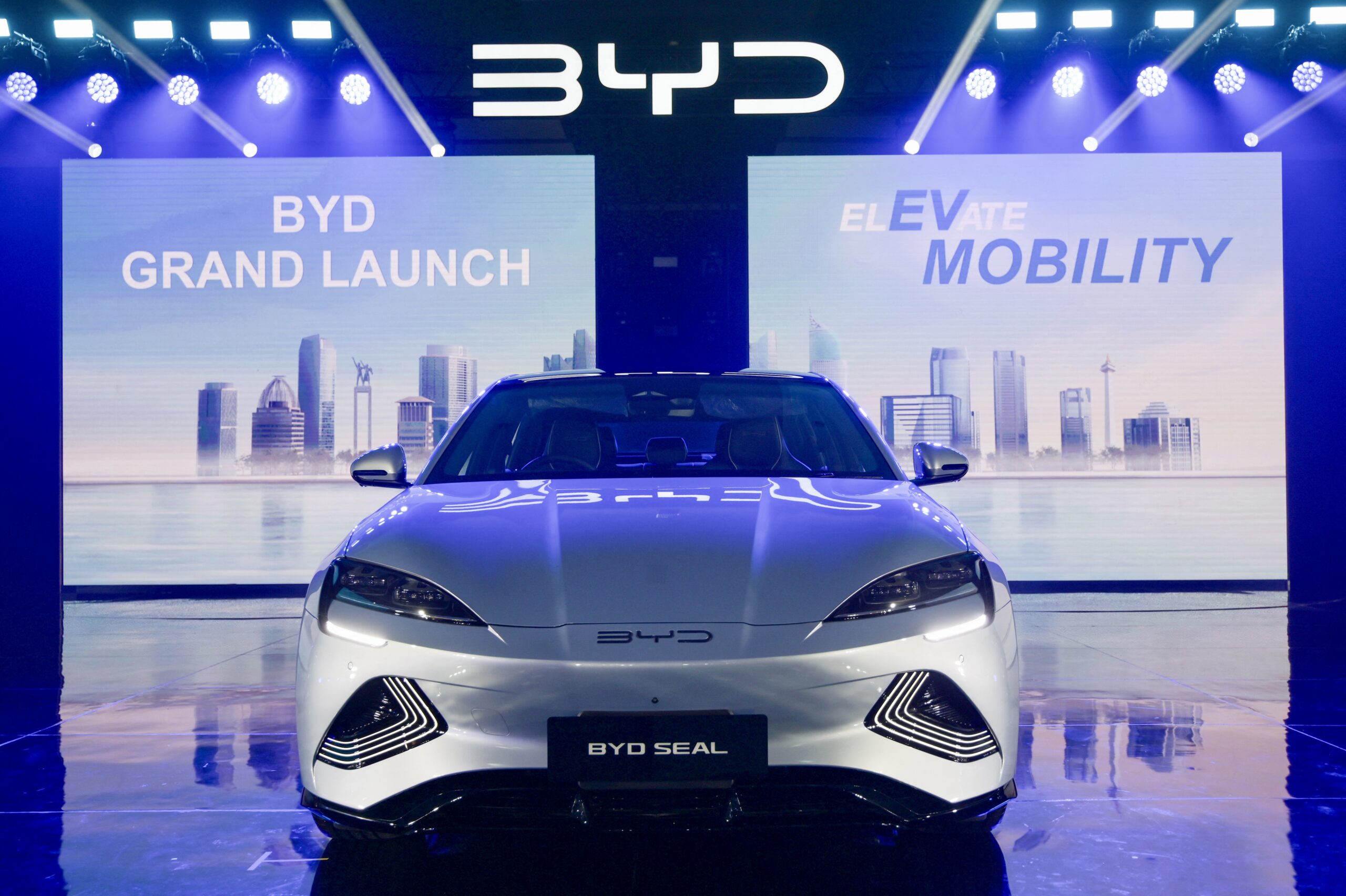
Chinese leading new energy vehicle company BYD’s latest half-year report for 2026 shows a decline in both revenue and net profit in the first half of the year, with a net profit drop of over 20%, marking the largest decrease in recent years.
On August 28, BYD released its 2026 half-year report, revealing that the company achieved operating income of approximately 344.815 billion yuan (RMB) in the first half of this year, a 7.13% year-on-year decrease. Net profit attributable to shareholders of the listed company was around 12.325 billion yuan, down 20.54% year-on-year, and net profit attributable to shareholders after deducting non-recurring gains and losses was about 10.782 billion yuan, down by 22.55%.
Against a backdrop of overall performance pressure, different business segments of BYD showed varying trends in revenue structure. In the first half of this year, revenue from BYD’s automotive and related products and other businesses was around 275.34 billion yuan, an 8.98% decrease year-on-year, accounting for 79.85% of total revenue; revenue from electronic and other product businesses was approximately 69.405 billion yuan, a 0.96% increase year-on-year, representing 20.13% of total revenue.
In terms of production and sales, BYD’s new energy vehicles had a cumulative sales volume of about 1.8085 million vehicles in the first half of this year, a 15.72% decrease year-on-year. According to data from the China Association of Automobile Manufacturers, BYD’s export volume in the first half of 2026 was 792,000 vehicles, a 67.8% increase year-on-year, with overseas income accounting for more than half of total revenue for the first time, becoming a core driver of performance.
According to a Bloomberg report, BYD adopted aggressive discount strategies to significantly increase deliveries, surpassing Tesla in sales volume but experiencing a sharp decline in profit. Earlier annual data released by BYD showed a 19% drop in profit in 2025. Its closely watched gross profit margin also fell to a three-year low of 17.7%, below 19.4% in 2024.
The outlook for 2026 is not optimistic. Data shows that in the first two months, BYD’s sales in China have significantly declined, conceding the top position to Geely Auto.
Furthermore, BYD’s market value has plummeted from its peak, and analysts believe that capital markets have reevaluated its valuation logic. In addition to the increasingly fierce competition in China and foreign trade barriers, BYD also faces some challenges that are difficult to overcome on its own.
Some Chinese consumers have complained on social media about BYD’s “Sky Eye” intelligent driving system, citing false advertising. This intelligent driving assistance system itself faces certain technological limitations and has been applied to all high-end and low-end vehicles within the brand before addressing all technical flaws.