
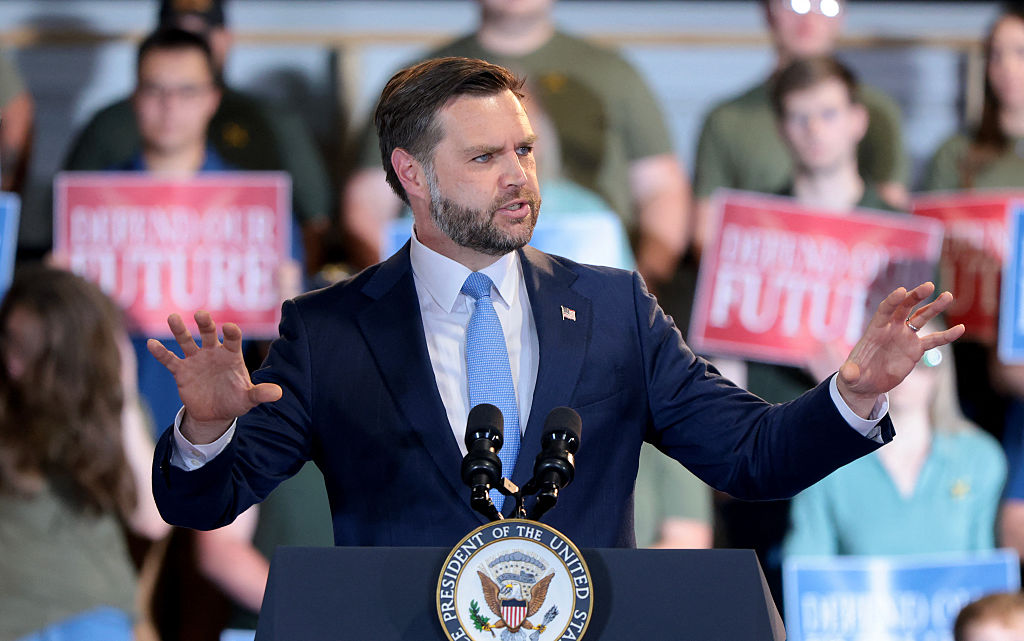
On August 25, 2026, US Vice President JD Vance mentioned Canada’s recent adjustment of its trade policy towards China during his visit to Maine, addressing the ongoing trade dispute between the US and Canada. Despite the recent breakdown in negotiations between the two countries, Vance emphasized the importance of reaching a trade agreement.
According to reports from Fox News, Vance delivered a speech at the defense technology company Compotech in Brewer, Maine, on Monday, August 24.
Regarding Canada’s trade with China, Vance emphasized that China is a major economic competitor to the US, while Canada is a long-standing ally. The US hopes that Canada will provide fair treatment to American goods in its trade policies.
Vance pointed out that the treatment Canada currently gives to Chinese goods is more favorable than that of goods coming from Maine. He expressed concerns about Chinese goods entering the US market through Canada, which has become one of the key issues in recent US-Canada trade negotiations.
Vance did not specify which Chinese goods he was referring to and did not provide data related to the scale or flow of these goods.
Canada has implemented trade restrictions on certain Chinese goods in recent years. In 2024, Canada imposed a 100% tariff on Chinese-made electric vehicles and a 25% tariff on Chinese steel and aluminum products.
In January of this year, during Canadian Prime Minister Mark Carney’s visit to Beijing, Canada and China reached new agreements on some trade issues. Canada agreed to allow a maximum of 49,000 Chinese electric vehicles to be imported in the first year at a preferential rate of 6.1%, accounting for less than 3% of the Canadian new car market.
As part of these agreements, China also agreed to reduce tariffs on some Canadian agricultural products. The Canadian Prime Minister’s Office stated at the time that China planned to reduce overall tariffs on Canadian canola seeds to around 15%, with other agricultural products also seeing a decrease in tariffs.
Carney indicated that Canada’s adjustment of policies on the import of Chinese electric vehicles is part of efforts to expand energy, clean technology, and trade cooperation between the two countries. The Canadian government aims to attract Chinese investment in the Canadian automotive industry, expand the electric vehicle supply chain, and increase the availability of lower-priced electric vehicles.
Regarding the recent breakdown in US-Canada trade negotiations, Vance expressed surprise as he believed an agreement had been reached but Canada ultimately made unreasonable demands that the US could not agree to. However, he reiterated the importance of both countries reaching a trade agreement despite the setback.
Canada, on the other hand, has a different perspective on the failed negotiations. Carney stated that progress had been made on several key issues, but the US later introduced new conditions that Canada deemed unfair and against its economic interests.
On August 22, Carney mentioned that Canada was willing to significantly reduce tariffs on steel, aluminum, and automobiles as long as the US reciprocated by canceling the remaining retaliatory tariffs and encouraging provinces to resume the sale of American alcohol products. However, Canada ultimately did not accept the new conditions proposed by the US.
Despite the pause in negotiations, both sides have not ruled out the possibility of reaching an agreement in the future. Vance emphasized the importance of a US-Canada agreement, while Carney also expressed the possibility of a mutually beneficial trade agreement between Canada and the US.