
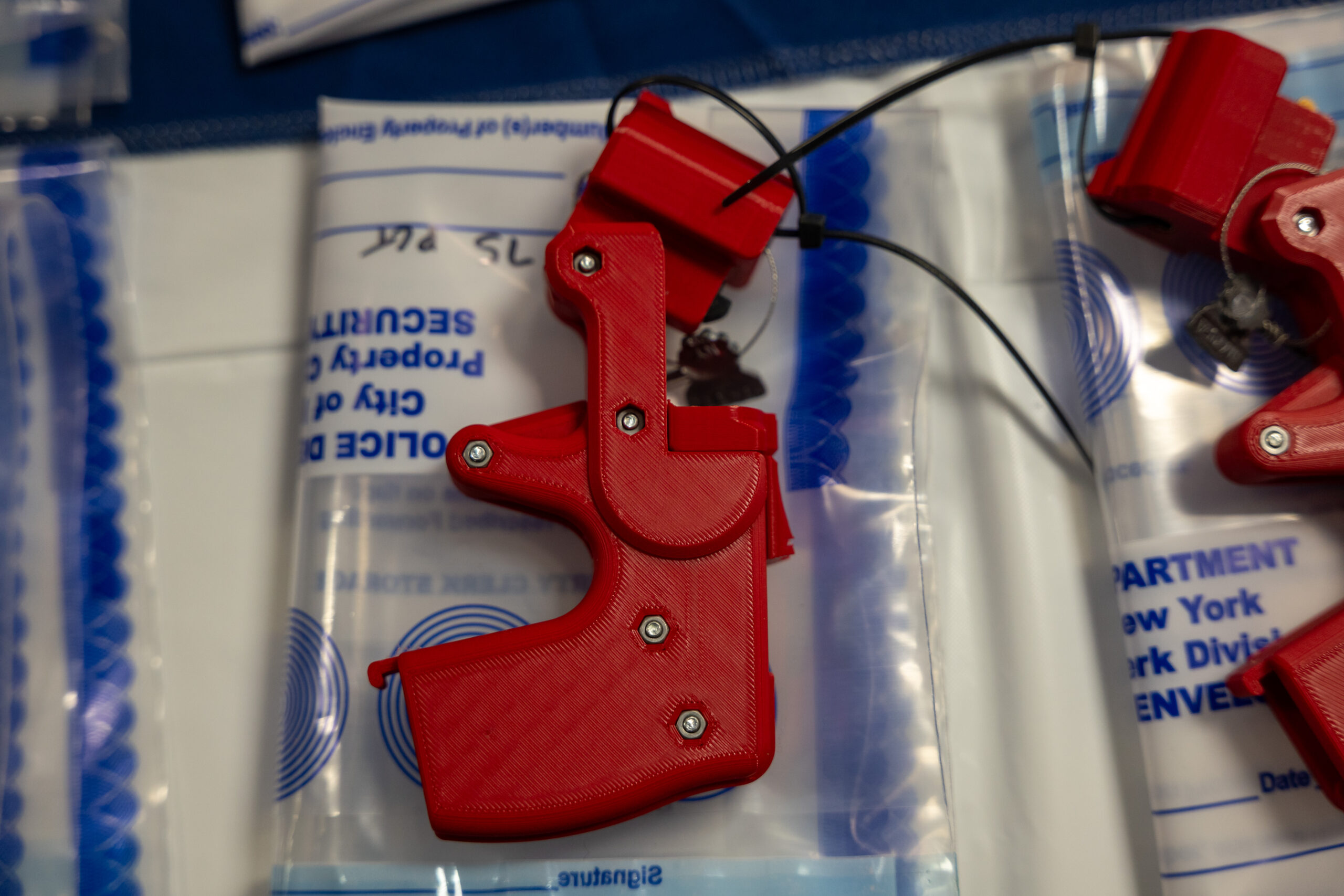
An ongoing controversy surrounding “ghost guns,” firearms that are difficult to trace due to a lack of serial numbers, has led to a recent legal battle in the United States. The federal appeals court in California recently rejected a lawsuit filed by the state government and a gun safety advocacy group, Giffords Law Center, seeking tighter federal regulations on these untraceable firearms.
The United States Court of Appeals for the Ninth Circuit in San Francisco ruled unanimously on August 22 to overturn a favorable decision for the plaintiffs by the lower court, the Northern District of California, back in February 2024. The appeals court stated that the plaintiffs failed to demonstrate any specific and non-speculative harm caused by the federal regulations established by the Bureau of Alcohol, Tobacco, Firearms, and Explosives (ATF) in 2022.
According to the ATF regulations, only “unfinished receivers or frames” sold together with tools or jigs are considered regulated firearms, while separately sold incomplete parts are not subject to oversight. The plaintiffs argued that this rule created a loophole that makes unregulated firearms more readily accessible.
In an opinion written on August 21 by Circuit Judge Consuelo Callahan on behalf of Judges Holly Thomas and Anthony Johnstone, they pointed out that the ATF’s partial ban on unfinished receivers/frames effectively expanded the scope of the Gun Control Act.
The opinion emphasized that the role of the judiciary, as granted by the Constitution, is “limited,” and by requiring plaintiffs to have standing, federal courts can “prevent the judicial process from being used to usurp the powers of the political branches.”
Callahan noted that California failed to prove that the ATF regulations necessitated increased law enforcement training expenditures or accelerated legislative processes regarding ghost guns. Similarly, the Giffords Law Center, a non-profit organization, could not demonstrate that the ATF rules disrupted its core mission and compelled additional spending to combat the proliferation of ghost guns.
The judges found the causal relationship argued by the plaintiffs to be too speculative or tenuous to meet the requirements for standing.
California Attorney General Rob Bonta and the Giffords Law Center have not yet indicated whether they will appeal the decision. Epoch Times reached out to Bonta’s office for comment.
Just four days before the Ninth Circuit Court of Appeals handed down its ruling, U.S. District Court Judge Reed O’Connor in the Northern District of Texas made a decision in another challenge to the 2022 ATF regulations.
The case was brought by pro-gun rights plaintiffs including Defense Distributed and the Second Amendment Foundation, who claimed that the 2022 ATF rules violated the Second Amendment rights protected by the U.S. Constitution and contravened the due process clause of the Fifth Amendment. (Note: The ATF introduced new regulations in 2022, expanding the definitions of “firearm,” “frame,” and “receiver” under the Gun Control Act, bringing some easily assembled parts kits under federal firearm control.)
The plaintiffs contended that the vagueness in defining when a metal or plastic item would be considered a regulated firearm under federal law was unconstitutional and could lead to individuals being unable to determine if their actions were illegal, depriving them of the fair rights protected by due legal process.
In addition to the Due Process Clause, the Fifth Amendment of the U.S. Constitution ensures rights such as “presumption of innocence” and “prohibition of double jeopardy” in criminal cases.
As a result, Judge O’Connor issued a temporary restraining order specific to the plaintiffs in the case, prohibiting the federal government from enforcing these provisions against them. This is not a nationwide injunction, so individuals in the U.S. must still comply with the ATF’s 2022 rules.
The U.S. federal government has the option to appeal to the Fifth Circuit Court of Appeals. If the case reaches the Fifth Circuit, the court may uphold or expand the relief granted by the lower court. It is currently uncertain whether the government will seek an appeal.
This legal dispute is not a recent development. In March 2025, the U.S. Supreme Court upheld ATF’s authority to promulgate the 2022 rules in a case involving the rules (Bondi v. VanDerStok), where Judge O’Connor had previously ruled against ATF’s authority.