
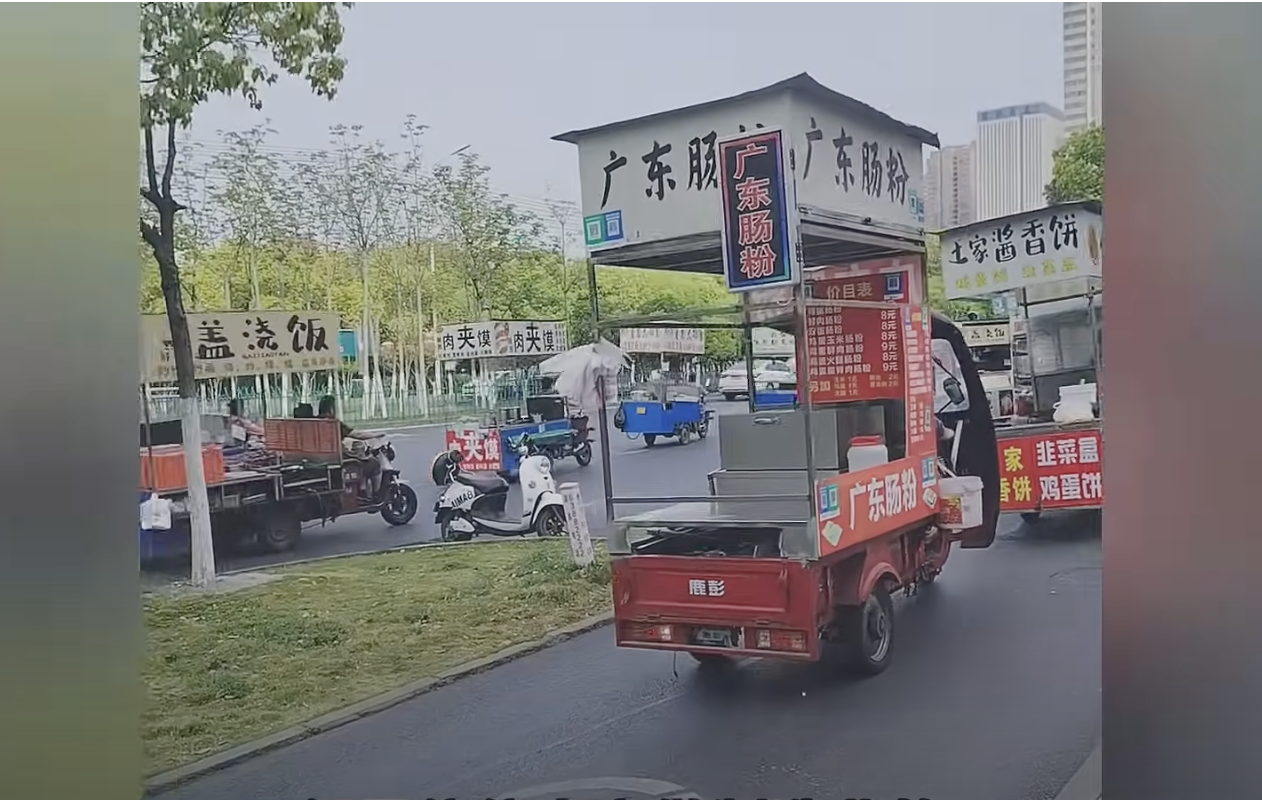
Recently, the remarks made by Zhang Dandan, the Vice President of the National Development Research Institute of Peking University, a young professor, and a doctoral supervisor, in a video program have sparked criticism and questioning from the public.
During the “Discussing Hot Topics” video program, when asked by the host Wang Bo about the social security benefits for the flexible employment group, Zhang Dandan responded by stating that from the perspective of labor economics, flexibility itself is a form of welfare.
Zhang Dandan pointed out that regular job positions offer excellent social security benefits including the five insurances and one fund, but require sacrificing freedom and adhering to fixed working hours in exchange for those benefits. On the other hand, flexible employment requires freedom, maximizing self-management and the right to choose autonomy over time. The trade-off is weaker social security coverage because individuals manage themselves and do not have an employer contributing to their social security, questioning why they should receive so many benefits.
This portion of her statement was quickly isolated and spread on the internet, sparking doubts and criticisms, leading to discussions around the concept of “Why not eat meat porridge?”
Some netizens expressed their belief that Zhang Dandan considers flexible employment itself as a form of welfare, suggesting that this welfare should be returned to the people in such situations.
According to an article by the mainland Chinese economist and financial commentator “Guangyuan Economic Perspectives,” there are over 200 million flexible employment individuals in China who do not have stable job opportunities and are compelled to engage in flexible employment. These over two hundred million flexible employment workers are not just abstract statistical figures but individuals who have to earn money, pay rent, support their children, save for retirement, and cover medical expenses every day.
The article highlights scenarios where individuals have no job prospects except becoming a food delivery rider, are unable to secure long-term labor contracts with companies leading to temporary employment, or have to drive for several hours each day for ride-hailing services due to a lack of alternative income sources, emphasizing that this is not true freedom but rather a forced choice under life pressures.
In a recent online post, Hu Xijin, former Editor-in-Chief of “Global Times,” noted that even in certain WeChat groups, he observed serious economists and media professionals who usually criticize Zhang Dandan’s statement in front of the camera, where she mentioned that “for flexible employees, flexibility is welfare, which can justify their lack of social security coverage,” a statement that Hu Xijin deemed “completely unacceptable.”
Hu Xijin further stated that the flexible employment sector comprises a significant group, and most individuals in flexible employment, excluding a few who have risen to fame online, have no choice but to make such decisions out of necessity. If provided with a stable job offering decent income and benefits like the five insurances and one fund, very few would refuse such an opportunity. Hu Xijin used the example of the university where Zhang Dandan works, highlighting that university professors enjoy a considerable amount of personal time and two annual holidays, making them much freer than the typical flexible employment worker.
“She bears the consequences of speaking in such a manner, and the responsibility lies with her. Perhaps she needs to respond to public opinion, clarify where needed, and offer an apology if necessary,” Hu Xijin emphasized.
The term “flexible employment” was initially coined by the Communist Party of China and refers to a form of employment different from traditional fixed-hour, full-time jobs with a regular employer. This term has sparked immense controversy, with some viewing it as a way to sugarcoat “unemployment,” stating that “unemployment is unemployment, dressing it up as flexible employment is just playing with words.” However, official sources assert that it is not synonymous with unemployment.
According to the “2025 China Blue-Collar Employment Research Report” released by the China New Employment Forms Research Center, the blue-collar workforce in China was estimated to be around 427 million last year.
The report indicates that by 2025, there will be approximately 280 million flexible employment workers in China, with this number projected to rise to 320 million in 2026. Considering the total employed population in China at the end of 2025 was 725 million, this indicates that over 44% will be in a flexible employment state.
The topic labeled “China’s flexible employment reaches 320 million” briefly trended as a hot search term, prompting netizens from diverse backgrounds to express their frustrations.
Some individuals noted, “Perceptually, there are mainly two aspects: the high unemployment rate among those aged 40 and above and those outside the formal system. I attended a headhunting training program before, and he mentioned that half of his acquaintances were not working. There are both proactive and passive individuals in this group. This includes individuals affected by the withdrawal of foreign companies, fluctuations in industry cycles, budget cuts due to economic downturns, and currently, the impact of artificial intelligence is relatively low.”
Some netizens mocked the officials for their talent in creating new terms, commenting, “‘Flexible employment’ has its unique characteristics.” “It’s just playing with words.” “Quite good at creating new terms.” “‘Flexible employment’ = unemployment, ‘dynamic zero unemployment’, sound familiar?” “Calling ‘unemployment’ ‘flexible employment’ doesn’t change anything. Don’t tease everyone, can’t we keep it real anymore?”