
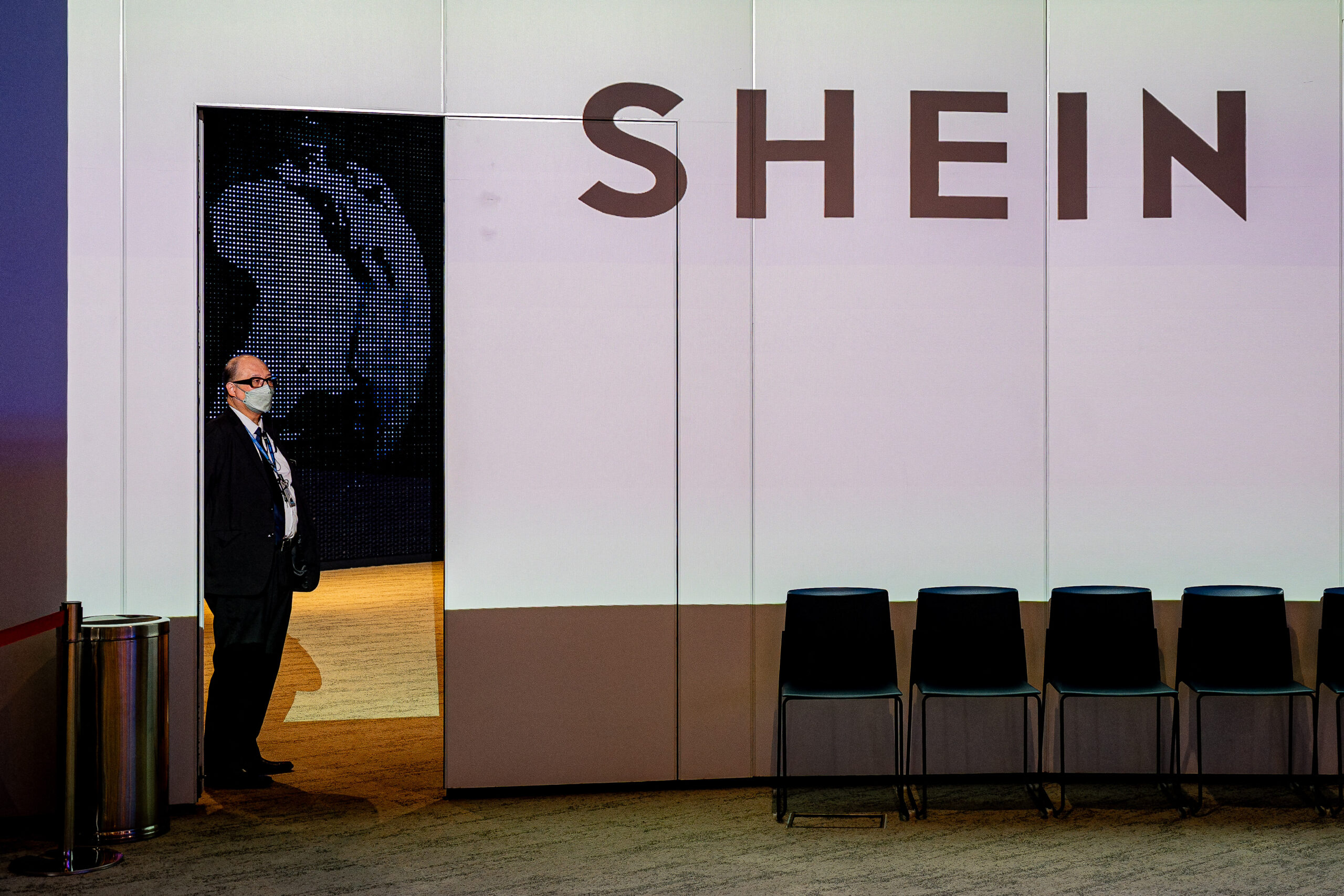
Shein, the fast-fashion giant, was officially listed on the Hong Kong Stock Exchange on Tuesday (September 1st). However, the four-year listing process did not come with a celebratory market response. The stock’s performance on its debut day was lackluster, with an early plunge of up to 10% to 43.80 Hong Kong dollars, ultimately closing at 48.50 Hong Kong dollars, slightly below the issue price of 48.56 Hong Kong dollars per share.
According to reports from Reuters, the closing price valued Shein at approximately $26.3 billion, shrinking nearly three-quarters compared to its peak near $100 billion in 2022. Sources and analysts pointed out that the stock managed to recover from intraday drops mainly due to the price stabilization mechanism employed by the Hong Kong stock market for large listings, coupled with only about 5% of freely tradable shares on the market (cornerstone investors subscribed for about one-fifth and are subject to a six-month lock-up period), temporarily easing the selling pressure.
Market analysis indicates that investors’ cautious attitude towards Shein stems from two major concerns.
The successive cancellations of low-value parcel tax exemption policies in the United States and Europe have dealt a heavy blow to Shein’s core cross-border direct mail model. Josh Gilbert, Chief Analyst for eToro in the Asia-Pacific region, pointed out that after the EU’s cancellation of the small parcel tax exemption policy, Shein and Temu both saw around a 45% decline in daily active users in Europe.
Due to the rise in trade costs and logistics expenses, Shein saw a 39% drop in net profit last year, turning into a loss in the first quarter of this year. The company also anticipates that operating profit margins in the second half of the year will be lower than in the first quarter.
Shein is currently facing an investigation by the U.S. Federal Trade Commission (FTC) on consumer protection, which could lead to significant fines; the European Commission is also reviewing its platform’s handling of illegal products, potential addictive design, and the transparency of its recommendation system.
Charu Chanana, Chief Investment Strategist at Saxo Bank, stated that Shein’s estimated price-to-earnings ratio is 15 times, more than double that of its competitor Temu’s parent company, Pinduoduo (PDD). With low growth visibility and high regulatory risks, investors do not believe that Shein’s valuation is underestimated.
During the listing ceremony, Shein’s founder and CEO, Sky Xu, did not speak and declined to answer media questions. Leigh Gui, Shein’s Chief Financial Officer, stated during the gong striking ceremony that the company will continue to innovate and collaborate with supply chain partners for mutual success.
Jianggan Li, CEO of Singapore consulting firm Momentum Works, analyzed that this listing is more of a “capital restructuring event,” aimed at compensating early investors who came in at previously inflated valuations (Shein has agreed to pay around $3.5 billion in cash to certain preferred shareholders and undergo equity adjustments). The real test of the market will come in the following weeks after the stabilization period.